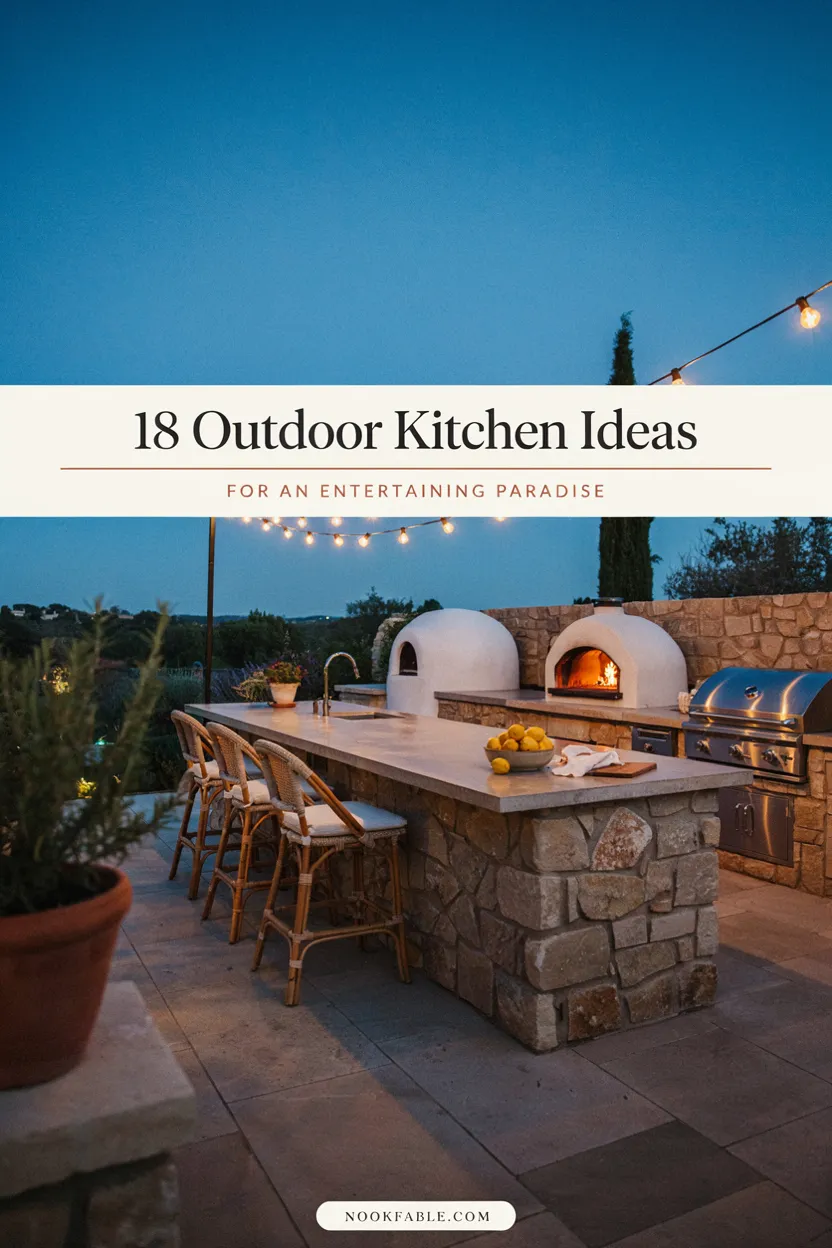
18 Outdoor Kitchen Ideas That Turn Every Backyard Into an Entertaining Paradise
Every good party migrates to the kitchen — so the smartest hosts finally moved the kitchen to the party. An outdoor kitchen turns the backyard from a place you carry food to into a place food actually happens: burgers flipped mid-conversation, pizzas sliding out of a glowing oven, drinks poured without anyone missing the story. And the category has outgrown its mansion reputation; between modular units, DIY block builds, and clever compact stations, there’s a version for nearly every budget and footprint. These outdoor kitchen ideas cover eighteen setups that turn backyards into entertaining paradises — full islands and pizza corners, smoker stations, pass-through windows, and the layout details that make cooking outside feel effortless instead of improvised.
1. The L-Shaped Island With Front-Row Seats
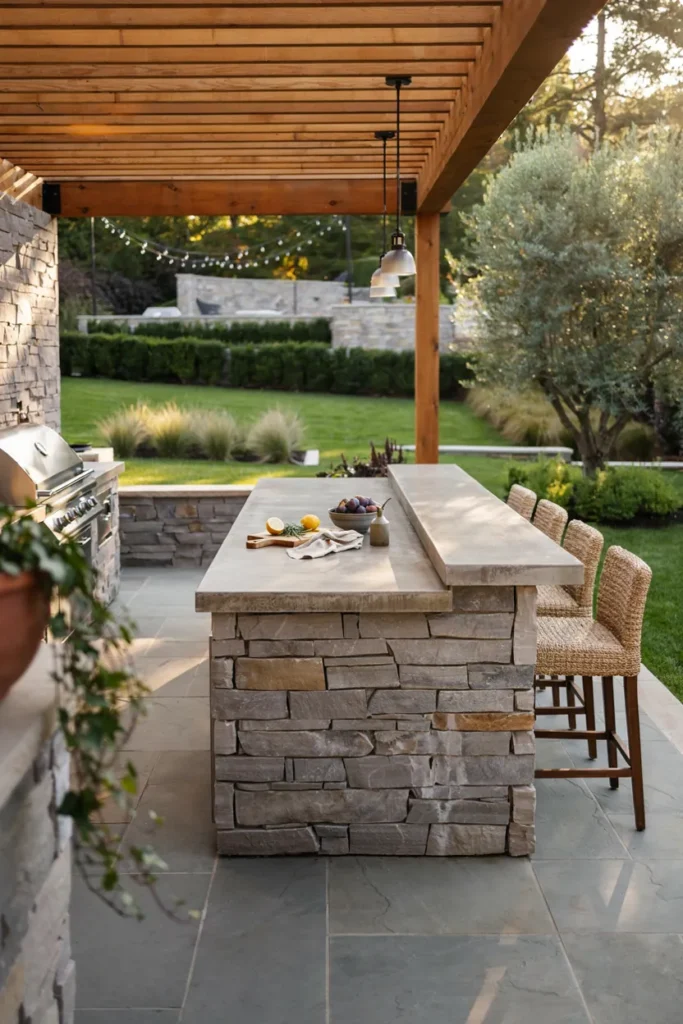
The L-shape is the outdoor kitchen’s golden layout because it solves the host’s eternal problem: cooking with your back to the guests. One leg holds the grill and prep zone, the other rises to bar height with stools — so the cook faces the audience, drinks stay within reach, and the island becomes the party’s natural gathering edge, exactly like the kitchen counter it replaced.
Give the grill leg at least eight feet for landing space both sides of the fire, and the bar leg room for three stools at two feet each. Raise the bar counter six inches above the work surface to hide prep mess from the seats. Stone or stucco base with a concrete top is the durable classic. Position the L to face the yard’s best view — the cook deserves it too.
2. A Pizza Oven Corner That Draws a Crowd
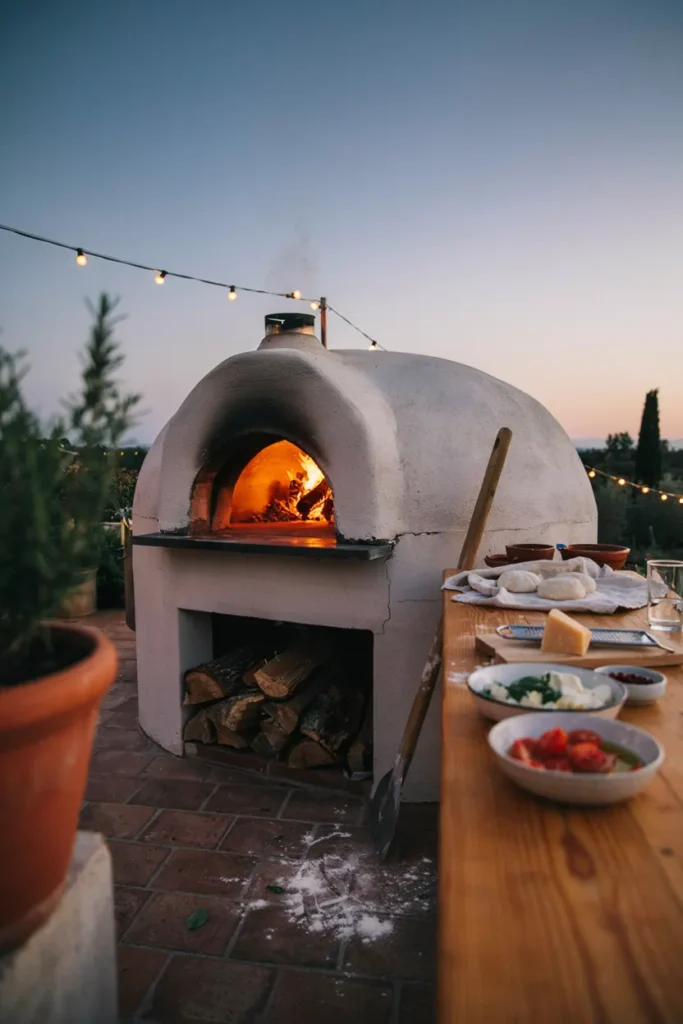
No appliance changes backyard entertaining like a pizza oven. Ninety-second pizzas turn dinner into theater — guests stretching dough, arguing toppings, crowding the glow like a campfire that feeds people. The oven earns its keep beyond pizza too: bread mornings, roasted vegetables, weekend wings. Once the dome is hot, hosts report the same phenomenon: nobody leaves the corner.
Choose your commitment level: portable pellet ovens hit pizza temperatures for a few hundred dollars, while masonry domes become permanent architecture. Either way, plan the surround — a peel-length counter beside the mouth, a log niche below, and stone or tile surfaces that shrug off embers and flour. Site it downwind of seating; woodsmoke is romantic until it’s in the salad.
3. The Covered Pavilion Kitchen for Every Forecast
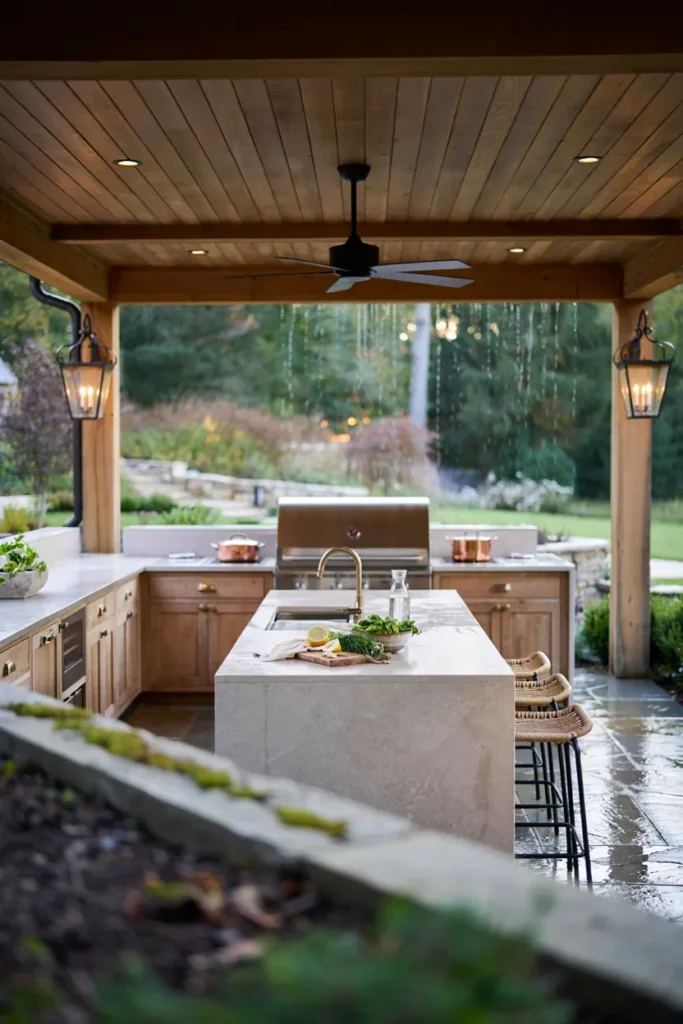
A roof is what separates an outdoor kitchen you use from one you check the forecast about. Under a pavilion, the grill runs in July sun and October drizzle alike, the ceiling fan moves August air, and lighting turns dinner prep into an evening event. It’s the configuration that makes outdoor cooking a lifestyle rather than a weather-permitting hobby — the true second kitchen.
Frame the pavilion at least twelve by sixteen so kitchen and a small table coexist, with a vented or high ceiling over the grill zone — never trap smoke under a flat low roof. Tongue-and-groove ceilings, a damp-rated fan, and dimmable lights finish it like an interior. This is the big-budget item on the list; phase it by building the kitchen first and roofing the following season.
4. Modular Units: The No-Contractor Kitchen
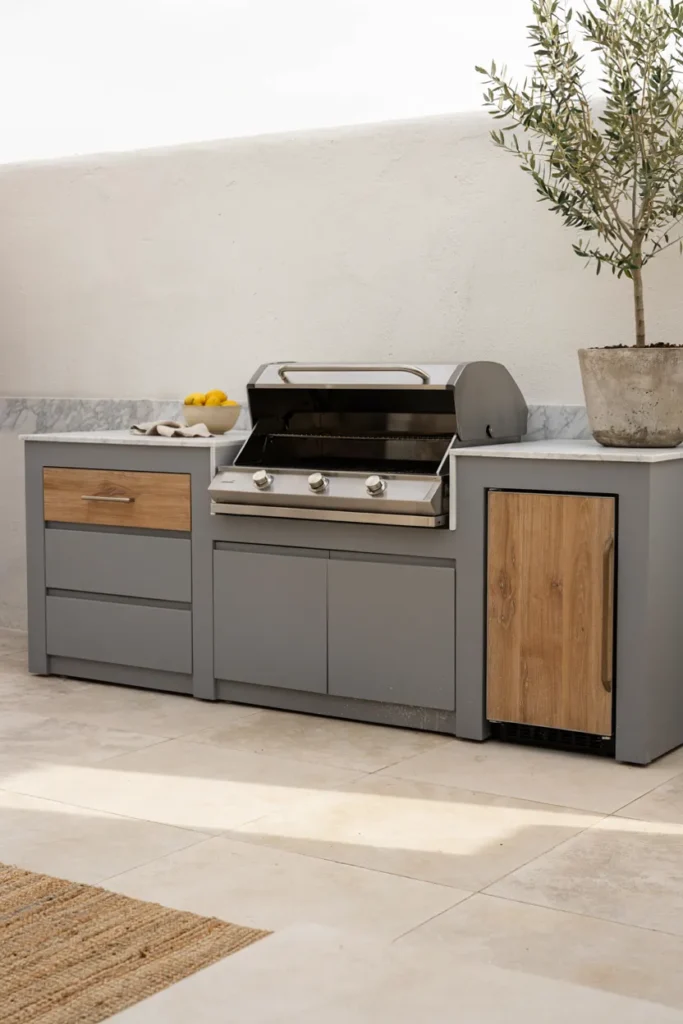
Masonry islands intimidate for good reason: footings, trades, and a price that starts with a comma. Modular outdoor kitchens deleted all of it — factory units for grill, storage, fridge, and sink that bolt side by side on any level patio, delivered and assembled in an afternoon. The current generation looks genuinely designed, not catalog-flatpack, and it moves with you if the address changes.
Buy the grill module first and add units as budget allows — the system logic means no phase looks unfinished. Graphite and stainless finishes with wood accents read most current. Confirm the patio is dead level and the gas plan early (natural gas line versus propane drawer). Total costs typically land at a third of built-in masonry for eighty percent of the effect.
5. The Cinder Block Build That Outsmarts Its Budget
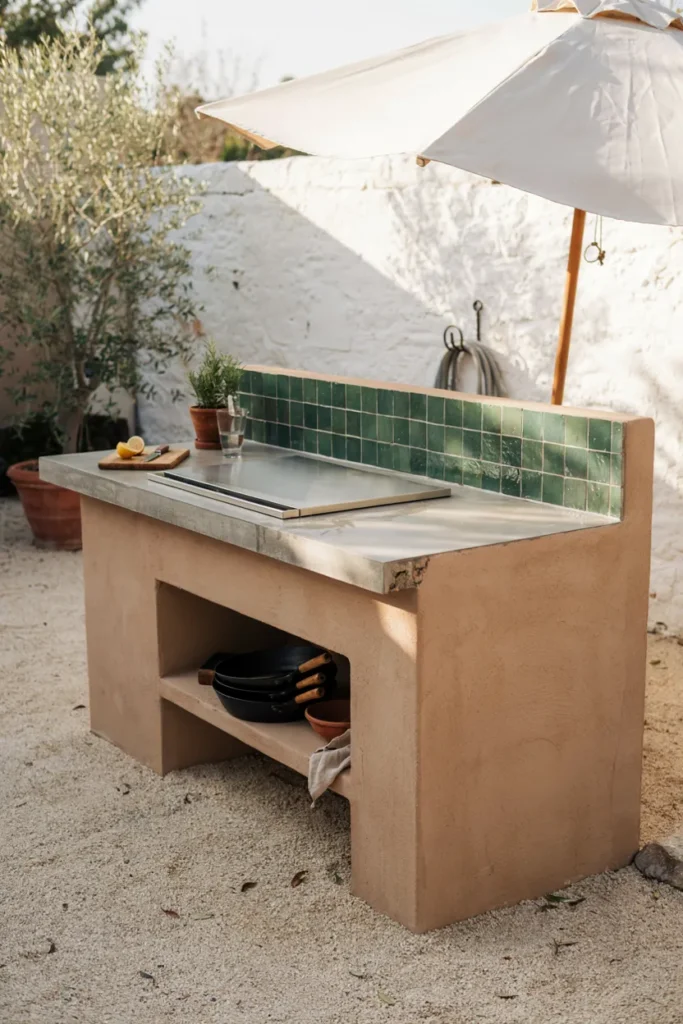
Under the stucco of many magazine-worthy outdoor kitchens hides sixty dollars of cinder block. The humble gray units stack into island frames a determined weekender can build without masonry skills, and once rendered smooth and topped with poured concrete, the result is indistinguishable from builds costing ten times more. It’s the highest-pride path to a real outdoor kitchen.
Dry-stack blocks on a level slab and lock them with surface-bonding cement — no mortar joints to master. Form and pour the counter in place with a drop-in grill cutout, then stucco or stone-veneer the base. A strip of patterned tile as backsplash is the detail that reads designed. Full build commonly lands under fifteen hundred dollars, grill included.
6. A Low-and-Slow Smoker Station
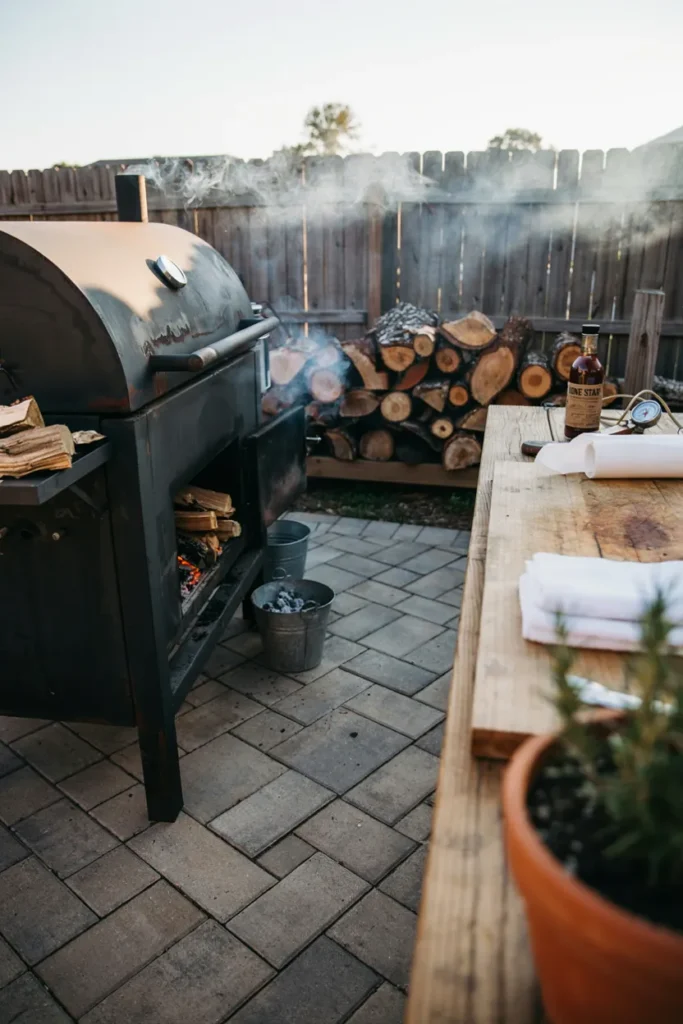
Grilling is cooking; smoking is a hobby with snacks. A dedicated smoker station honors the difference — the offset or pellet rig on its own pad, wood stacked within reach, a prep table for the wrapping and slicing rituals, and room for the lawn chair that twelve-hour briskets demand. For the host whose love language is barbecue, this corner is the whole backyard’s reason.
Set the smoker on pavers away from structures and overhangs, prevailing wind carrying smoke off the patio. The prep table matters more than beginners expect: counter height, sealed top, towel bar, and a rail for tools. A covered wood rack keeps splits dry and the stack looks as good as it functions. Add a dimmable light — the best bark happens after dark.
7. The Backyard Bar With a Beverage Center
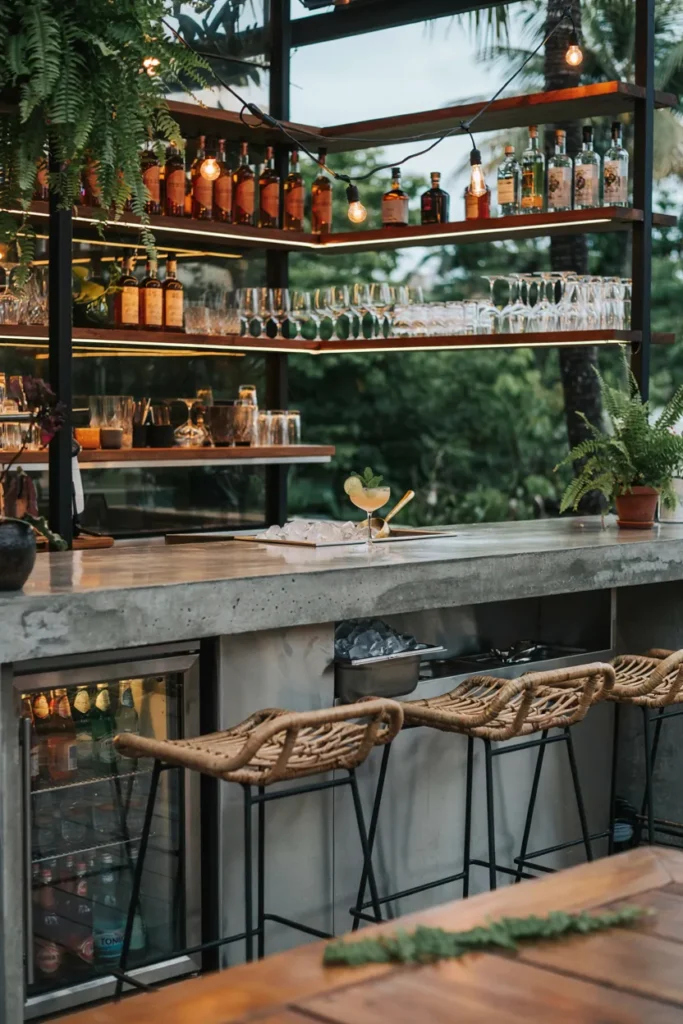
Half of outdoor entertaining is drinks, and drinks deserve better than a cooler on the grass. A dedicated bar — counter, beverage fridge, ice bin, glass shelf glowing softly after dark — turns refill runs into the party’s second act. It also spares the actual kitchen: guests self-serve at the bar while the cook keeps the grill zone, and the two stations split every crowd naturally.
Prioritize the ice bin — it’s the cheapest component and the one hosts use most. An outdoor-rated beverage fridge lives under the counter; standard indoor units die outside within a season. Add a bottle-opener screwed to the frame, a towel bar, and LED strip under the shelf for the resort glow. Position within sightline of the grill so the two hosts can still talk.
8. A Prep Station With a Farmhouse Sink and Herb Wall
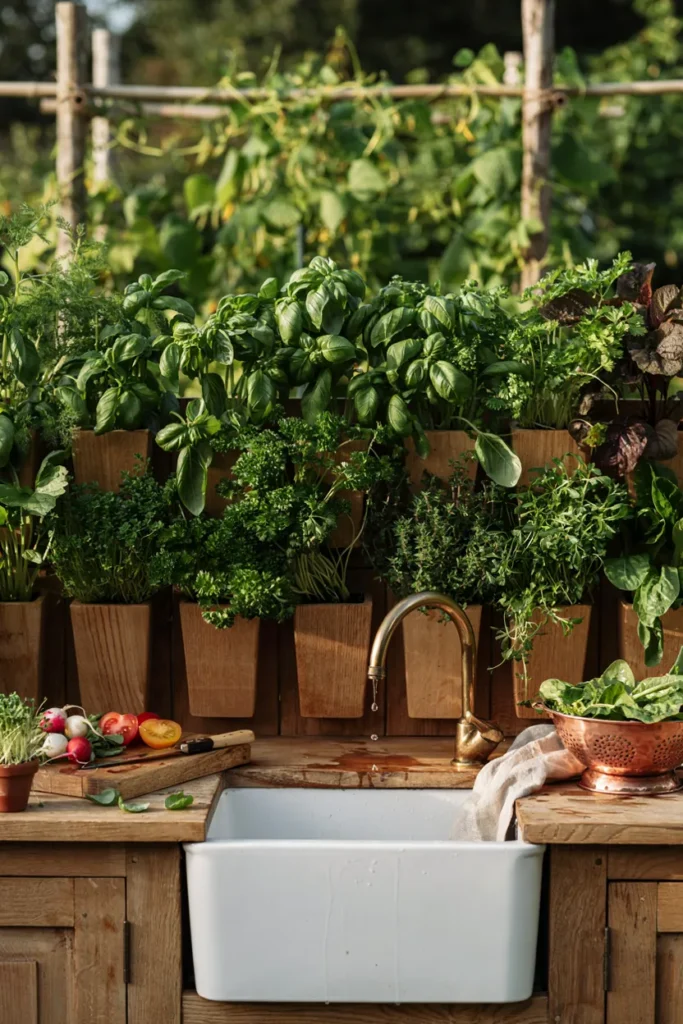
Water is the difference between an outdoor grill and an outdoor kitchen. A prep station with a real sink means salads washed where they’re served, hands rinsed without hallway commutes, and cleanup that happens at the party instead of after it. Back it with a living herb wall and the station becomes the garnish aisle: basil at arm’s reach, mint for the drinks, theater for the guests.
A cold line teed off the hose bib handles most needs; drain to a dry well or the garden where code allows. Farmhouse-style apron sinks in fireclay or stainless survive outdoors beautifully and look the part. Mount pocket planters or a rail of pots behind, planted with the herbs you actually cook with. A fold-down cutting board doubles the counter when the crowd grows.
9. Build the Kamado Into the Counter
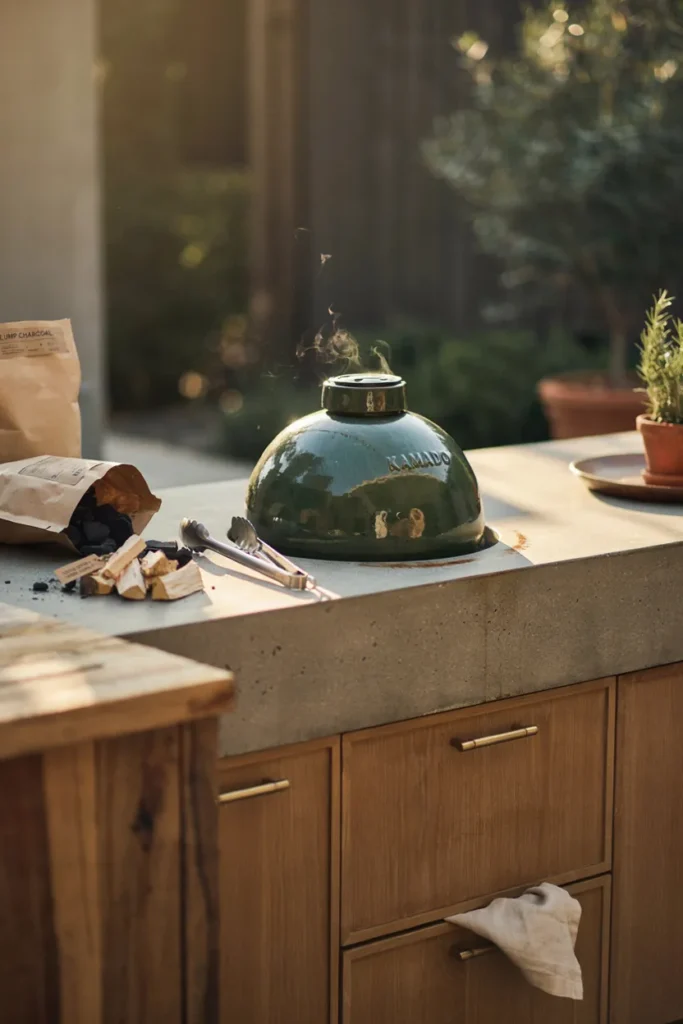
Kamado owners already know the ceramic egg does everything — sear, smoke, bake, pizza — but on its stand it’s an appliance; built into a counter, it’s a kitchen. The nested installation puts the dome at working height with landing space both sides, storage below for charcoal and wood chunks, and the sculptural green ceramic becomes the island’s centerpiece rather than an accessory parked beside it.
Order or template the exact cutout for your kamado model, supported on a shelf rated for its considerable weight, with an inch of air gap and heat-resistant surround per the manufacturer. Teak or concrete counters flatter the ceramic best. Keep the hinge clearance behind and a tool drawer within reach. The build converts one grill into the yard’s entire cooking identity.
10. Cabinetry That Laughs at Weather
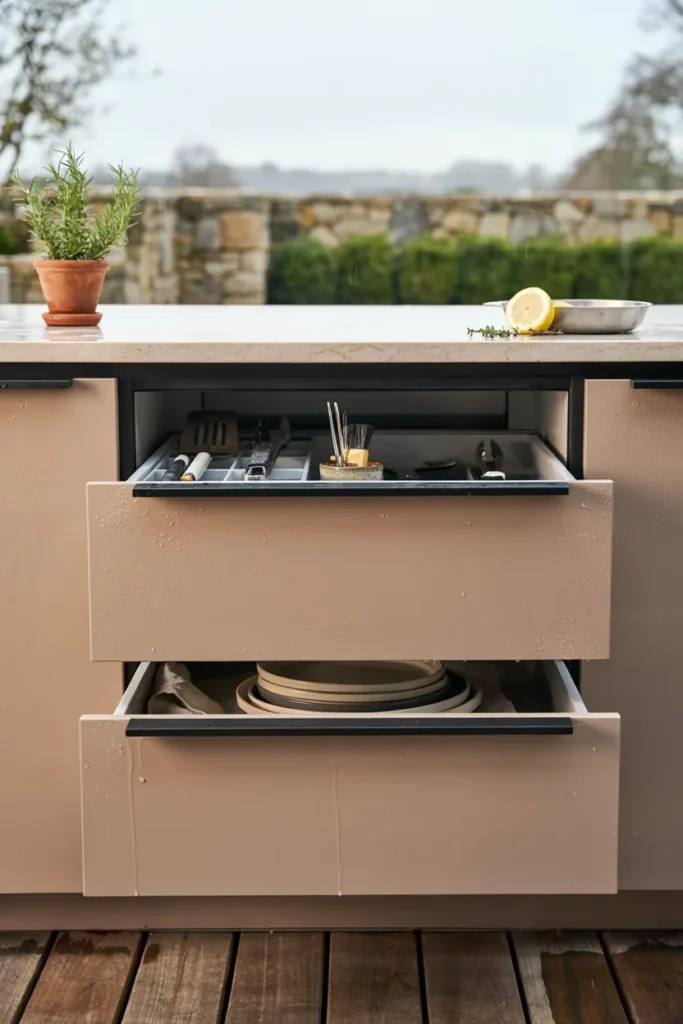
Outdoor kitchens fail in the details first — swollen doors, rusted hinges, drawers that stopped sliding after one winter. Marine-grade polymer and powder-coated aluminum cabinetry solves the failure point permanently: boat-industry materials that shrug off rain, sun, and grease, with soft-close drawers that still soft-close in year ten. Real storage outside means the end of ferrying tongs and platters forever.
Polymer costs more than repurposed indoor cabinets and outlasts them tenfold; look for stainless hardware, UV-stable color, and sealed drawer boxes. Plan drawers over doors — everything in a deep drawer surfaces with one pull. Warm taupes and graphite read designed; glossy white reads appliance. One dish drawer stocked with outdoor plates ends the most common kitchen sprint.
11. Light It Like a Restaurant, Not a Runway
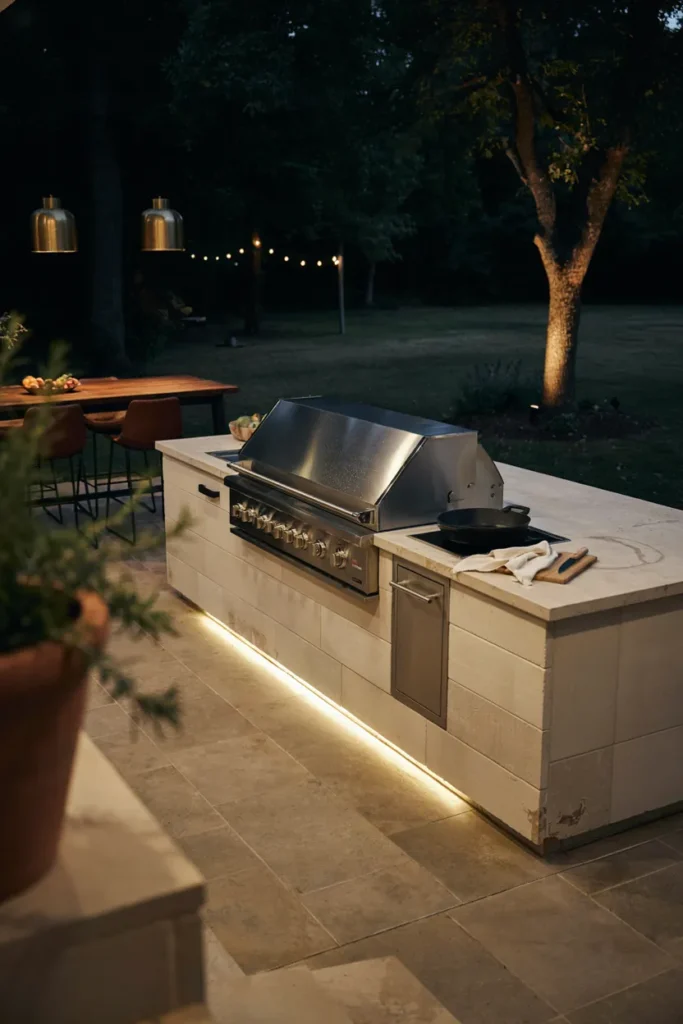
Most outdoor kitchens are lit by one blinding flood that makes dinner feel like a traffic stop. Restaurants know better: bright only where knives work, warm and low everywhere people sit. Task light on the grill, pendants over the bar, a soft graze along the counter base — three layers that let the cook see doneness while the party keeps its candlelight mood.
Put a focused, color-honest light over the grill (seeing meat’s true color is the one non-negotiable), warm dimmable pendants or festoons over seating, and LED strip tucked under counter overhangs for the floating glow. Everything 2700K except the task lamp, all switched separately. Solar handles the perimeter; the kitchen zones deserve wired or plug-in reliability.
12. The Pass-Through Window Cheat
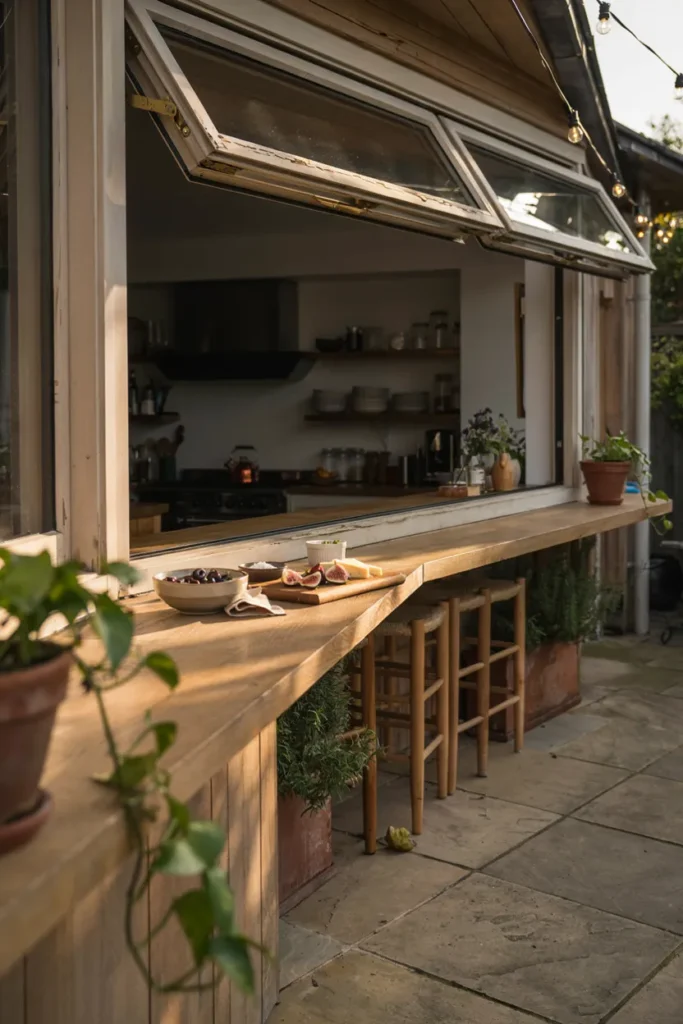
The most underrated outdoor kitchen isn’t outdoors at all — it’s a window. A pass-through connecting the indoor kitchen to an exterior counter turns the existing appliances, sink, and fridge into the backyard’s back-of-house: platters slide out, empties slide in, and whoever’s inside stays in the conversation. For entertaining efficiency per dollar, nothing on this list competes.
Awning and gas-strut windows make the best pass-throughs, opening clear of the counter; a fold-out or slider works where framing allows. Run the exterior counter bar-depth with stools, weatherproofed in stone or sealed hardwood. This is a contractor project — header, flashing, finish — but a modest one, and it multiplies every other outdoor idea by connecting them to the mothership.
13. The Griddle Station Where Everyone Cooks
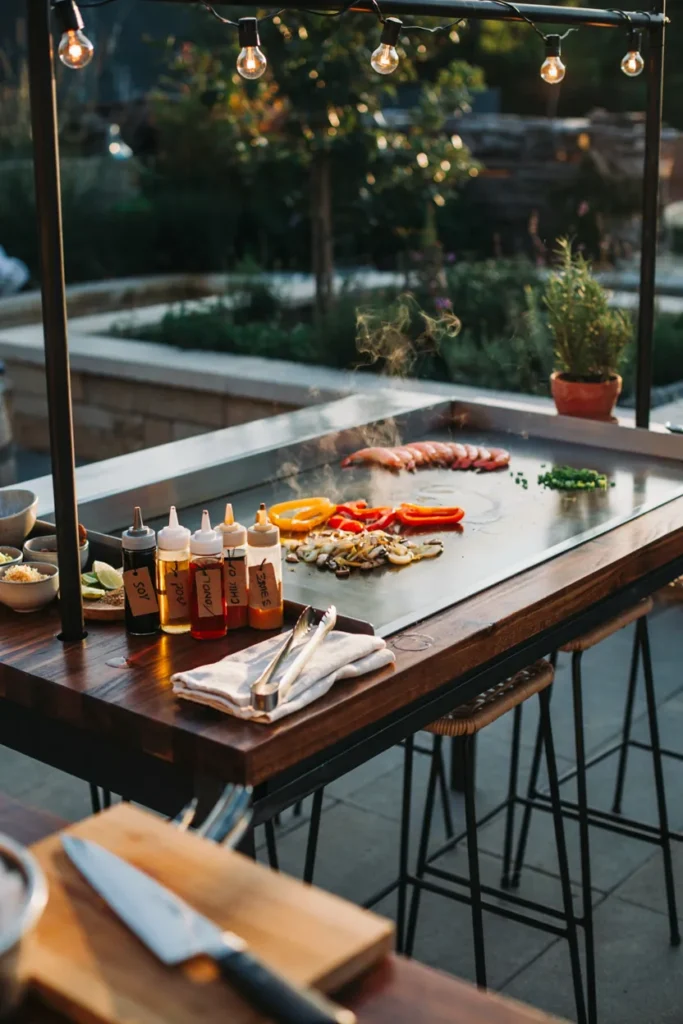
Grills separate the cook from the crowd; griddles turn cooking into the show. A flat-top station with seating wrapped around two sides runs like backyard teppanyaki — smash burgers, fried rice, taco fillings, all cooked in front of an audience that can’t stop watching. Kids flip their own pancakes on Sunday, guests customize on Friday, and the griddle becomes the most social appliance outside.
Build counter seating on the two sides opposite the cook, bar-height with a food-safe landing strip along the griddle’s edge. A rear grease trap model keeps splatter off spectators; a wind guard keeps the flame honest. Stock squeeze bottles, dome lids, and two scrapers — the tools are half the theater. This station loves the pass-through window as its supply line.
14. The Compact Cart Kitchen for Small Patios
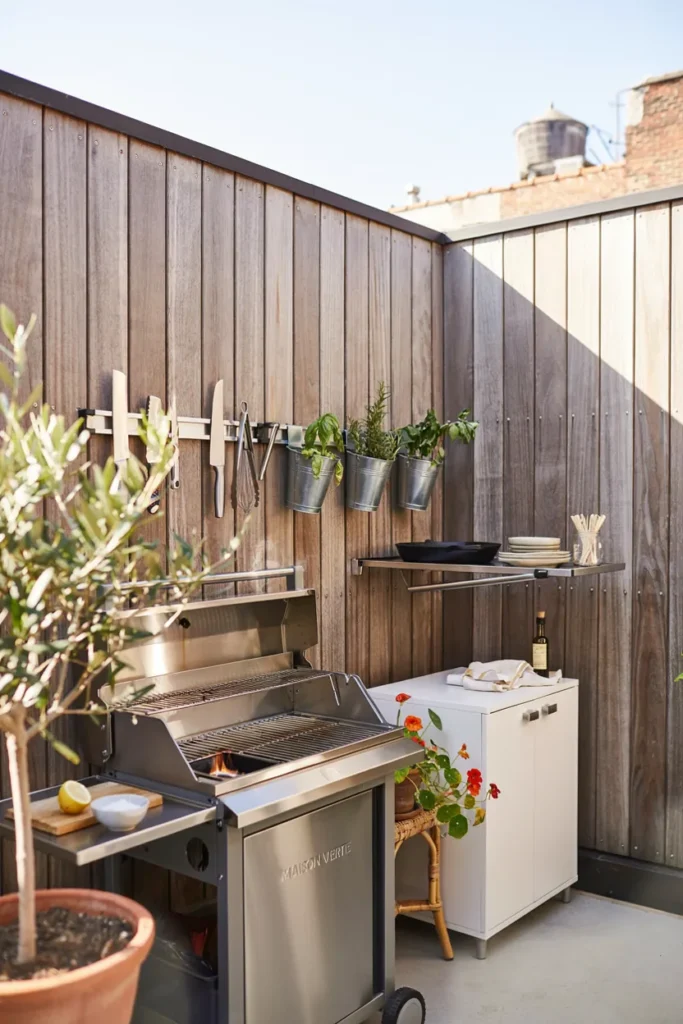
No sprawling yard required: a true outdoor kitchen compresses into two square meters when every piece works double. A quality grill cart with fold-out wings, a fold-down wall shelf, a slim cabinet, and a rail of tools on the fence — that’s cooking, prep, and storage in the footprint of a loveseat, and it entertains six people as capably as any island.
Spend on the cart’s grill and let the rest be clever: fold-down shelving appears for service and vanishes after, rail planters grow the garnish, and a magnetic strip holds tools at eye level. Choose pieces on wheels so the whole kitchen reconfigures — or clears entirely for the dance-floor phase of the evening. Renters lose nothing at moving day.
15. Cook Over the Fire Pit Itself
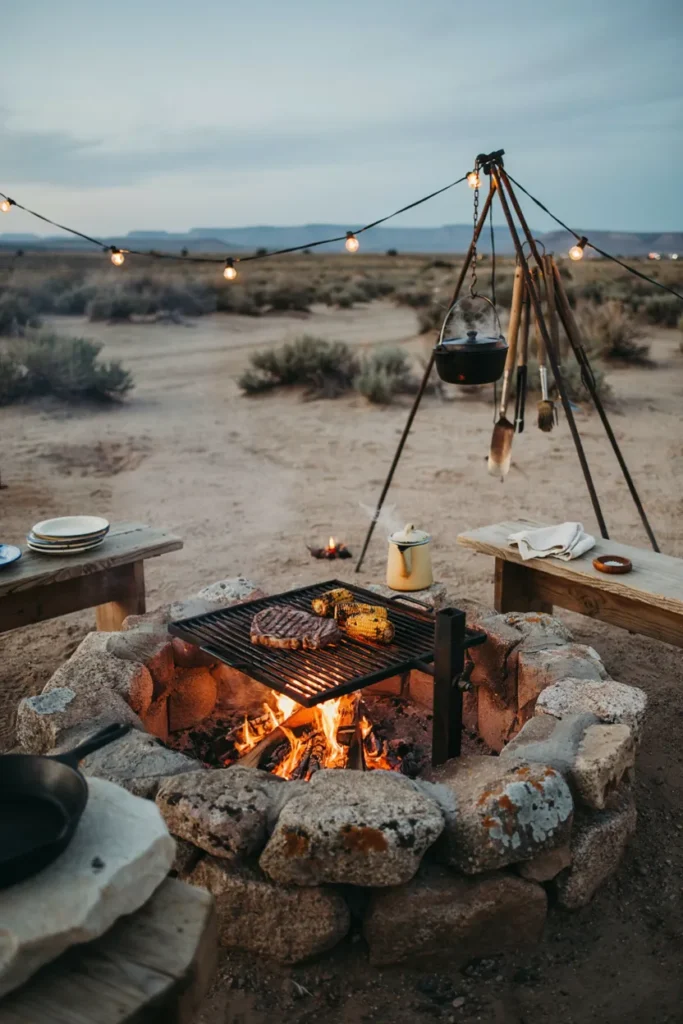
Before kitchens moved outdoors, fires were the kitchen — and cooking over the pit still beats every appliance for pure atmosphere. A swing-arm grate turns the existing fire ring into a range: steaks over oak coals, a Dutch oven of chili hanging from the tripod, marshmallow course included. It’s the outdoor kitchen idea that costs the least and gets photographed the most.
A pivoting swing grate mounts beside the ring and swings over or off the heat — far better control than fixed grates. Cook over coals, not flames; build the fire early and rake embers to one side. Cast iron rules here: Dutch oven, long skillet, tripod. Keep a dedicated tool stand and a sealed bin for the cookware so the setup survives outside beautifully.
16. Grow the Ceiling: Kitchen Under a Living Pergola
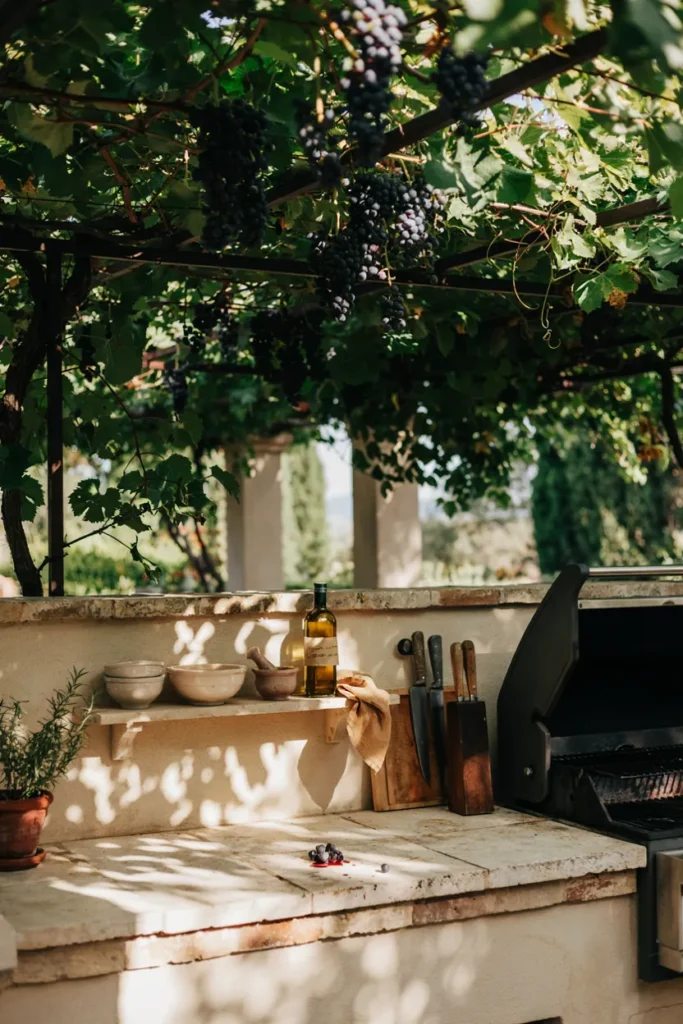
Steel and stone kitchens impress; kitchens under a living green ceiling enchant. A pergola planted with grape or kiwi vines shades the counters with leaves that deepen exactly as grilling season peaks, hangs actual harvest over the prep zone, and dapples the whole station in trattoria light. It’s the version of the covered kitchen that gets better every single year.
Frame the pergola clear of the grill’s heat column — position the cooking zone at the structure’s open edge or vent gap, since vines and flare-ups disagree. Grapes deliver the classic canopy in two seasons; evergreen jasmine trades fruit for fragrance. Train stems along wires the first year and prune ruthlessly each winter. The light alone will sell every dinner invitation.
17. Concrete Counters and a Tile Moment
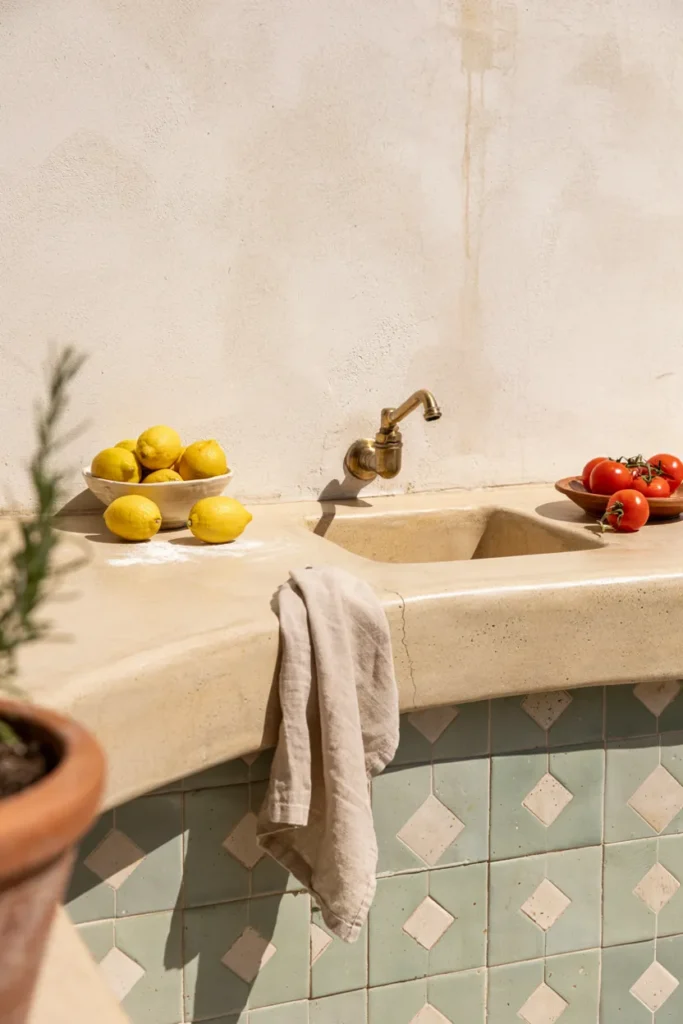
Outdoor kitchens default to stainless-and-stone sameness — materials are where yours gets a personality. Poured concrete counters in warm sand tones handle heat, rain, and decades while feeling hand-made, and one wall of patterned tile turns the island from equipment into design. The combination photographs like a coastal European villa and costs surprisingly little of the total build.
Concrete counters pour in place over a plywood form or arrive precast; seal annually against oil and wine, and embrace the gentle patina between. Spend the tile budget on one visible face — the bar front or backsplash strip — in frost-proof porcelain patterns. A brass pot filler or vintage-style faucet is the jewelry. Materials with warmth make even modest kitchens feel collected.
18. Design the Flow From Flame to Table
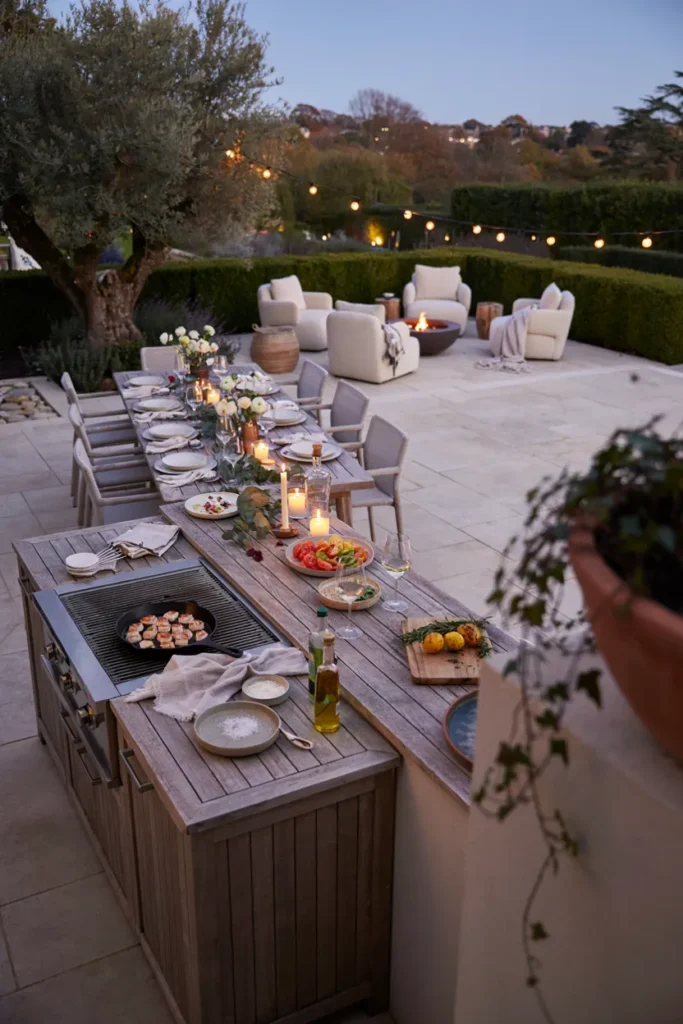
The final idea isn’t an appliance — it’s the choreography. Great outdoor kitchens fail when the table sits fifty feet from the grill; paradise happens when flame, serving surface, and seats flow in a line. Cook, slide, serve, sit: when the layout honors that sequence, hosts stay in the party, food arrives hot, and the whole backyard works like one generous room.
Keep the dining table within fifteen feet of the grill with a landing counter between — every platter should travel one motion, not one journey. Route the guest path behind the seats, never behind the cook. Let zones borrow from each other: bar visible from the table, fire lounge catching dinner’s overflow. Draw the evening as arrows on paper before building anything; the arrows are the design.
Conclusion
An entertaining paradise isn’t bought in one delivery — it’s composed, the way every great kitchen indoors was: heat, water, surface, storage, and seats arranged around the way you actually host. That’s the quiet theme in all of these outdoor kitchen ideas, whether the version that fits your yard is a modular island, a cinder-block triumph, a pizza dome, or a cart and a fold-down shelf that outperform kitchens ten times their price. Start with the flame you’ll use weekly, add the counter beside it, and let each season fund the next station — kitchens built in phases end up fitting their hosts perfectly. Save your favorite setups to your Pinterest boards so the plan survives until building weather, and keep the flow rule sacred: one motion from flame to table. Then send the invitation you’ve been meaning to send. The backyard is about to become the restaurant everyone wants a reservation to — and you own it. The kitchen feeds the party; these backyard retreat ideas build the rooms it spills into.