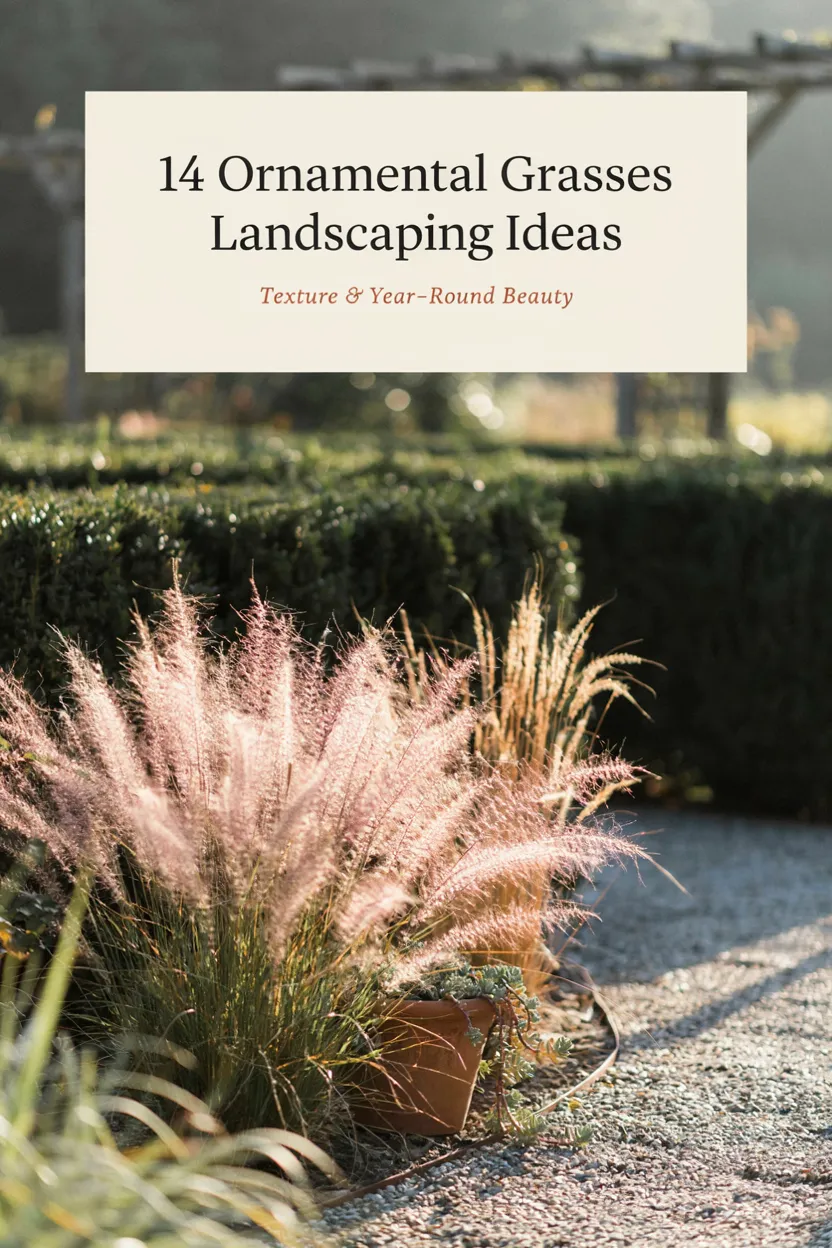
14 Ornamental Grasses Landscaping Ideas That Add Texture and Year-Round Beauty
Most gardens are built for June — and then spend eight months apologizing. Ornamental grasses fix that imbalance better than any plant family in the catalog. They bring movement flowers can’t match, catch light like nothing else in the yard, and stand tall through frost and snow when the rest of the border has gone to sleep. Even better, most varieties ask almost nothing: sun, occasional water in year one, and a single haircut each spring. These ornamental grasses landscaping ideas show fourteen ways to put them to work, from soft privacy screens and glowing sunset borders to modern grids and shade-loving cascades. Whether your style leans cottage, prairie, or clean-lined contemporary, there’s a grass — and a design — here that fits. Save the ideas that suit your space, and get ready for a garden that finally earns its keep in January. Grasses were the first thing I learned to lean on as a stylist — they never have an off week.
1. A Living Privacy Screen That Sways
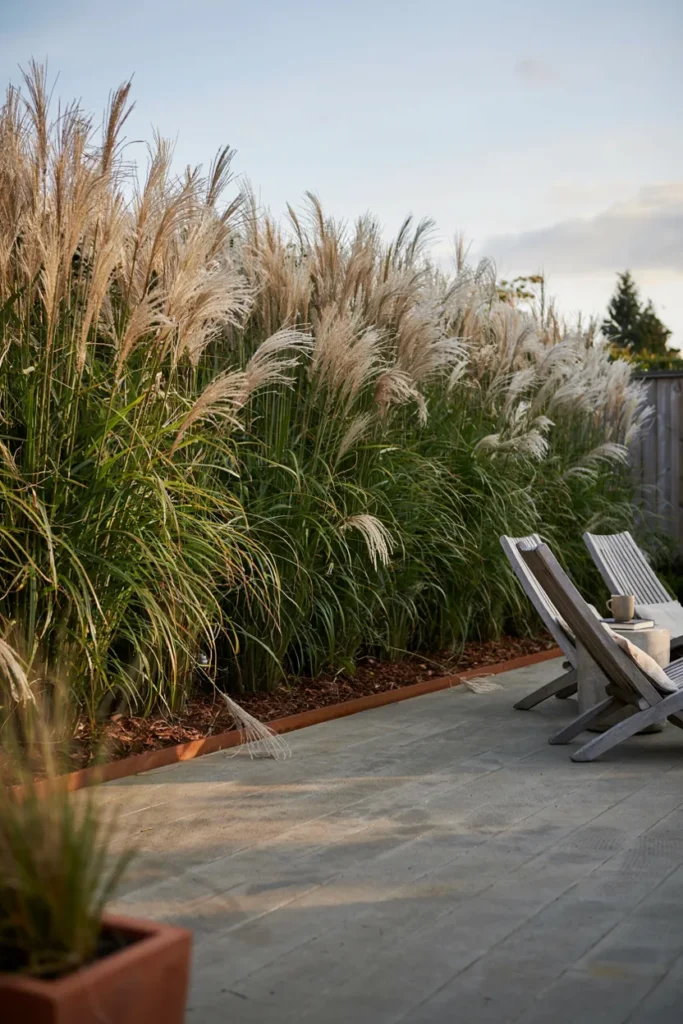
A fence blocks a view; a grass screen softens one. Planted in a row, tall varieties like miscanthus rise six to eight feet by midsummer, building a rustling green wall that filters sightlines without the dead-stop feeling of boards. It moves with every breeze, glows when the sun drops behind it, and costs a fraction of fencing. For close-set neighbors or an exposed patio, it’s privacy that actually improves the view.
Space plants three feet apart in a single or staggered double row along the line you want screened — full sun gives the densest growth. ‘Gracillimus’ miscanthus and switchgrass ‘Northwind’ both hold a tight upright shape without flopping. Water deeply through the first summer, then let rain handle it. The screen stands tan and architectural all winter; cut it to a foot tall each March before new blades emerge.
2. A Foundation Border in Three Heights
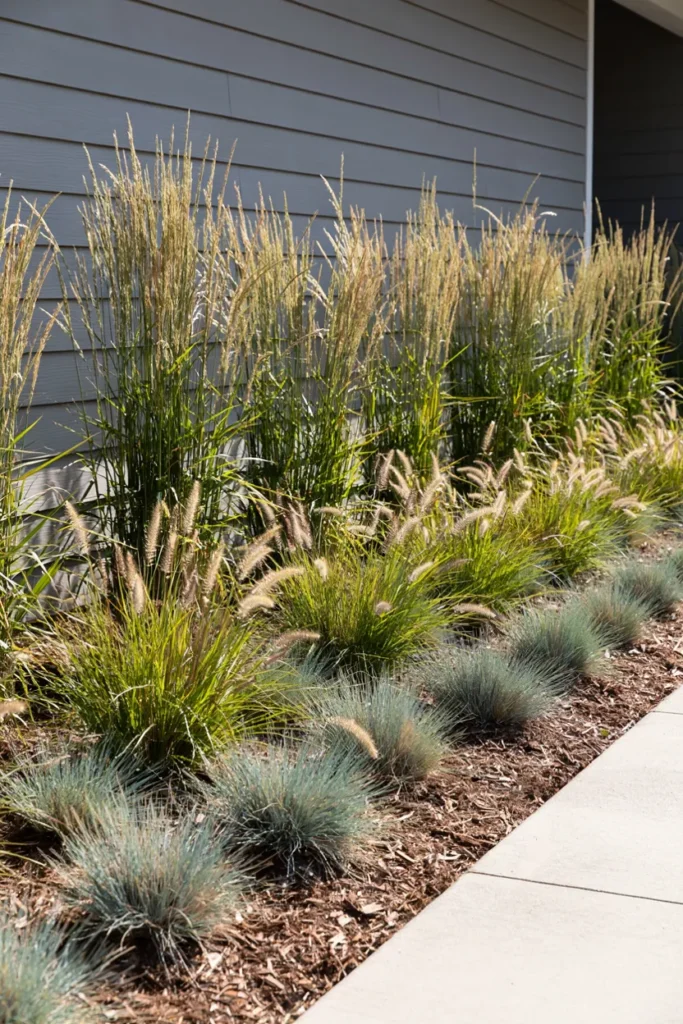
Foundation shrubs are the beige of landscaping — fine, forgettable, everywhere. Replacing them with grasses in three graduated heights gives the front of the house rhythm instead: vertical feather reed at the back, arching fountain grass in the middle, tidy blue mounds at the edge. The layered textures read professionally designed from the street, and unlike foundation evergreens, the composition changes character with every season and every breeze.
Plant in overlapping rows, not straight soldier lines — stagger each tier so the layers weave. Feather reed grass ‘Karl Foerster’ gives the back row unbeatable vertical structure; ‘Hameln’ dwarf fountain grass fills the middle; blue fescue buttons the front. Keep two feet of gravel or mulch between grasses and siding for airflow. One spring cutback and an occasional split every few years is the entire maintenance program.
3. Plant the Sunset: A West-Facing Glow Border
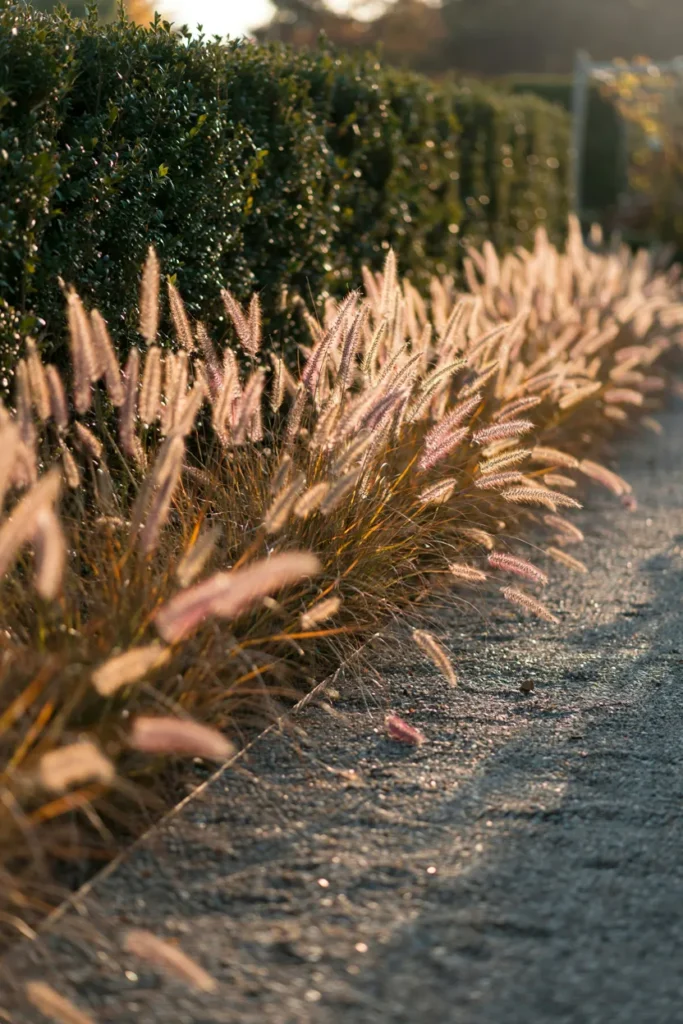
Grasses have one talent no flower can touch: they’re translucent. Position them where the low sun passes behind, and every plume and seed head ignites — pink muhly turns to rose-colored smoke, feather grass to spun gold. Designers call it planting the sunset. A border placed on the west side of a path or patio delivers this light show nightly from late summer through fall, free of charge.
The rule is simple: you, then the grasses, then the setting sun. Choose varieties with airy, luminous heads — pink muhly, Mexican feather grass, switchgrass ‘Shenandoah’. A dark backdrop of hedge or fence doubles the glow by contrast. Plant in loose drifts rather than rows so light passes through multiple layers. Then put a bench where you’ll actually sit at seven in the evening; this border is theater, so build the seats.
4. A Container Trio for Porch or Patio
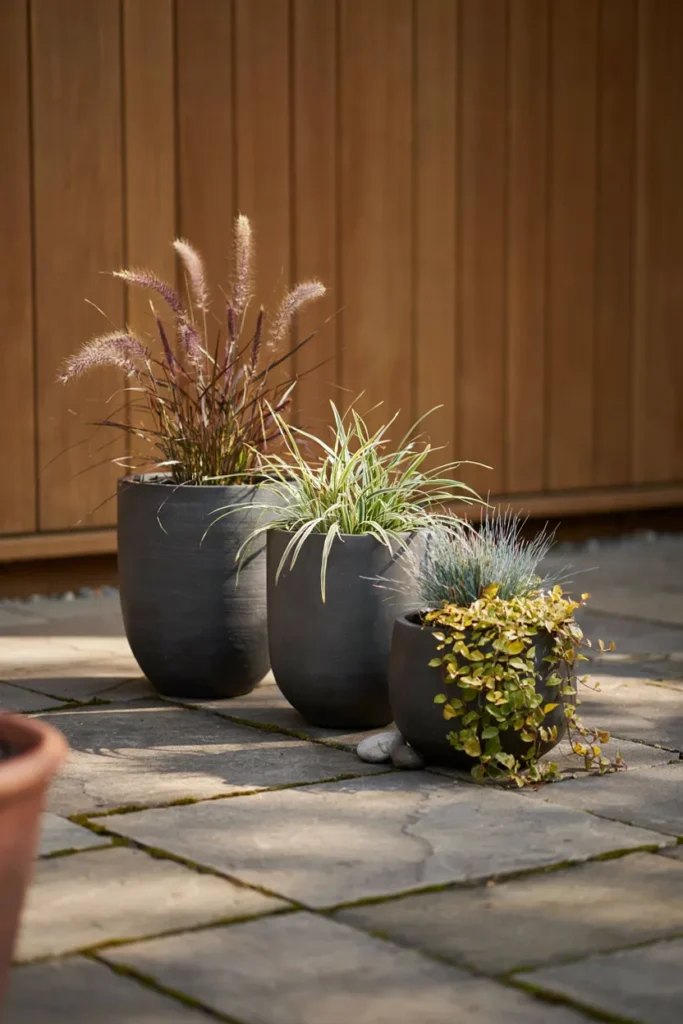
No yard required: grasses may be the best container plants nobody uses. A trio of pots in graduated sizes — one tall upright grass, one arching mid-height, one low with a trailing partner — creates a full, four-season composition for a porch corner or patio edge. The grasses give containers what annual flowers can’t: height, motion, and presence that lasts from May straight through the first snows.
Use generously sized pots, sixteen inches and up, since grasses resent cramped roots. Purple fountain grass makes a dramatic thriller; Japanese sedge or dwarf miscanthus fills the middle; blue fescue with creeping jenny spills below. Group the three in an off-center cluster rather than a row. In cold zones, treat purple fountain grass as an annual or winter it in a garage — or plant fully hardy switchgrass and skip the worry.
5. One Dramatic Pampas Corner
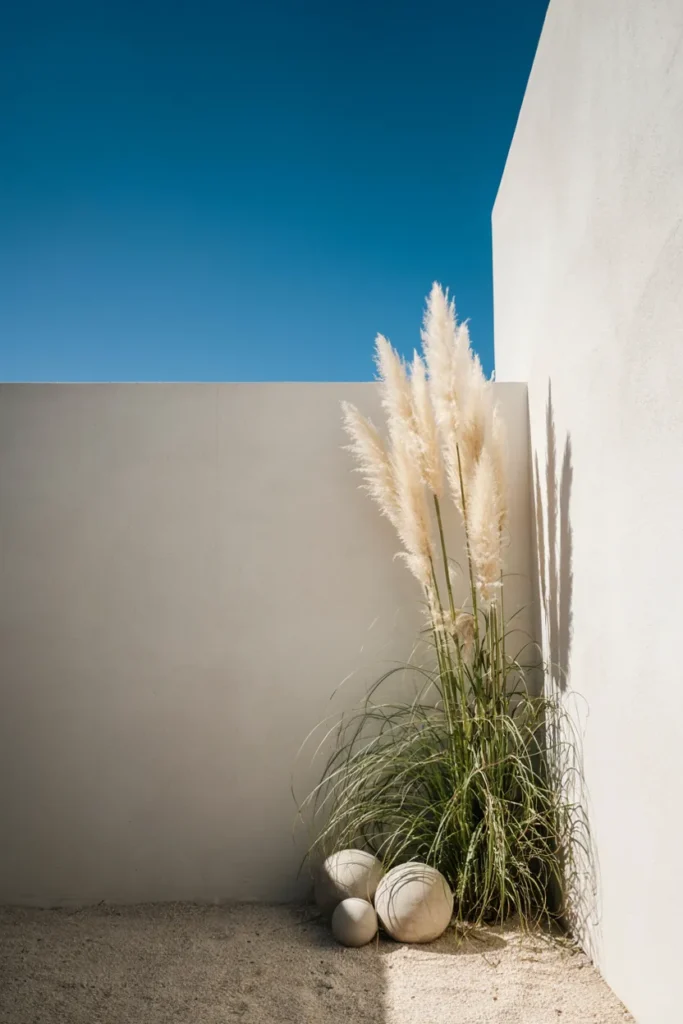
Sometimes landscaping needs one exclamation point, not a paragraph. A single pampas grass at a corner of the house or driveway delivers exactly that — eight feet of creamy plumes that photograph like sculpture and announce themselves from down the street. Treated as a specimen with clean space around it, pampas reads modern and intentional rather than overgrown. One plant, one statement, enormous payoff.
Give it room: pampas matures at six feet wide, so site it a full eight feet from walls and walkways. A gravel or bare mulch apron keeps the silhouette crisp and makes maintenance honest. Plant compact ‘Pumila’ in smaller yards, and check regional invasive lists first — where pampas is problematic, hardy miscanthus ‘Silberfeder’ gives the same plume drama responsibly. Wear long sleeves for the annual cutback; the leaf edges are serious.
6. Carpet a Slope You Hate Mowing
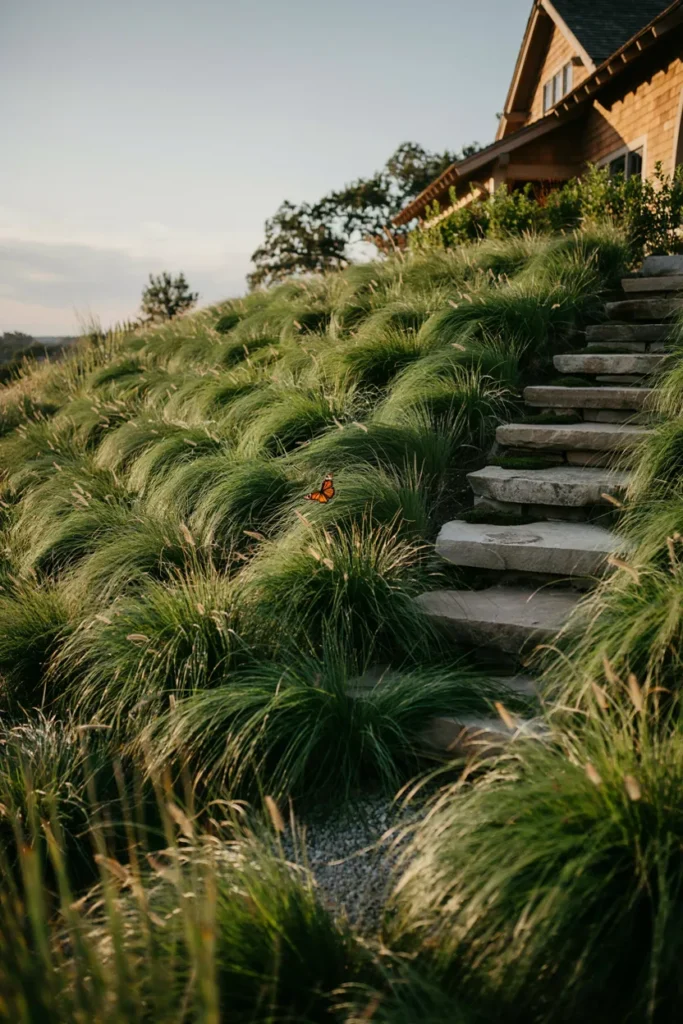
Mowing a slope is dangerous; watering one is futile, since everything runs downhill. Mass-planting the entire grade with one grass variety solves both problems and looks spectacular doing it — hundreds of identical fountains rippling in wind like a single organism. The fibrous roots knit the soil against erosion far better than turf, and the unified sweep gives even modest homes that designed-landscape gravity.
One variety, massed, is the secret — mixing dilutes the effect. Prairie dropseed gives fine-textured elegance; ‘Hameln’ fountain grass reads fuller and faster. Plant plugs on eighteen-inch centers in a diamond grid across the slope, mulch between, and water the first season with a cheap drip line. By year two the canopy closes, weeds lose, and your only task is the annual cutback — which, on a slope, you’ll do standing comfortably.
7. The Prairie Mix: Grasses Plus Coneflowers
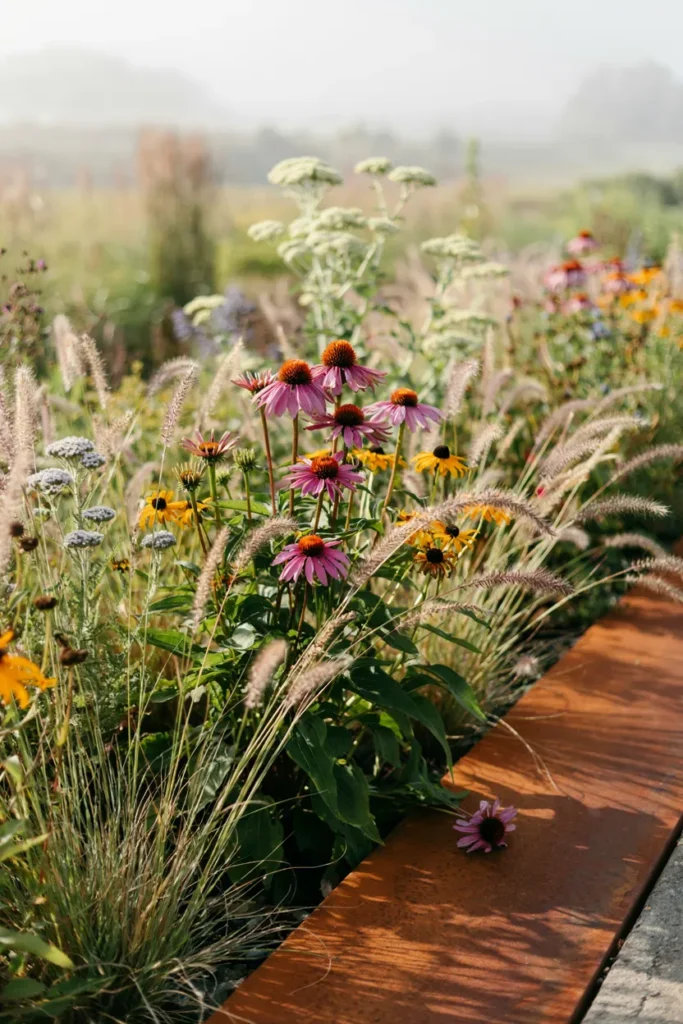
The look defining modern garden design — those loose, painterly borders in every design magazine — is really one formula: native grasses woven through sturdy prairie flowers. The grasses supply the matrix and motion; coneflowers and black-eyed susans supply the color that floats above it. Together they feed pollinators all summer, stand structural through winter, and shrug off drought that would flatten a traditional flower bed.
Aim for roughly sixty percent grass, forty percent flower. Little bluestem and prairie dropseed make an ideal base layer; weave through coneflower, rudbeckia, and yarrow in repeating drifts of five or more. Plant everything small and close — plugs knit into a self-supporting community within two seasons. Resist fall tidying; the standing seed heads are the winter show and the bird feeder. One March cut, and the cycle restarts.
8. A Soft Ribbon Along the Walkway
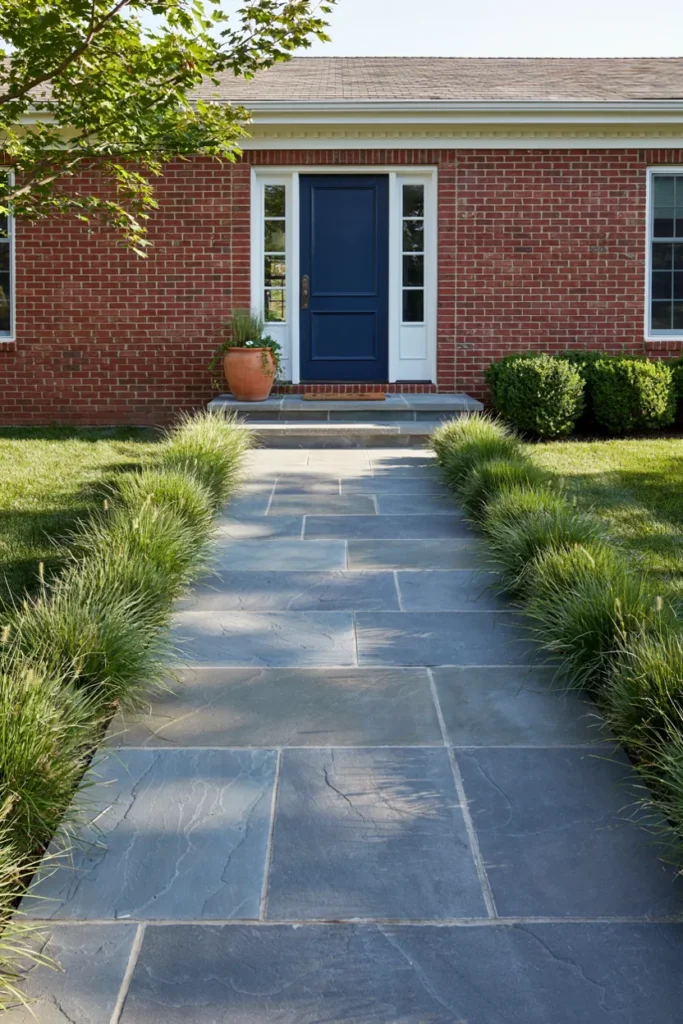
Walkways edged in brick or bare mulch feel institutional; edged in low grasses, they feel like an event. A continuous ribbon of dwarf fountain grass along both sides of the path softens every hard line, brushes ankles as guests pass, and visually funnels attention straight to the front door. It’s the landscaping equivalent of rolling out a runner — and it makes even a straight concrete walk feel designed.
Dwarf varieties are essential so the path never disappears: ‘Hameln’ or ‘Little Bunny’ fountain grass, or liriope where deer pressure is high. Plant a single row along each edge, eighteen inches from the walking surface, spaced at their mature width. The arching habit does the styling for you. Solar path lights tucked between every third plant extend the effect — and the glow through blades at night is a bonus show.
9. Poolside Planting That Never Sheds Petals
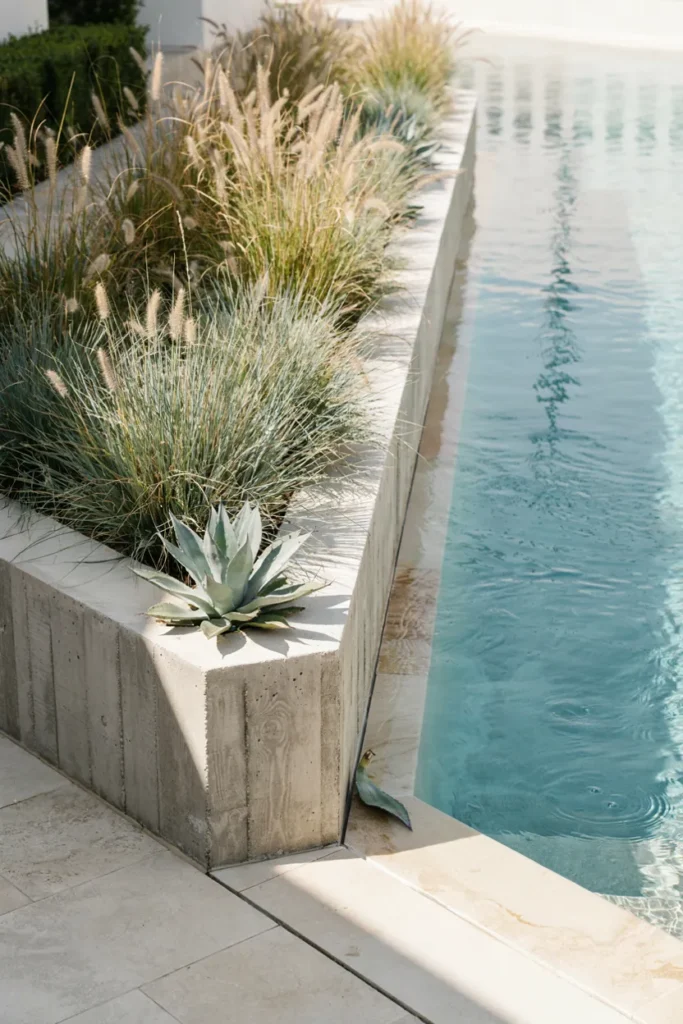
Pools punish fussy plants: petals in the skimmer, leaves on the water, roots wandering toward plumbing. Grasses are the professionals’ answer — nearly litter-free, non-invasive rooted, and their blue-green blades against turquoise water is a color pairing straight off a resort brochure. The vertical blades also lend privacy around lounging areas without walling in the sun, and they don’t care how much chlorinated splash lands on them.
Favor clumping, tidy varieties: blue oat grass, switchgrass ‘Heavy Metal’, and lomandra in warm climates. Plant in raised beds or bands set back a foot from coping so cutback debris never reaches the water. Repeat one or two varieties in rhythm around the pool rather than collecting many — repetition is what reads resort. A single sculptural accent like agave or a pot of papyrus gives the composition its focal point.
10. The Winter Garden You Don’t Cut Down
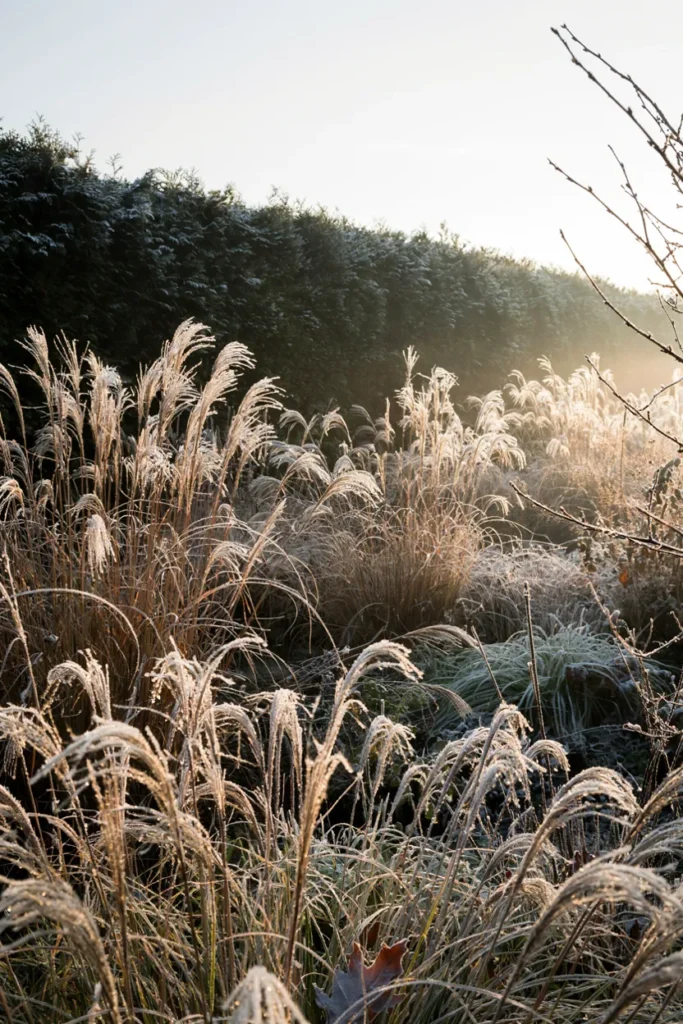
Most gardens get cut to the ground in October and spend five months as mulch. Grasses invert the calendar: left standing, they become the winter garden — tan plumes catching low light, seed heads feeding finches, every stem etched in frost on cold mornings. The bleached architecture against snow is arguably the grass garden’s finest hour, and it requires doing precisely nothing except resisting the urge to tidy.
Design for the season deliberately: site grasses where you’ll see them from indoor windows, because that’s where winter gardens are actually enjoyed. Miscanthus, switchgrass, and feather reed hold their structure under snow load best; fountain grass collapses earlier. An evergreen backdrop makes the tan glow. Delay the annual cutback until late winter, just before new growth — the birds, the frost photos, and the February view all say thank you.
11. A Modern Grid of Blue Mounds
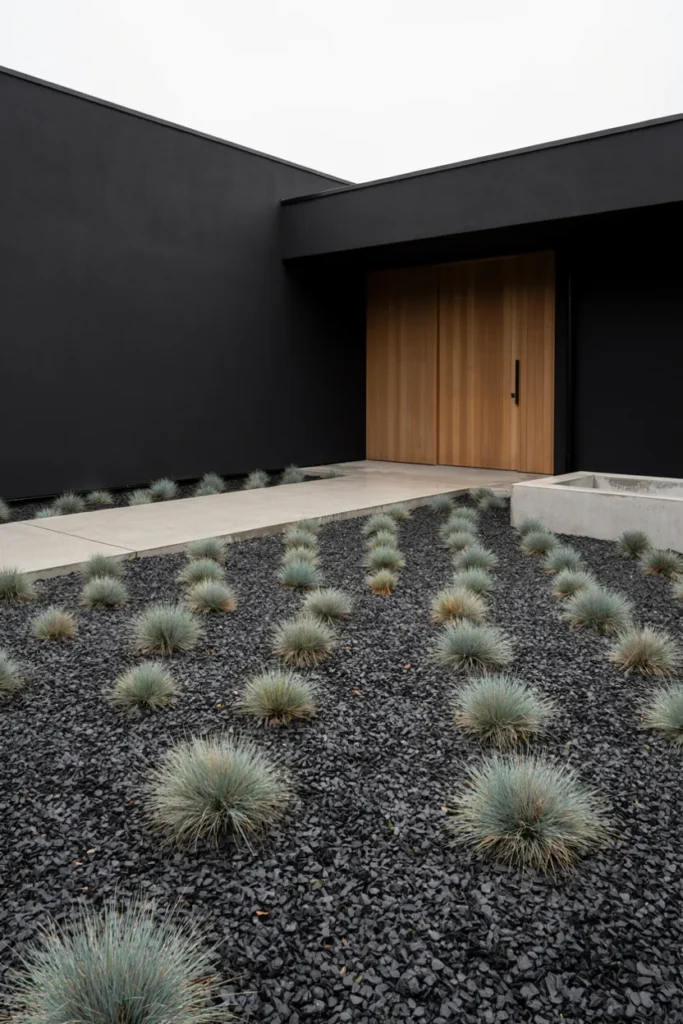
For modern architecture, plant like a modernist: identical blue fescue mounds set in a strict grid across dark gravel, each one a silvery button in formation. The repetition turns plants into pattern, reading more like installed art than gardening. It’s the landscape equivalent of a great tiled wall — disciplined, graphic, and startlingly beautiful in its restraint. Flat, boring side yards are the perfect canvas for it.
Snap a true grid with string before planting; the effect lives or dies on spacing, so measure to the inch — two-foot centers suit fescue’s ten-inch mounds. Lay fabric beneath three inches of uniformly dark gravel for maximum contrast against the blue. Fescue wants sun and sharp drainage, and combs clean with gloved fingers each spring. Replace any mound that dies immediately; one gap in a grid shouts.
12. A Golden Cascade for the Shady Side
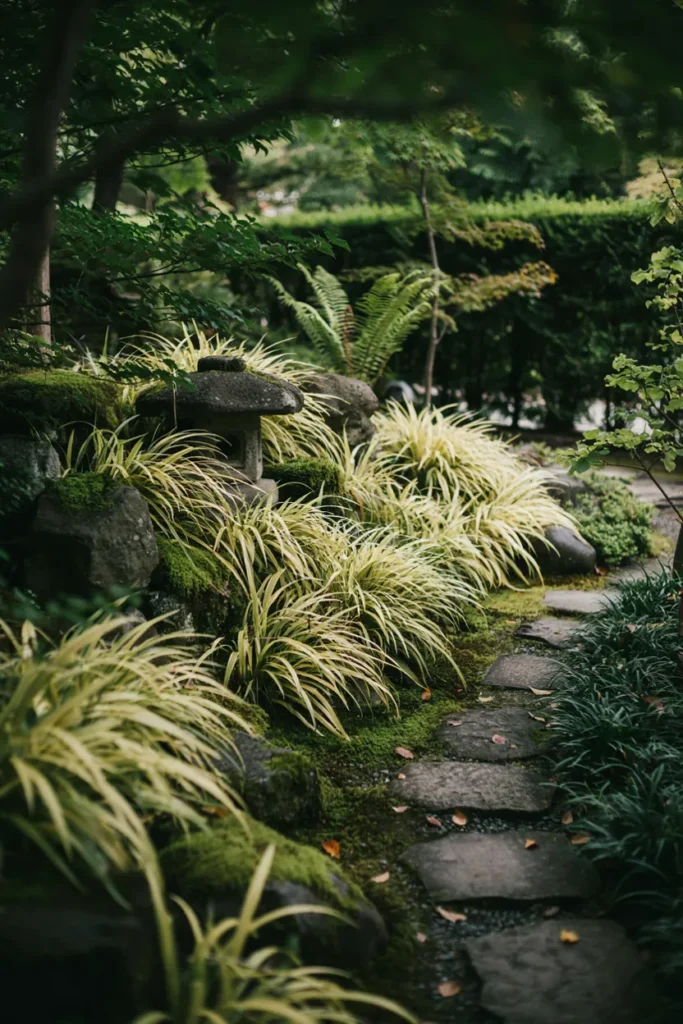
Most grasses worship sun, but the most elegant one prefers shade. Japanese forest grass pours over rocks and bed edges like golden water, every blade flowing the same direction, lighting up dim side yards and north borders where little else performs. Beside dark stone or black mondo grass, its chartreuse cascade is the kind of pairing that makes a narrow pass-through feel like a destination garden.
Plant ‘Aureola’ in part to full shade with steady moisture and rich soil — this is one grass that appreciates compost. Position at bed edges, above low walls, or over boulders where the cascading habit can perform; on flat ground the effect halves. It spreads politely and slowly, never invasively. Pair with ferns, hostas, and hellebores. Growth is unhurried, so buy the largest pots your budget allows.
13. A Rain Garden That Drinks the Downspout
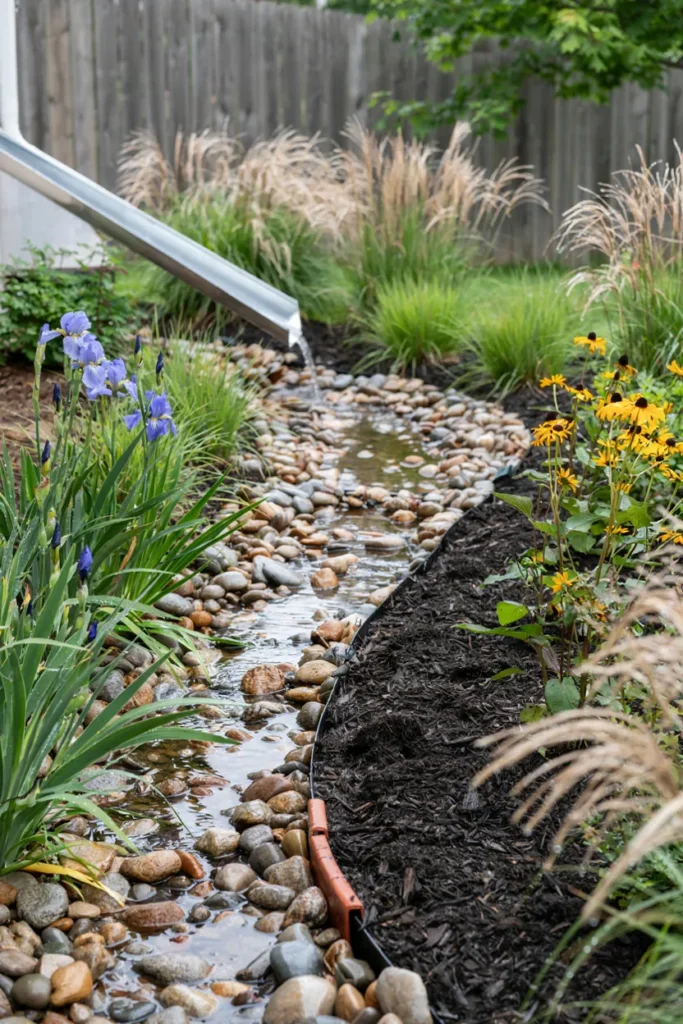
Where the downspout dumps and the lawn stays soggy, stop fighting the water — plant a garden that drinks it. A rain garden is a shallow, planted basin that swallows roof runoff and filters it into the soil, and grasses are its backbone: deep fibrous roots that tolerate both flood and drought. Done well, it looks like a lush planted hollow, not infrastructure, while quietly solving the yard’s wettest problem.
Dig a basin six to eight inches deep about ten feet from the foundation, routing the downspout to it via a stone channel. Plant the wet center with switchgrass, soft rush, and blue flag iris; ring the drier berm with little bluestem and rudbeckia. A gravel forebay where water enters catches debris. Native mixes establish fastest — and many municipalities offer rebates that cover most of the plant bill.
14. Soften the Mailbox and Driveway Corner
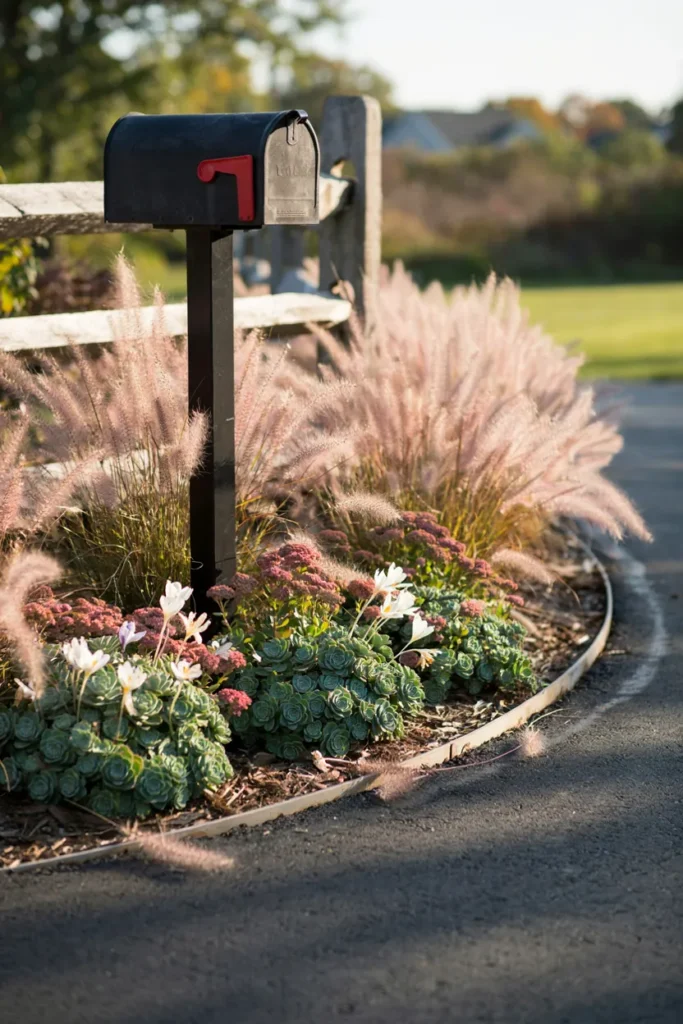
The mailbox corner is the most public square yard you own and usually the most neglected — scalped turf, a leaning post, maybe gravel spray from the plow. A cloud of grasses fixes it in one planting. Pink muhly around a mailbox stops traffic every October, and even simple green fountains soften the transition where driveway meets street. Small spot, outsized first impression: everyone who visits passes it twice.
Choose tough, drought-proof varieties, since nobody drags hoses to the curb: muhly in warm zones, little bluestem or ‘Hameln’ fountain grass in cold ones. Keep mature heights below three feet near driveways for sightlines, and plant eighteen inches back from pavement to survive snowplows and car doors. Underplant with bulbs — the grasses’ late rise politely hides their dying foliage each spring.
Conclusion
Once you start using grasses, it’s hard to design without them. They’re the plants that fill every gap other plants leave: motion in still borders, structure in dead winters, softness against hard architecture, and near-zero maintenance in a world of demanding gardens. From a single dramatic pampas specimen to a whole hillside rippling in unison, these ornamental grasses landscaping ideas scale to any yard, climate, and level of ambition. The common thread is simple — plant them where light can pass through, repeat varieties generously instead of collecting one of everything, and let them stand through winter for the second act most gardens never get. Start with one idea that matches your trickiest spot, whether that’s a soggy downspout or a slope you dread mowing. And before planting season arrives, save your favorites to your Pinterest boards so the vision is waiting when the shovels come out. The wind is about to become your favorite garden feature. Ready to retire turf entirely? These grass-free front yard ideas show how far grasses can carry a whole landscape.