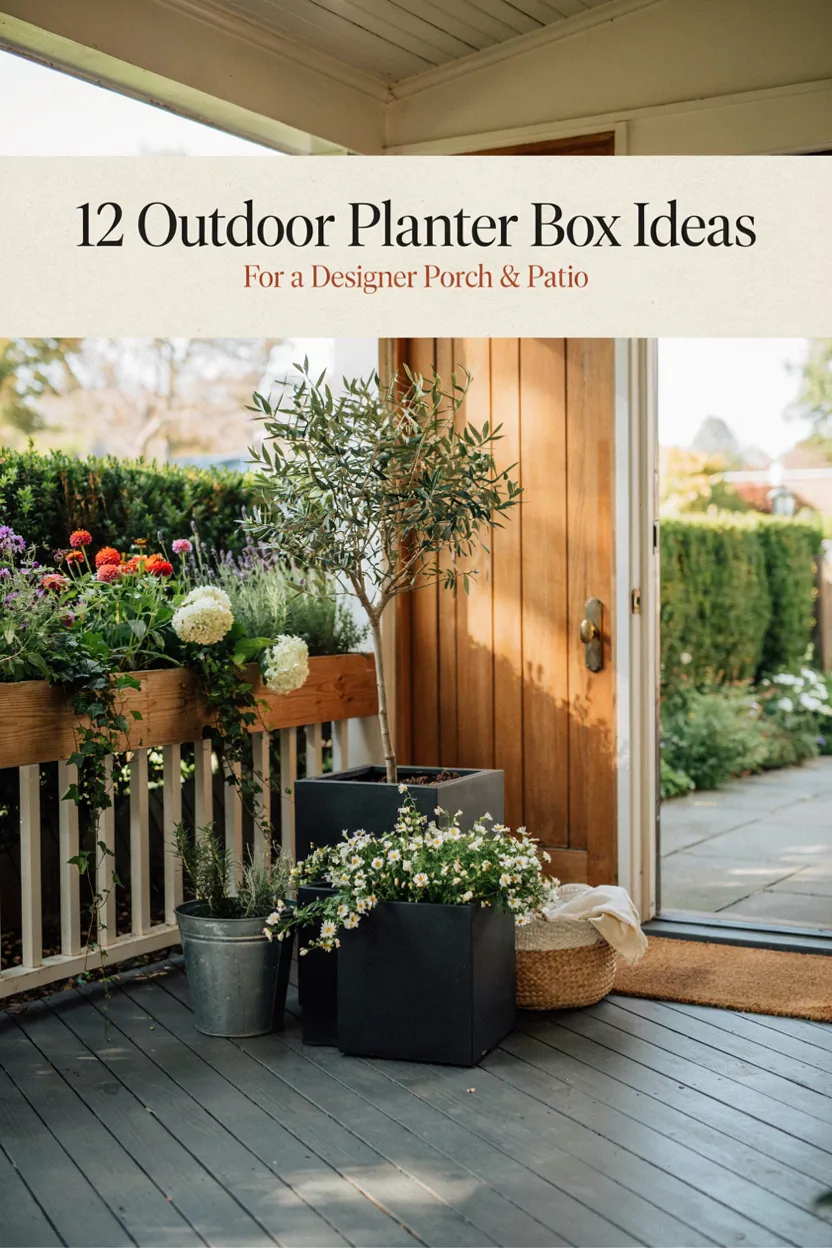
12 Outdoor Planter Box Ideas That Give Your Porch and Patio a Designer Look
Planters are the fastest way to fake a designer’s touch outside. The same porch, the same plants, the same budget — but swap scattered plastic pots for a few well-chosen boxes and suddenly everything reads intentional. That’s because containers do double duty: they’re architecture and garden at once, adding height, rhythm, and structure that in-ground beds can’t deliver next to hard surfaces. These outdoor planter box ideas cover twelve looks that transform porches and patios — sculptural black cubes, cascading rail boxes, rolling gardens for renters, and one clever box that changes wardrobe every season. Each one includes what to plant, what to skip, and the styling details that separate “designer” from “garden center clearance.” Save the ones that match your home’s mood, and start with the spot you pass every single day: the front door. Planters are the first thing I rearrange at every shoot — they are that powerful.
1. A Trio of Matte Black Cubes
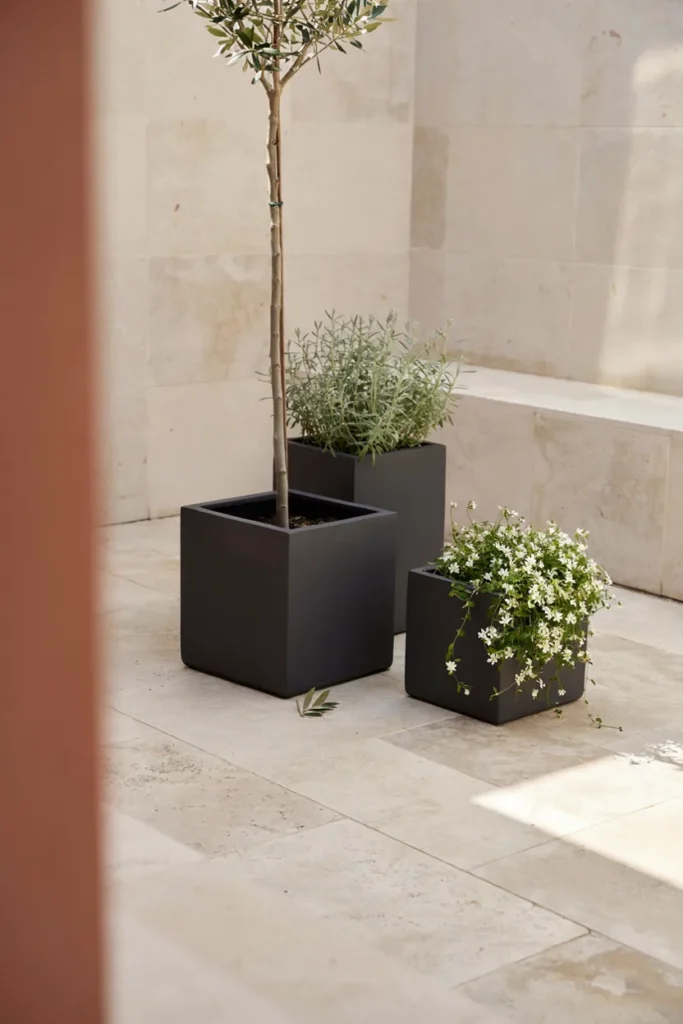
One matte black cube looks like a purchase; three in graduated sizes look like a decision. Clustered off-center on a patio or beside a door, the trio reads sculptural — the planters themselves become the design, and the plants become the finish. Black frames greenery the way a gallery frames art, which is why this combination anchors half the professional patios on Pinterest.
Choose fiberglass or resin cubes in three sizes — roughly knee, shin, and ankle height — and cluster them in a loose triangle rather than a row. Plant one tall element (olive tree, dwarf grass), one mound (artemisia, heuchera), and one spiller (bacopa, ivy). Keep every bloom white or silver for maximum contrast against the black. Pot feet underneath prevent staining and add a floating, custom look.
2. Cedar Rail Boxes That Drip With Color
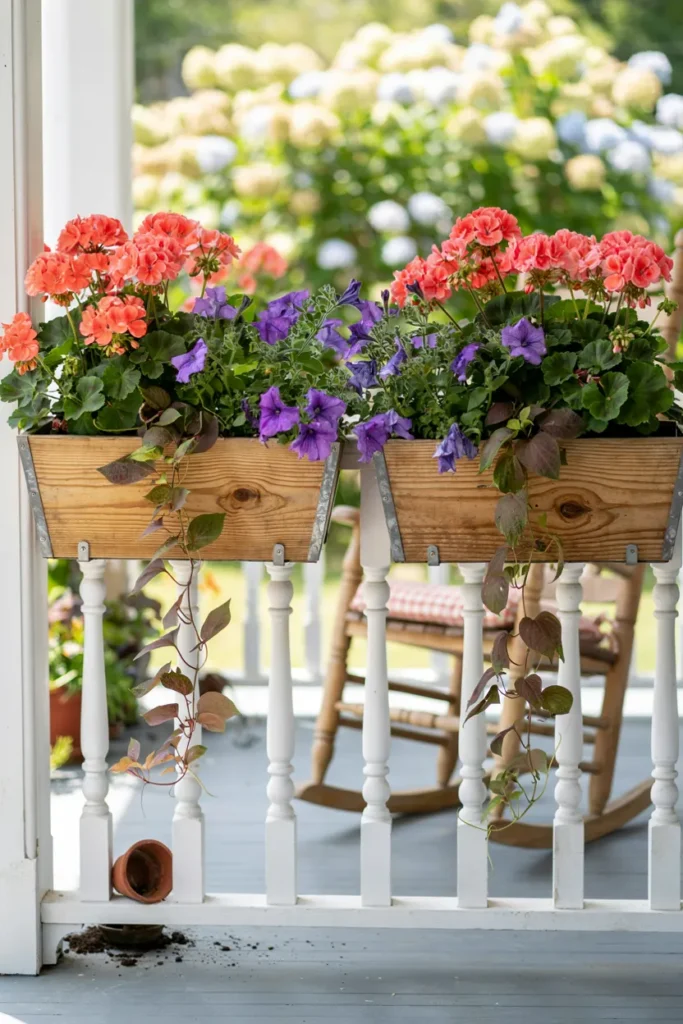
Porch railings are prime real estate that most homes leave empty. Cedar boxes hung along the rail turn that dead line into a waterfall of color visible from the whole street — flowers at hand height, vines spilling toward the floor, and not one inch of walking space sacrificed. It’s the planter idea with the highest curb-appeal payoff, and it makes sitting on the porch feel like sitting inside a garden.
Buy adjustable rail brackets rated for your railing width, and choose boxes with drainage plus a liner to protect the wood. The planting formula is one upright (geranium), one filler (petunia, calibrachoa), one aggressive trailer (sweet potato vine) repeated along each box. Repeat the same combination in every box — repetition, not variety, is what looks professional. Water daily in high summer; rail boxes dry fast.
3. A Galvanized Trough of Kitchen Herbs
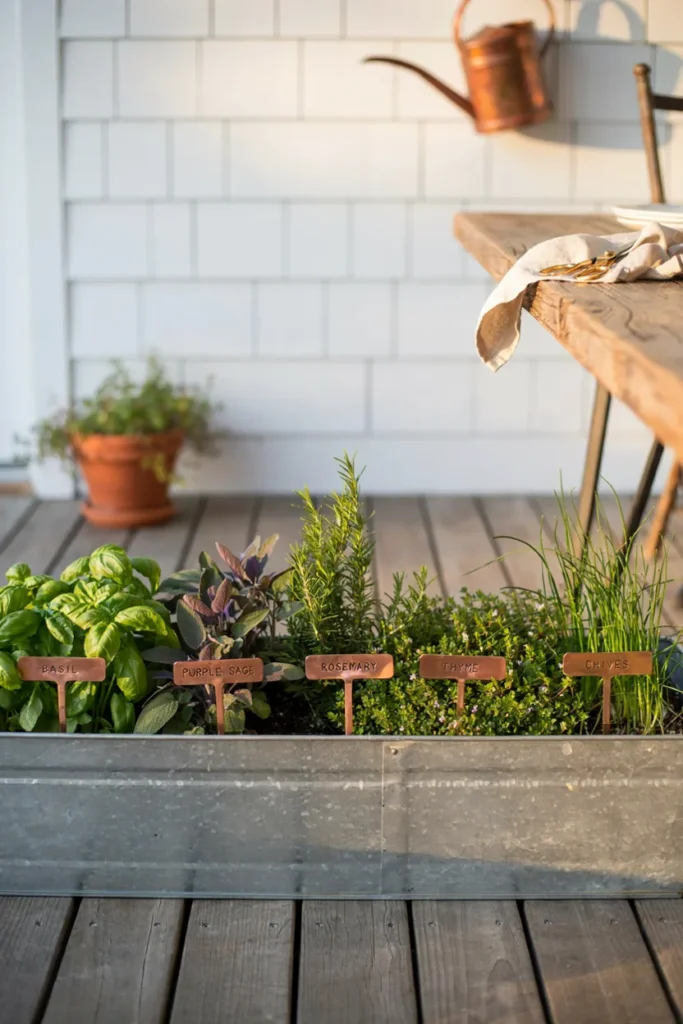
The most charming planter is one you cook from. A galvanized trough parked beside the patio table keeps five or six herbs within arm’s reach of dinner — snip basil while the pasta boils, brush past rosemary on the way in. The silvery metal ages beautifully, the mixed greens look lush all season, and the whole box costs less than three restaurant pizzas while quietly upgrading every meal.
Farm-store stock troughs or purpose-made zinc planters both work; drill drainage holes generously. Plant sun-lovers together — basil, thyme, sage, rosemary, chives — and give mint its own pot unless you enjoy hostile takeovers. Copper or slate markers add the boutique-nursery touch. Position in six hours of sun near the door you actually cook behind, because herbs twenty steps away get used and herbs forty steps away get admired.
4. A Ladder of Planters Up the Wall
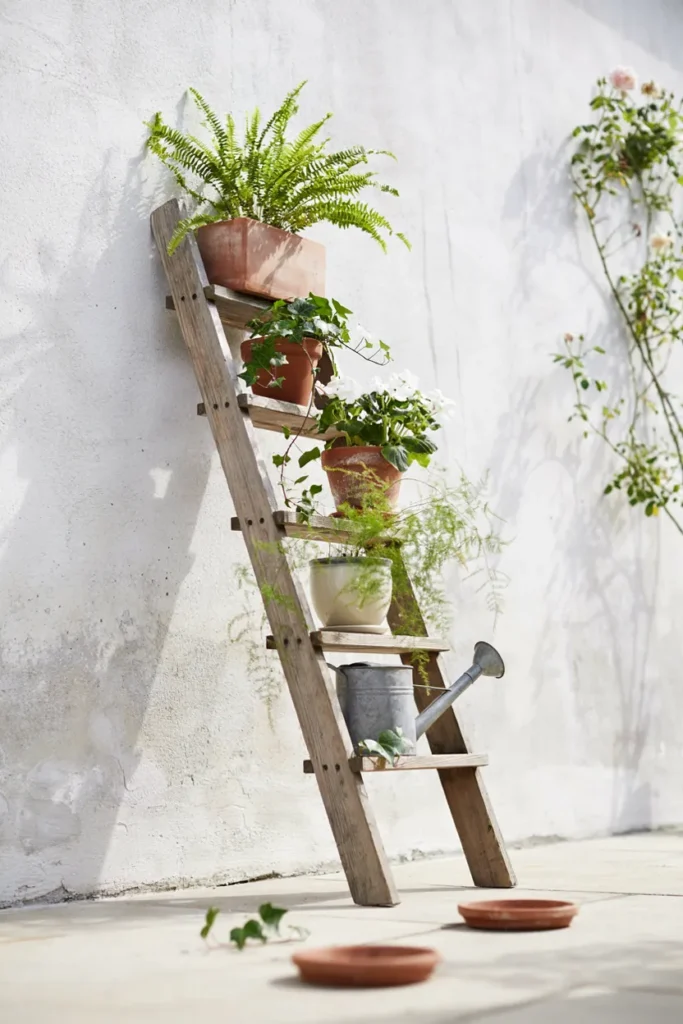
Small patios can’t spare floor space, but walls stand empty everywhere. A ladder-style plant stand stacks five or six planter boxes into two square feet of footprint, building a living tower where greenery cascades level to level. The staggered heights create instant abundance — the “collected over years” look — while everything stays reachable for watering. It’s the small-space cheat that photographs like a conservatory.
Buy an A-frame ladder stand or repurpose a real wooden ladder sealed for outdoors, leaned and anchored against the wall. Weight heavy boxes on lower rungs, light ones up top. Mix leaf shapes rather than flowers: ferns, ivy, asparagus fern, one white impatiens box for glow in shade. Terracotta unifies the collection. Water top-down and let gravity share the drink.
5. The Whiskey Barrel, Done Properly
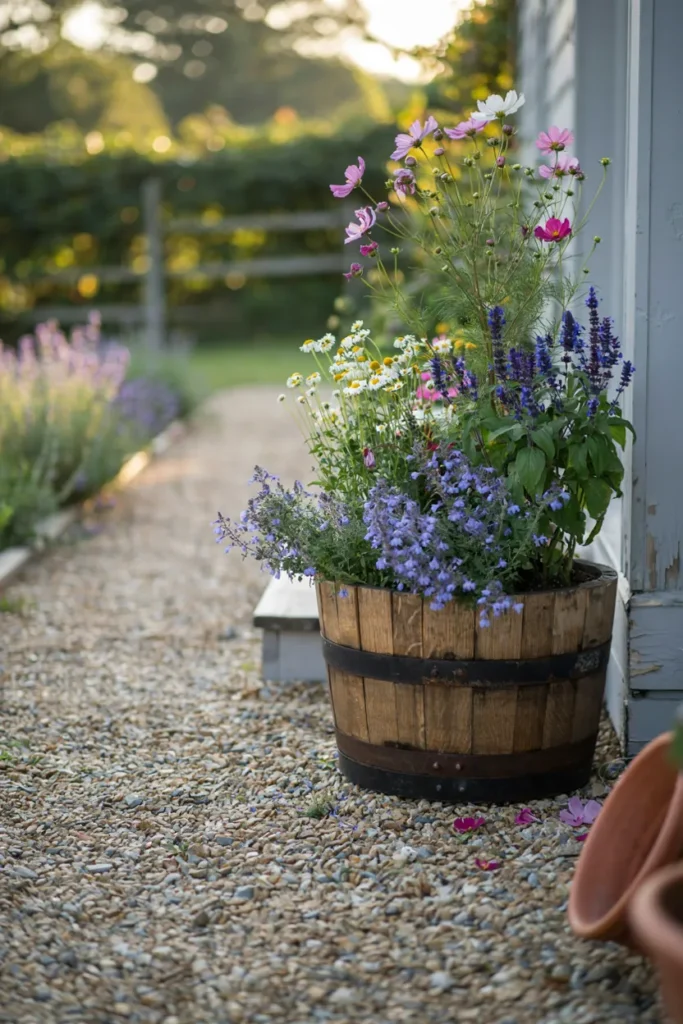
The whiskey barrel earned its cliché status honestly: real oak, real patina, and enough soil volume to grow practically anything. Done lazily — one sad geranium in the center — it looks like a gas station. Packed properly, with a dense cottage mix billowing over the rim, it becomes the most generous-looking planter on the street, softening farmhouse porches and rustic patios like it grew there.
Hunt authentic distillery half-barrels rather than thin replicas; the charred interior and steel bands are the charm. Drill five drainage holes, elevate on hidden bricks, and fill with quality potting mix. Then overplant shamelessly: a tall center (salvia, dahlia), six fillers, four trailers. The rim should disappear under flowers by July. One barrel per corner beats five thin pots scattered everywhere.
6. Fluted Terracotta and a Pair of Olives
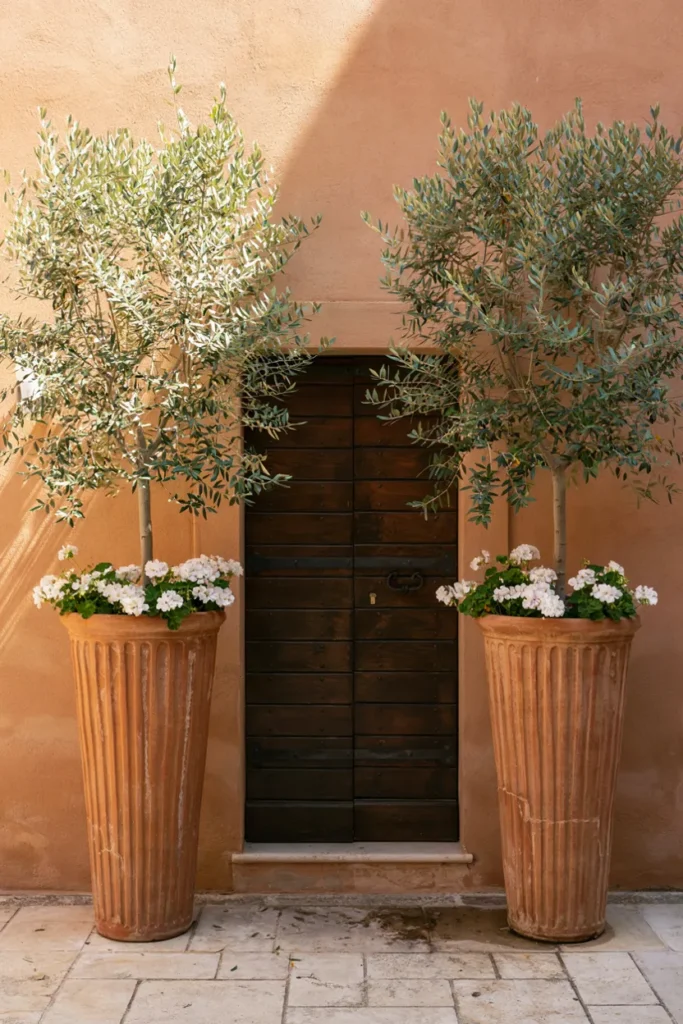
Some pairings never miss: ribbed terracotta, silvery olive leaves, and hard sunlight. Two tall fluted pots flanking a door or patio opening deliver instant Mediterranean courtyard — the vertical ribbing catches shadow all day, giving the planters sculptural presence even before the trees go in. It’s the look of a villa in Puglia, achievable in an afternoon at any garden center.
Scale matters most: pots should reach mid-thigh, and skinny trees need that counterweight. Olives thrive in pots with gritty, fast-draining soil and full sun; in cold zones, wheel them into a garage for winter or substitute hardy junipers pruned airy. Underplant with white geraniums or trailing rosemary. Let the terracotta bloom its white mineral patina — scrubbing it off removes half the charm.
7. A Board-and-Batten Box Painted Like the Door
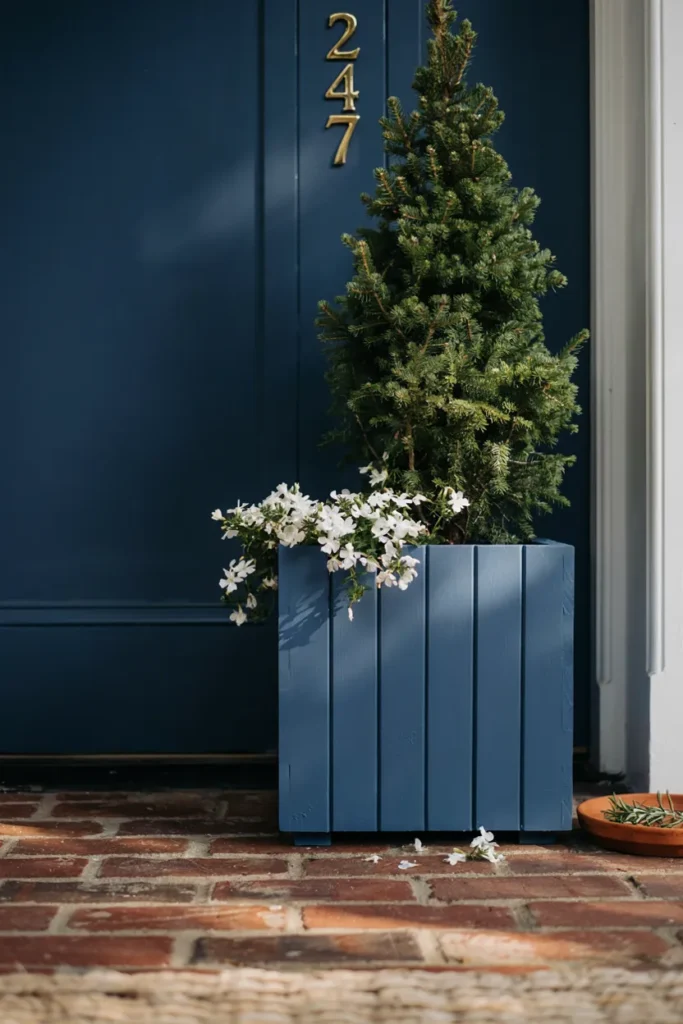
Here’s the designer trick hiding in plain sight: paint the planter the same color as your front door. That one echo ties the entry into a composition — door, box, and plants reading as a single design decision instead of accessories that happened to meet. A simple DIY board-and-batten box elevates the effect further, adding cottage texture you simply can’t buy at big-box stores.
Build a basic plywood box and face it with vertical battens every four inches — an afternoon project with a saw and brad nailer, or a $40 commission for a handy neighbor. Prime and paint in your exact door color (bring the swatch), seal inside with liner or leftover roof paint. Plant one evergreen for year-round structure plus seasonal trailers. Suddenly the whole porch matches on purpose.
8. Woven Basket Planters for Instant Warmth
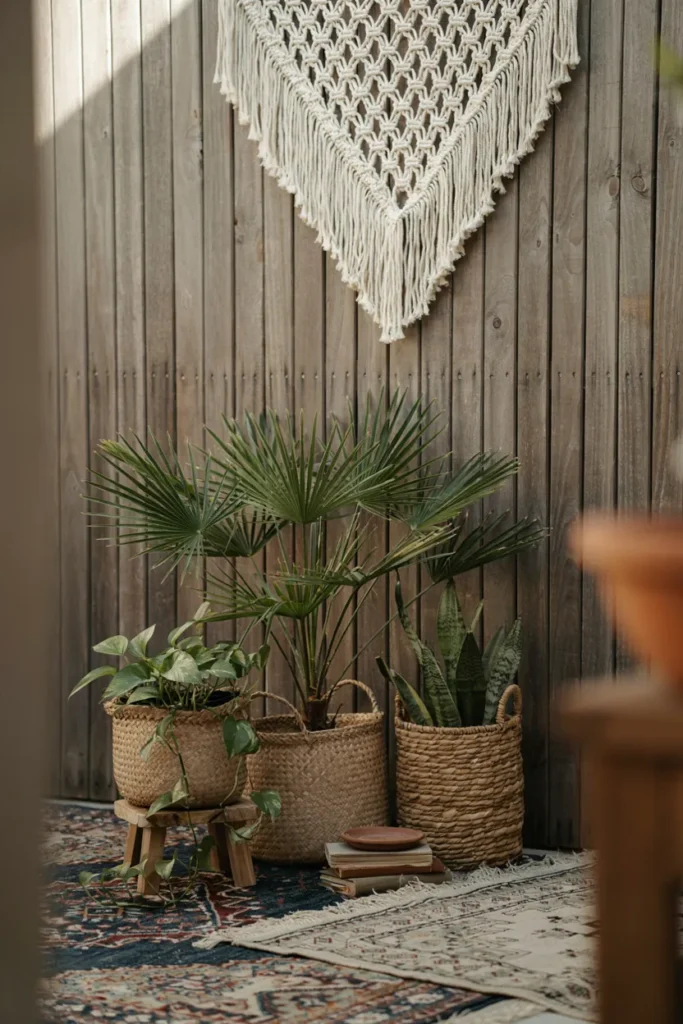
Hard pots keep patios feeling hard. Woven baskets do the opposite — all that texture softens stone and concrete instantly, bringing living-room coziness to outdoor corners. A cluster of seagrass planters with bold foliage turns any dull patio angle into the boho nook people gravitate toward with their coffee. It’s the fastest warmth money can buy outside, and thrift stores are full of the raw material.
The weatherproof secret: baskets are jackets, not pots. Keep plants in plastic nursery pots set inside on a brick or saucer, so watering never touches the weave, and move baskets under cover during long rain. Vary heights — palm high, snake plant middle, pothos trailing. Natural tones mix freely; painted baskets don’t. Under a covered patio, they last for years.
9. Low Concrete Bowls of Living Sculpture
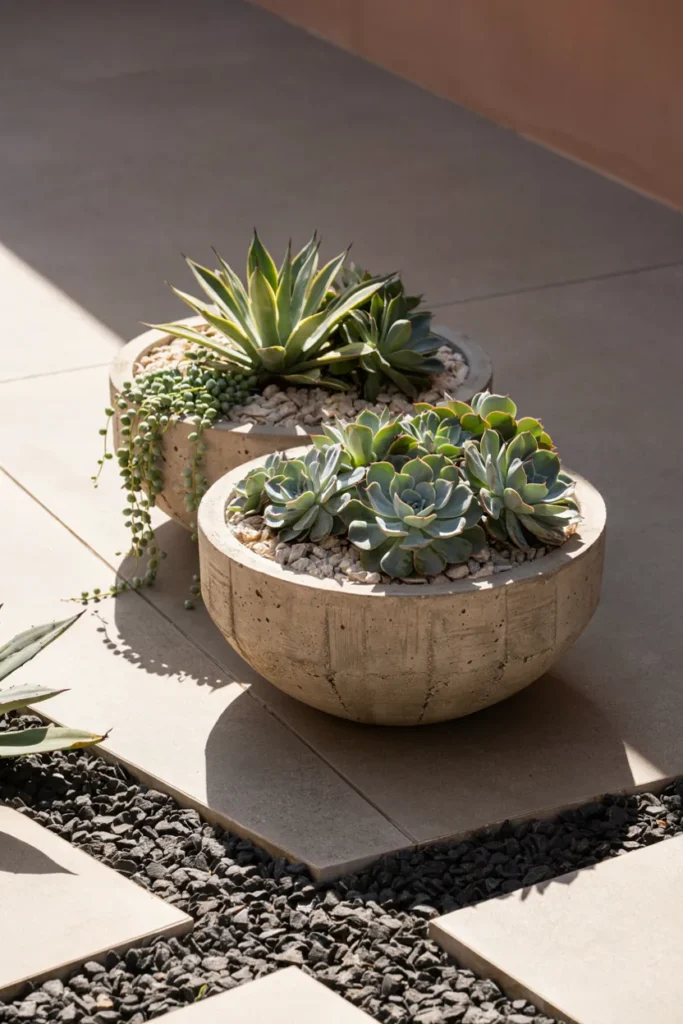
Wide concrete bowls barely a foot tall do something tall planters can’t: they make you look down into a composed world. Planted with geometric succulents in gravel, each bowl becomes a living sculpture — part garden, part art object — perfect beside modern architecture or minimalist seating. The heaviness of raw concrete against delicate rosettes is the whole aesthetic, and it thrives on neglect.
Choose bowls at least twenty inches wide with a drainage hole, filled with cactus mix and topped in fine gravel. Arrange one structural anchor (agave, large echeveria) off-center, then rhythm plants around it, letting string of pearls spill one edge. Pairs look intentional; singles look lonely. Full sun, water every week or two, and bring tender varieties in before frost — or plant hardy sempervivum and skip even that.
10. Rolling Planters That Rearrange With Your Life
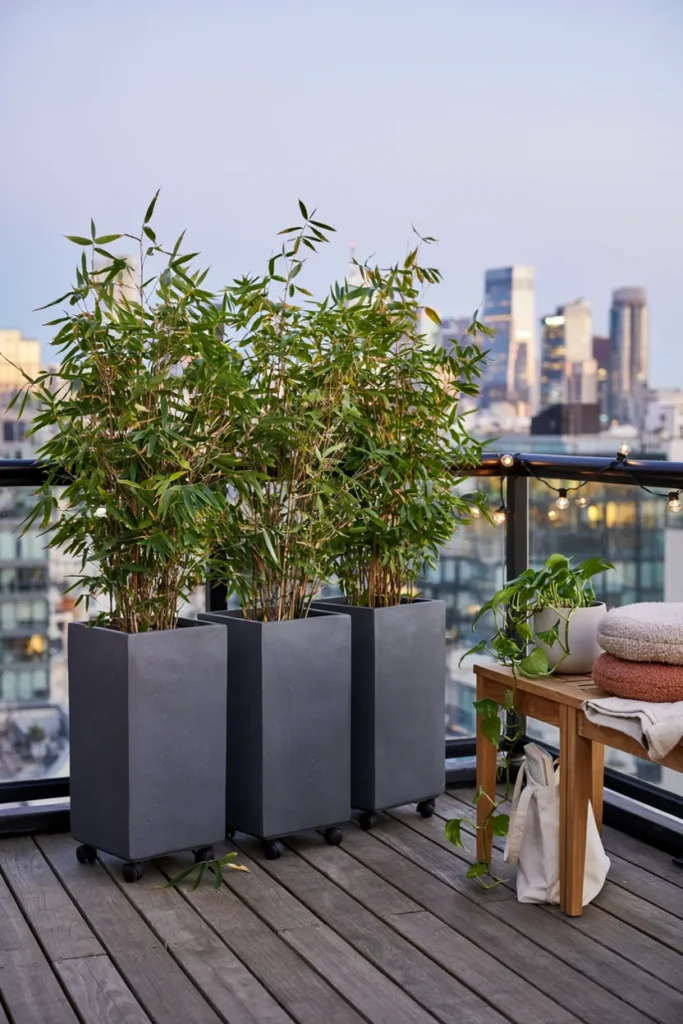
Renters and small-patio owners share a problem: nothing can be permanent. Planters on casters solve it with grace — a rolling hedge of bamboo that screens the neighbors at dinner, slides aside for a party, and moves out entirely when the lease does. Mobile green walls turn one patio into several different rooms depending on the evening, which is more flexibility than most landscaping ever offers.
Buy planters with built-in wheels or add locking casters rated well above soil weight — a large wet planter easily tops a hundred pounds. Clumping bamboo, tall grasses, or arborvitae give the densest screens. Keep boxes matching and rectangular so they align into a clean wall. Lock wheels in wind, and use lightweight potting mix cut with perlite to save your back on rearranging night.
11. The All-Green, All-White Formal Pair
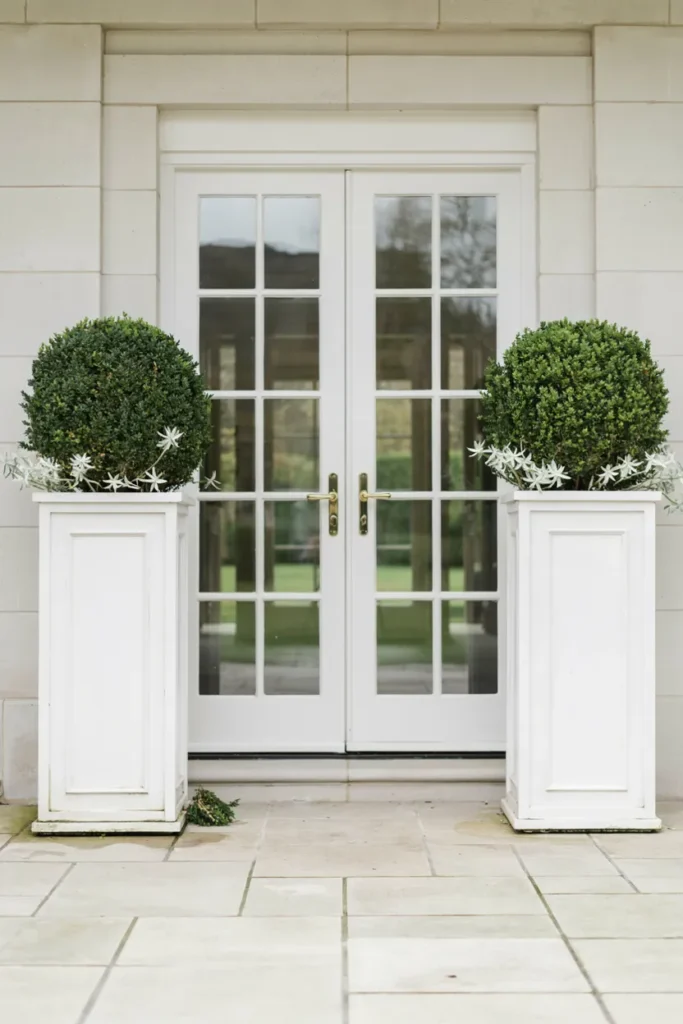
When in doubt, go formal: white paneled planters, clipped green spheres, absolute symmetry. The all-green-and-white recipe has anchored estate entrances for centuries because it never argues with anything — not the house color, not the seasons, not the neighbors’ choices. Flanking patio doors or a garden step, the pair adds instant establishment, like the home has always had someone who knows what they’re doing.
Square planters with simple panel molding read most classic; keep them white or the palest putty. Boxwood spheres are the traditional filling — clip twice a year — with white annuals like euphorbia or alyssum frothing at the base. Perfect symmetry is non-negotiable: same pot, same plant, same trim height. This is also the lowest-maintenance designer look on the list, which the estates never admit.
12. One Great Box, Four Seasonal Wardrobes
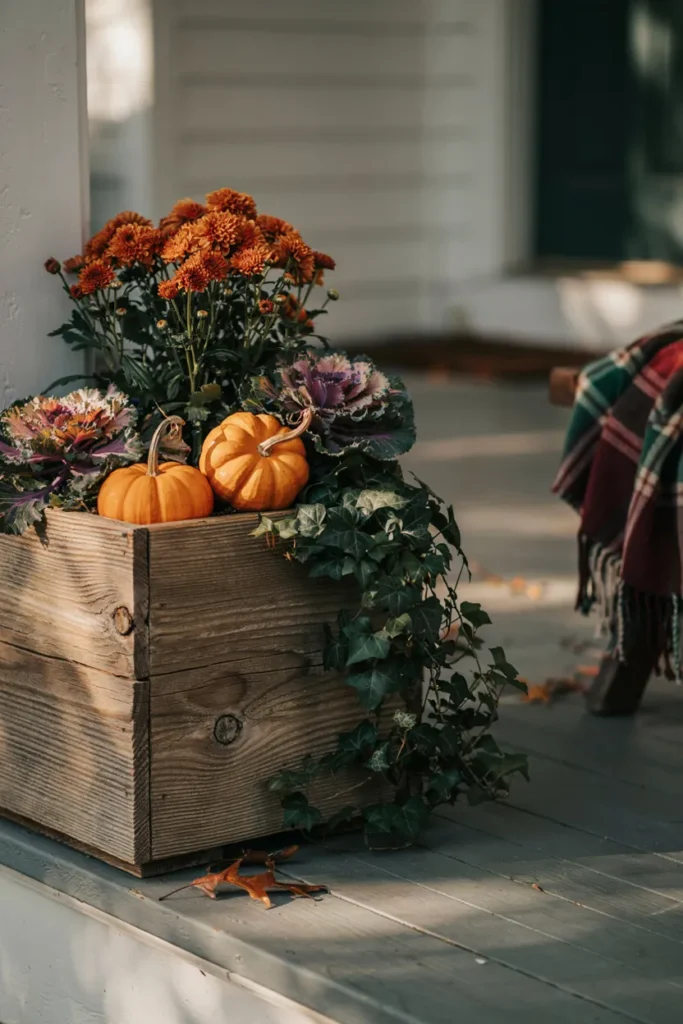
The smartest planter strategy isn’t owning many — it’s owning one great box and restyling it four times a year. Tulips and pansies in spring, geraniums all summer, kale and pumpkins for fall, then cut evergreen boughs and berries through winter. The box becomes your porch’s seasonal announcement, always current, never cluttered, and far cheaper than buying new containers every impulse.
Invest once in a generous, honest material — oak, stone, or quality fiberglass around twenty-four inches wide. Keep a small evergreen anchor planted year-round in one corner so the box never looks empty on changeover week. Each season, swap only the front two-thirds: roughly twenty dollars of six-packs and whatever the garden offers. Photograph each version; by year two you’ll have your own recipe book.
Conclusion
Designer patios rarely come from bigger budgets — they come from fewer, better decisions. One material repeated instead of five competing. Planters scaled tall enough to matter. A color that echoes the front door. That’s really the whole trade secret, and every one of these outdoor planter box ideas applies it in a different style, from formal white pairs to rolling bamboo walls. Start with a single statement — the trio of cubes, the herb trough by the table, the barrel packed properly — and let it prove how much one container can shift the mood of a porch or patio. Add the next box when the season changes. And before you shop, save your favorite looks to your Pinterest boards so the vision comes with you to the garden center, where the clearance rack does its best to talk everyone out of good taste. Your porch has a designer already — it’s you, with better containers. For the garden beyond the pots, our backyard retreat ideas continue the tour.