13 Wood Fence Ideas That Add Privacy and Instant Curb Appeal
A fence is the largest piece of woodwork most homes will ever own — bigger than any deck, more visible than any door — yet it usually gets chosen from three builder options and forgotten. That’s a waste of the property’s biggest design surface. The right fence does two jobs at once: it wraps the yard in privacy you can feel, and it hands the street a first impression that no planting alone can deliver.
1. Horizontal Slats, the Modern Standard
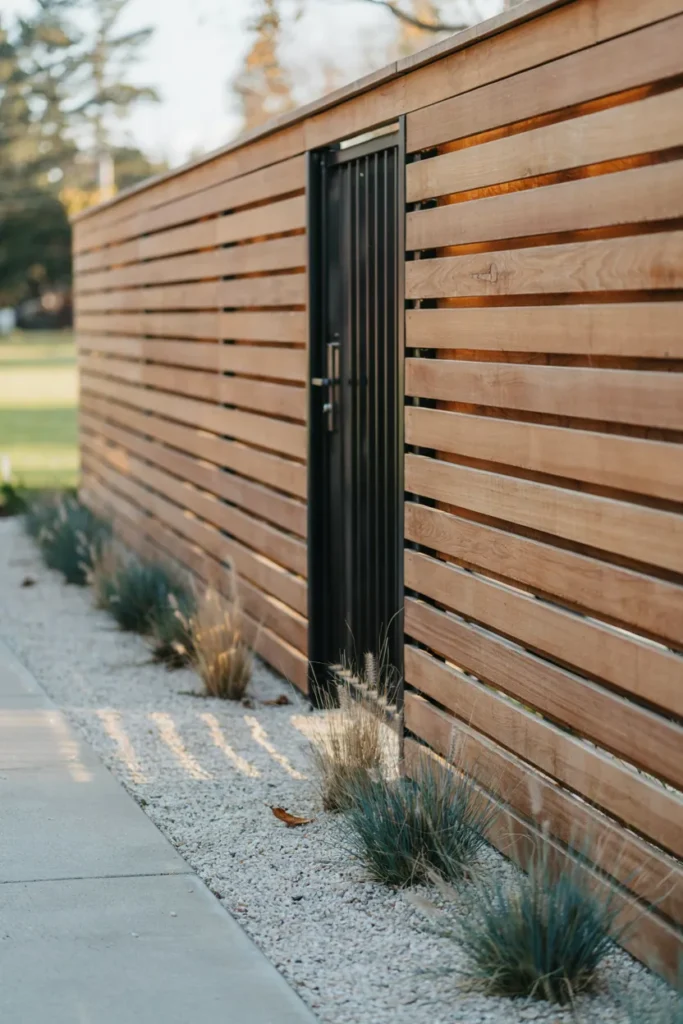
Turning the boards sideways remains the single fastest way to make a fence — and the house behind it — read current. Horizontal lines lengthen the property visually, echo modern architecture’s geometry, and turn ordinary cedar into something that photographs like an design-magazine detail. It’s the fence equivalent of good tailoring: same material as everyone else, completely different silhouette.
Use kiln-dried cedar or thermally modified boards to minimize the sagging horizontal runs are prone to, with posts every six feet instead of eight. Keep gaps tight and consistent — half-inch reads designed, random reads rushed. A gravel strip with grasses at the base finishes it like architecture. Stain matters more here than any style: horizontal boards showcase every finish choice, good and bad.
2. Board-on-Board for True Privacy
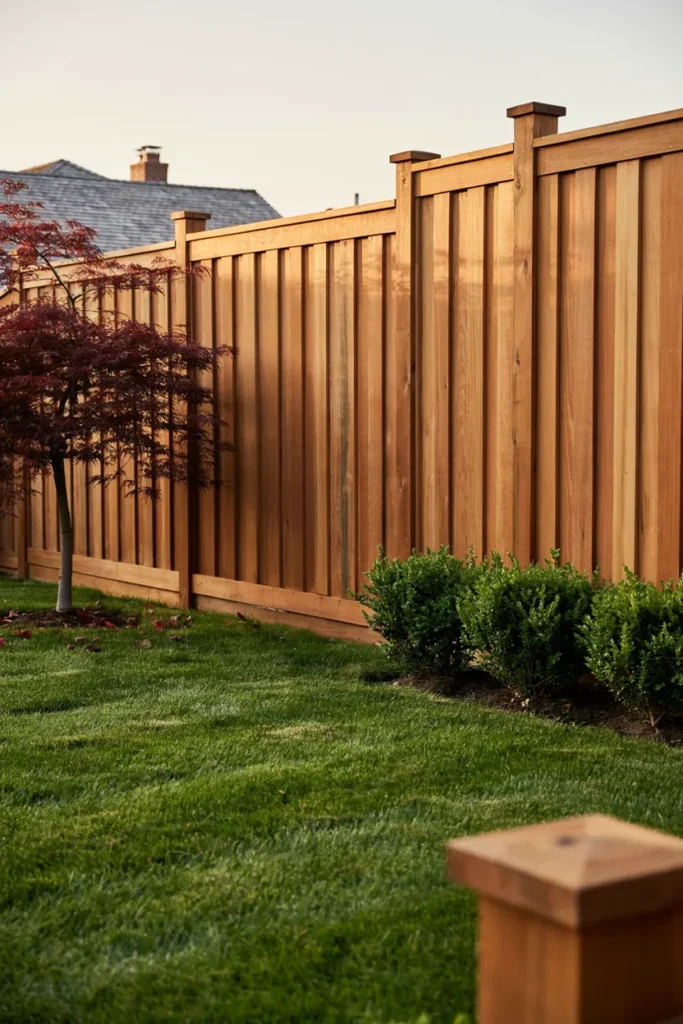
Standard privacy fences have a dirty secret: boards shrink, gaps open, and by year three the neighbors are back in view. Board-on-board construction overlaps every board with the next, so no gap ever appears no matter how the wood moves. The overlap also creates depth — subtle shadow lines running the fence’s length — which is why it reads noticeably more expensive than flat stockade despite modest extra cost.
Boards overlap roughly an inch on each side, adding about a third more lumber than flat construction — the entire premium, and worth it. Both sides look finished, ending the classic who-gets-the-good-side dispute. Cap the top with a horizontal rail to shed water and sharpen the line. Six feet tall is the privacy standard; check local limits before dreaming taller.
3. The Black Fence That Makes Gardens Glow
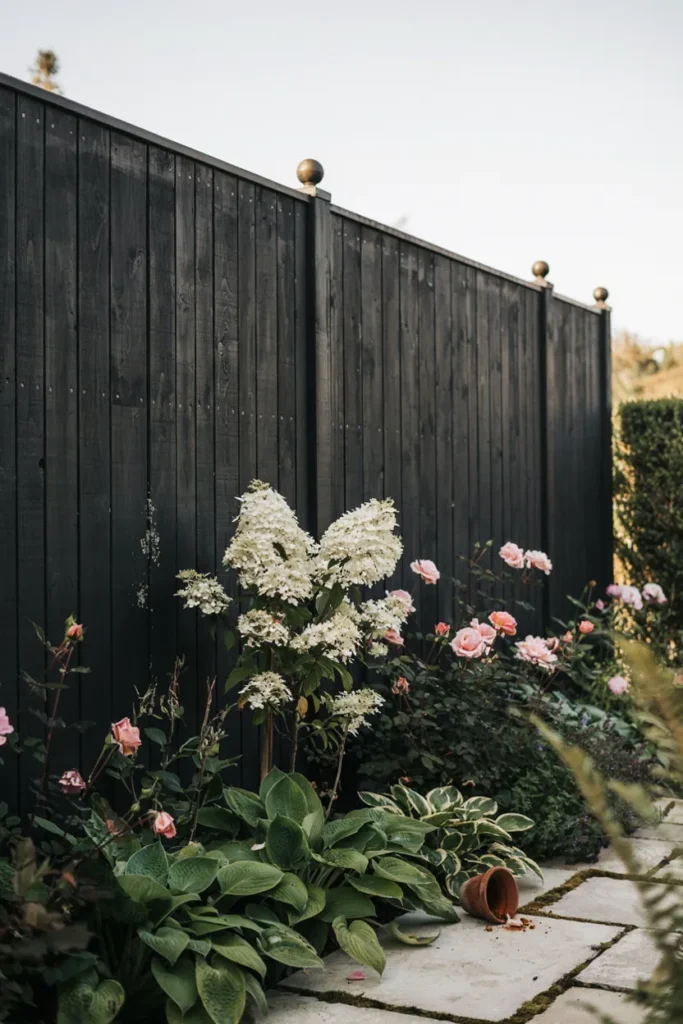
Painting a fence black sounds like losing it — until you see what it does to everything in front. Dark boards recede like a gallery wall, making foliage look greener, blooms brighter, and the yard visibly deeper. Scandinavians and English garden designers have used the trick for generations: the fence stops being an object and becomes the backdrop that makes the garden the exhibit.
Choose a matte or low-sheen exterior stain in soft black rather than glossy paint; stain shows grain and ages gracefully. Solid-color stains outlast semi-transparent on this look. Plant generously in front — the fence is now scenery, and bare black reads stark. White and pale blooms deliver the highest contrast. Bonus: black hides weathering and mildew far better than any natural tone.
4. Cedar Boards on Steel Posts
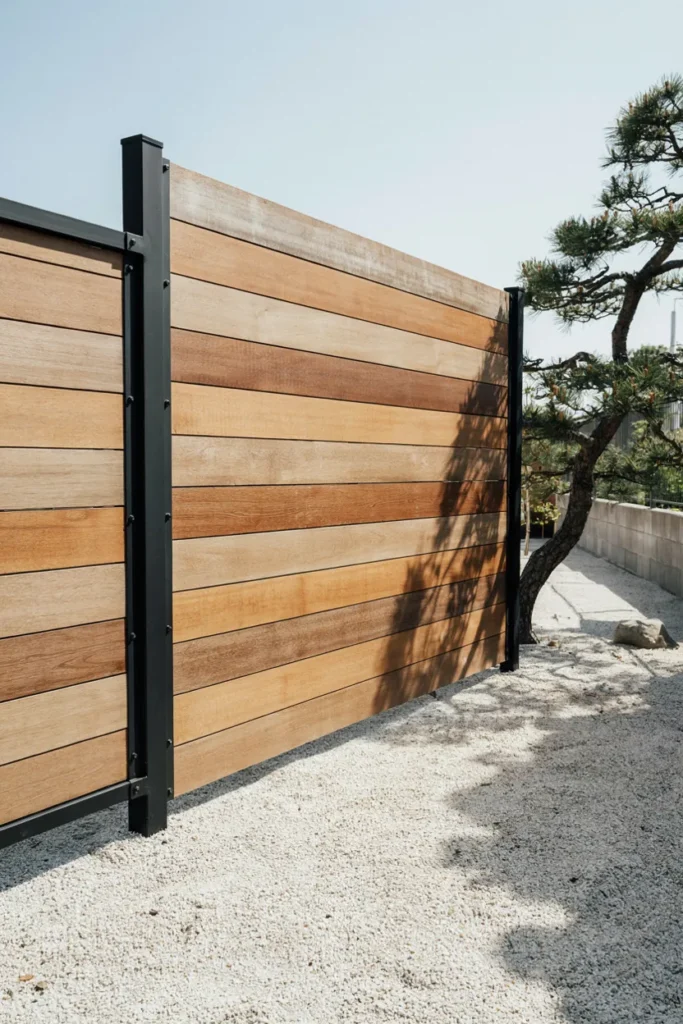
Wood fences fail at the posts — rot works from the ground up while everything above still looks fine. Steel posts solve the engineering and, left exposed as black verticals between cedar panels, they upgrade the design too: warm wood framed in dark metal, the exact material pairing driving modern architecture. The fence gains decades of life and a custom fabricated look in one decision.
Galvanized steel posts with wood-mount brackets set in concrete outlive the boards themselves — expect to reboard once before ever reposting. Powder-coated black reads most intentional; keep brackets consistent and visible rather than hidden, since honesty is the aesthetic. The hybrid costs more upfront and wins the twenty-year math easily. Pair with horizontal boards to complete the modern brief.
5. Louvered Panels That Breathe
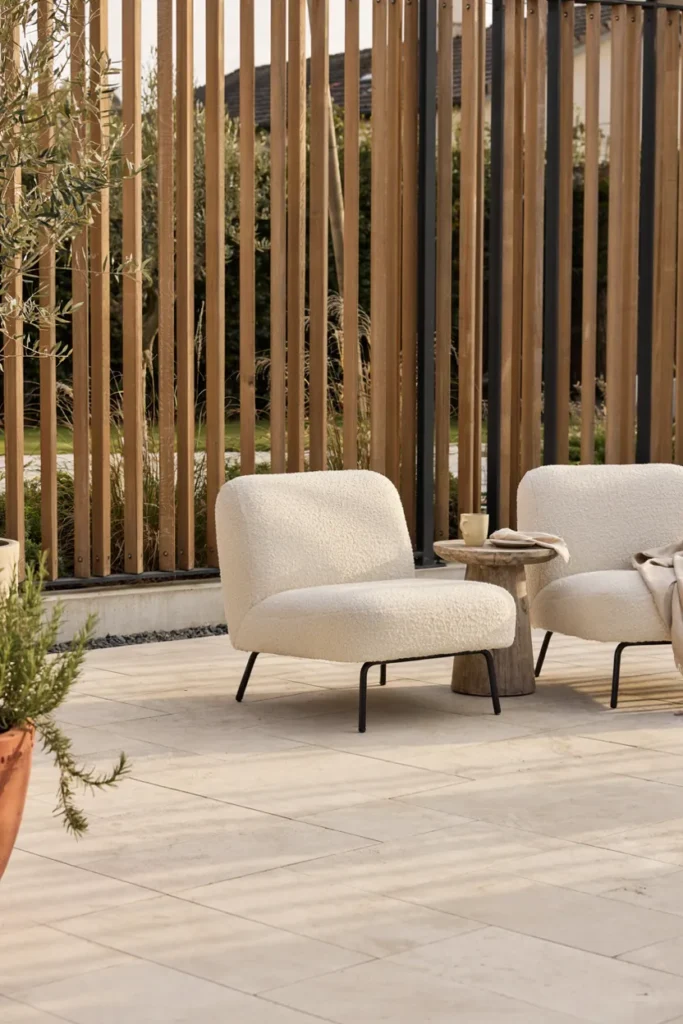
Full privacy fences buy seclusion at a price: dead air, hard shadows, and a walled-in feeling on small lots. Louvered fences — boards angled like open blinds — block sightlines from the street while letting breeze and light keep moving. Stand at the neighbor’s angle and it’s solid; sit on your patio and the fence breathes. It’s the most sophisticated privacy trick carpentry offers.
Fins angle at roughly forty-five degrees toward the view you’re blocking — mock up one section and walk the sightlines before committing the run. Prefab louvered panels in steel frames save serious labor over site-built. Use it strategically: louvers on the patio-facing stretch, solid board elsewhere, since the style costs more per foot. The striped afternoon light through the fins is a free daily feature.
6. The Chunky Modern Picket
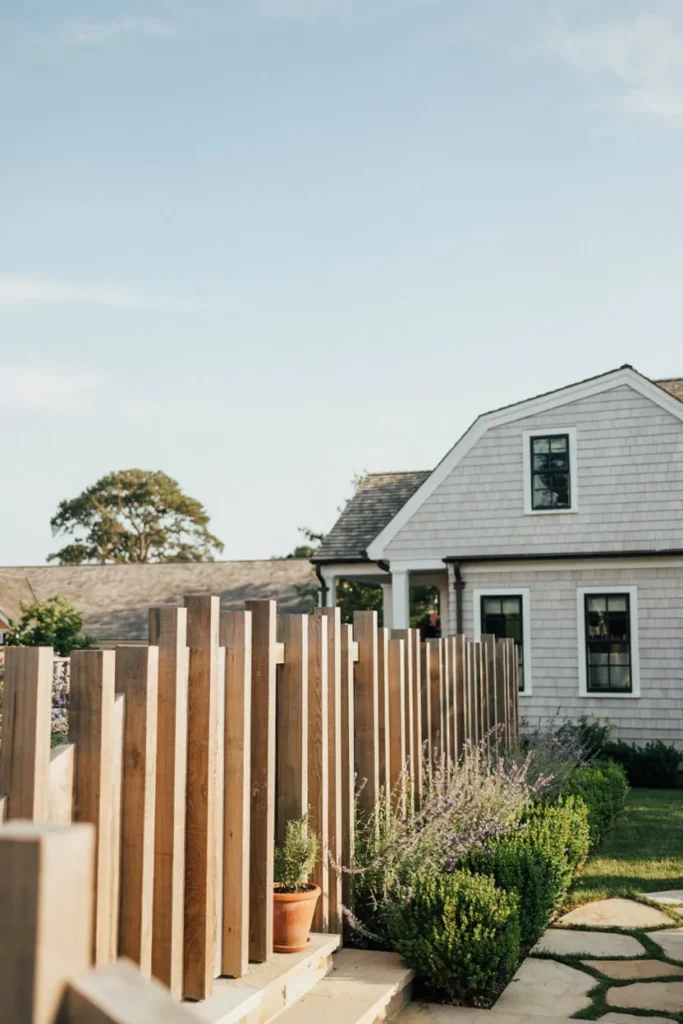
The picket fence didn’t age badly — it just got skinny and pointy somewhere along the way. Rebuilt with wide, flat-topped boards at generous spacing, the picket reads instantly fresh: same friendly hip-height welcome, none of the dollhouse fuss. For front yards where a privacy wall would be hostile and nothing would be bare, the modern picket is the diplomatic answer.
Use boards at least three and a half inches wide, square-cut tops, spaced their own width apart — the chunkiness is the update. Natural cedar and soft black both outperform white for modern reads, though white stays the cottage classic. Keep height at three to three-and-a-half feet. Align the gate flush in the same pattern, hinges hidden, and the whole run reads architect-drawn.
7. The Living Fence Hybrid
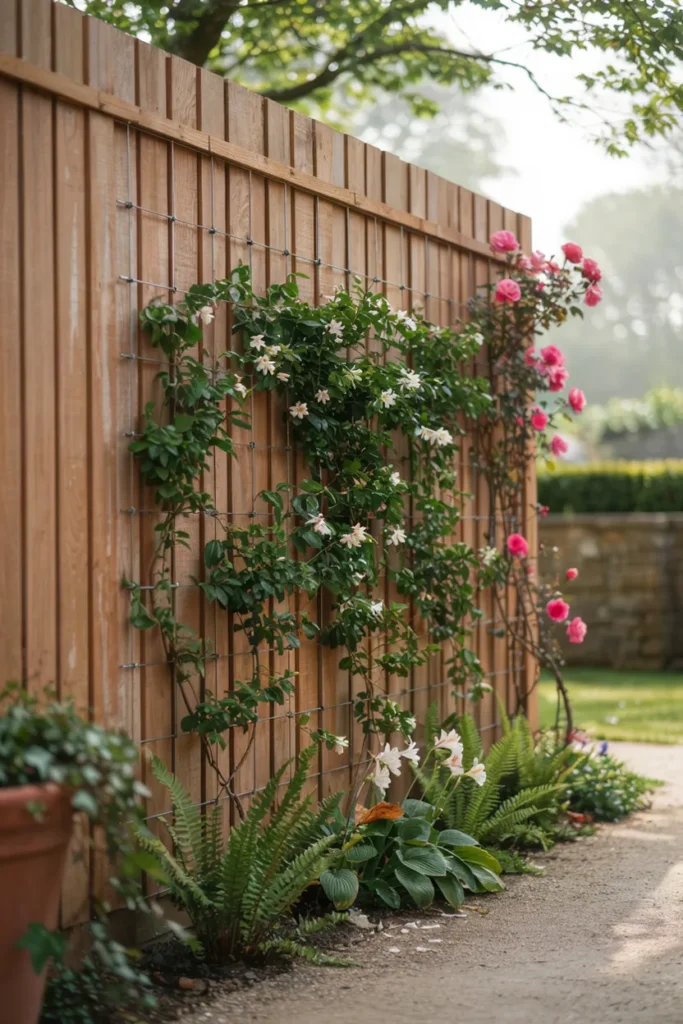
The best-looking fence in any neighborhood is usually half plant. Mounting cable or wire trellis on a solid fence invites climbers to do the decorating — jasmine spilling white and fragrant, roses claiming a post, evergreen clematis softening the whole run. The wood provides instant privacy; the plants provide the years-later magic. Together they age in the right direction, which almost nothing else on a house does.
Run stainless cables or wire grid on standoffs a few inches off the boards so vines never trap moisture against wood. Choose behaved climbers — star jasmine, clematis, climbing roses — and skip ivy, which eats fences whole. Plant at every second post and train weekly the first season. Stain the fence before planting; you won’t get honest access again for a decade.
8. Lattice on Top, Light in the Yard
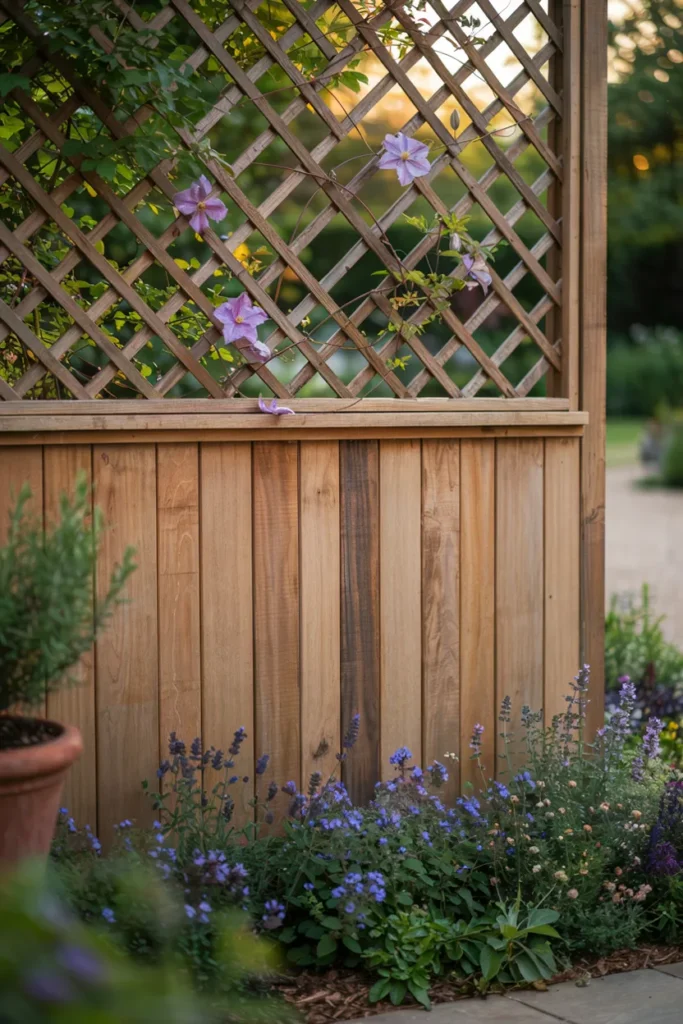
A solid six-foot wall of boards can loom; the same fence with its top foot swapped for lattice suddenly has manners. The open crisscross keeps functional privacy at eye level while letting sky show above, lightening the whole yard and giving climbing plants a ladder they’ll actually use. It’s the detail that separates fences that enclose from fences that decorate.
The classic ratio is five feet solid plus one foot lattice, framed with a rail between so the transition reads deliberate. Square lattice looks more current than diagonal; keep openings around two to three inches. Match stain across both sections. Clematis and jasmine adopt lattice within a season. Many codes also count lattice differently on height limits — sometimes the extra foot is only legal this way.
9. Stepped Heights That Follow the Yard
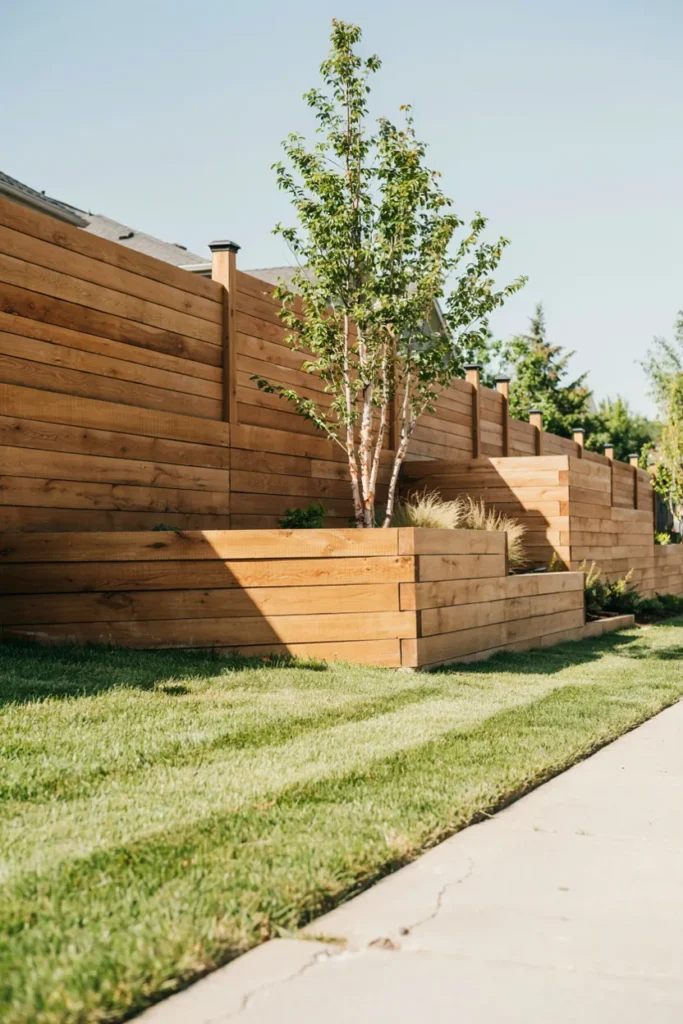
Running one fence height from backyard to sidewalk pleases nobody: too low for privacy in back, too fortress-like out front. Stepping the fence — six feet where you lounge, four along the side, three toward the street — matches enclosure to actual need, keeps the front open and neighborly, and usually satisfies the code that caps front-yard fences anyway. The transitions themselves read as design.
Step at posts, never mid-panel, dropping in even increments with a matching cap rail carrying across every level. Keep material, gap, and stain identical through all heights so the fence reads as one composition. Plant the height transitions — a shrub or small tree at each step softens the drop. This is also the diplomatic fence: neighbors see openness, you keep the private core.
10. Built-In Planter Boxes Along the Base
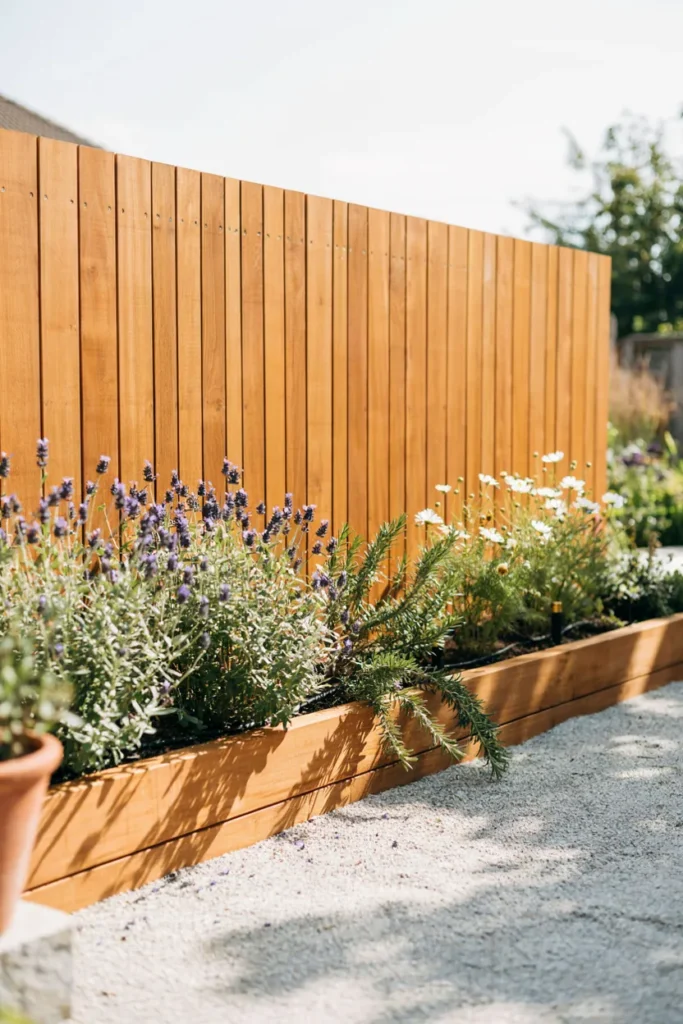
A fence with planters built into its base stops being a boundary and becomes a garden feature. The matching wood boxes ground the vertical boards, put flowers and herbs at knee height along the whole run, and erase that awkward bare strip where fence meets dirt that grass never grows in anyway. One structure, two jobs, and the yard’s edge becomes its best-planted zone.
Frame boxes into the fence posts during construction, or bolt matched cedar planters to an existing run. Line with fabric, ensure drainage away from the fence boards, and slip a drip line along the row before filling. Plant repetitively — lavender or rosemary the whole length beats a botanical zoo. Cap box edges wide enough to rest a watering can, or a wine glass at golden hour.
11. Charred Black: The Shou Sugi Ban Showpiece
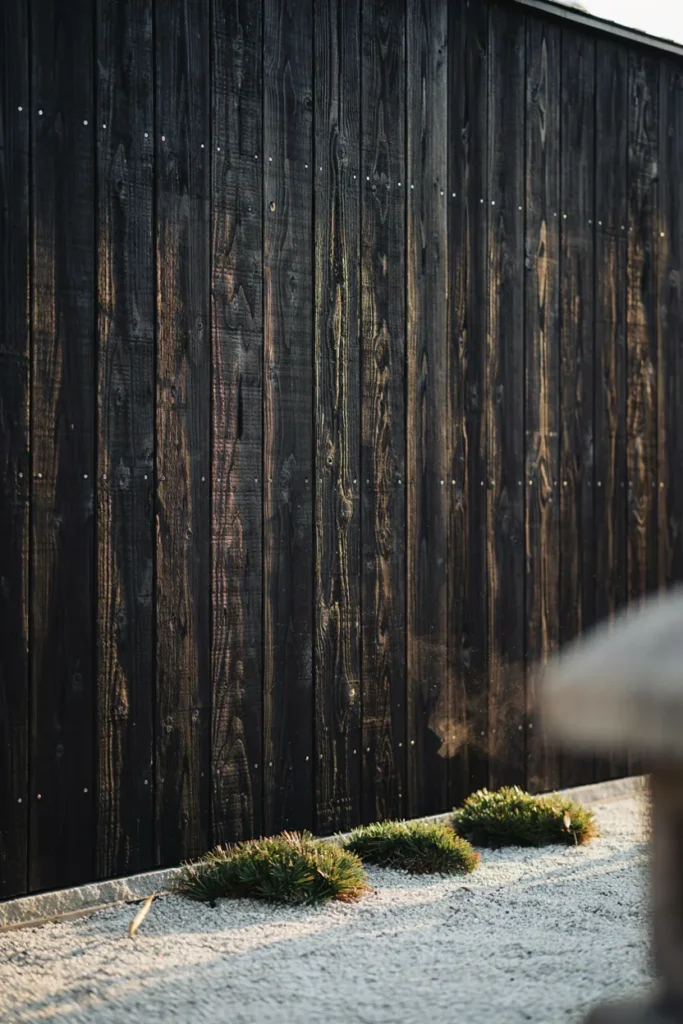
Shou sugi ban — the Japanese craft of preserving wood by charring it — produces the most dramatic fence surface that exists: deep black boards with a crackled, faintly silver texture that shifts as light moves. The burn isn’t just beauty; carbonizing the surface makes wood remarkably resistant to rot, insects, and UV. Centuries-old Japanese buildings wear the proof.
Buy pre-charred, sealed boards from specialty suppliers rather than DIY-torching a whole fence — consistency and safety both argue for it. The deep-char alligator texture is the showpiece grade; brushed char reads subtler. Pair with white gravel and sculptural evergreens for the full Japanese-modern read. Costs run premium, so many use it on the one fence section guests actually see.
12. Slatted Screens for Zoned Privacy
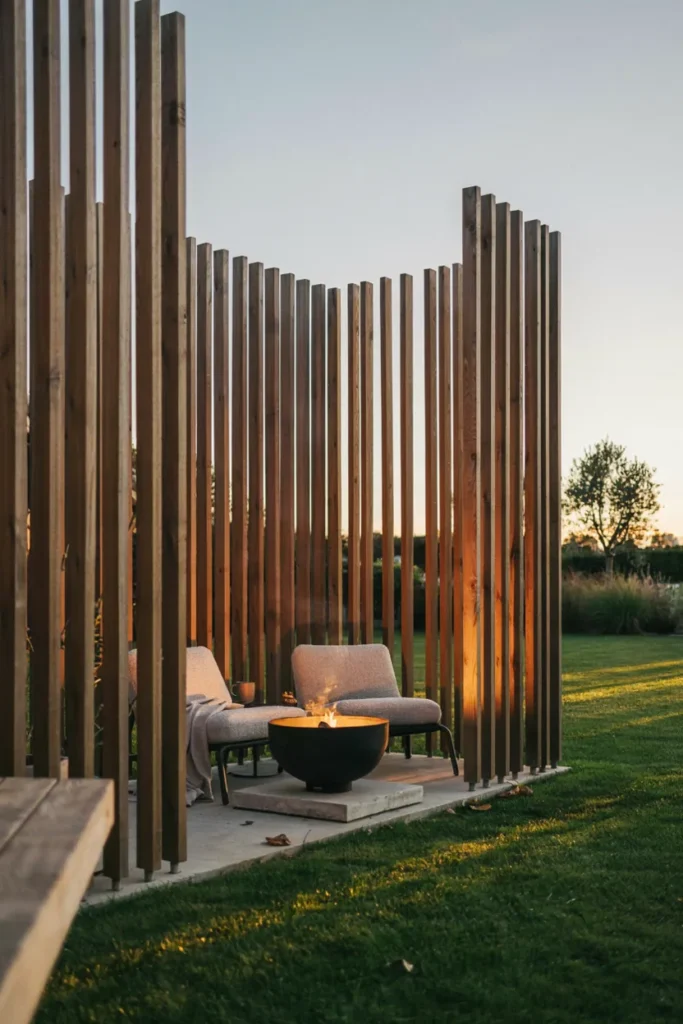
Sometimes the yard doesn’t need a perimeter — it needs a pocket. Freestanding slatted screens carve a private seating corner out of open lawn without fencing anything in: three panels, wide gaps, just enough interruption to make the space behind feel held. The see-through layering adds depth the way sheer curtains do indoors, and the project needs a weekend, not a contractor.
Build or buy panels around five feet tall with slats gapped one to two inches — solid screens read as barricade, slatted as design. Anchor posts in concrete or heavy surface mounts against wind. Three panels in an L or shallow U define a corner best. Because they’re structures, most codes treat screens leniently, making them the renter-friendliest privacy on this list.
13. Make the Gate the Main Event
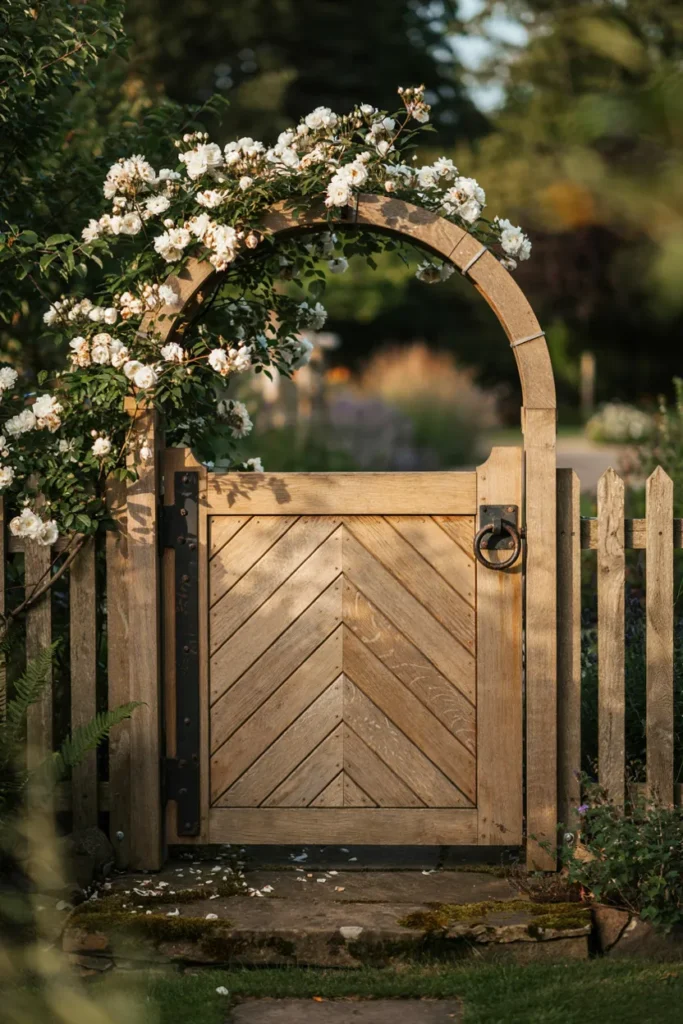
People forget fences and remember gates. Spending the design budget on one exceptional gate — an arch, a herringbone pattern, real iron strap hinges — buys more curb appeal than upgrading every board on the property. The gate is where hands touch and guests pause; it’s the fence’s handshake, and a beautiful one recasts the plainest run of boards as deliberate restraint.
Keep the fence simple and pour craft into the opening: herringbone or chevron infill, an arched or bell-curve top, hardware with genuine weight. Iron ring latches and strap hinges cost little and read heirloom. Frame the gate with climbers or a small arbor, light it softly, and let the step beneath be stone. One rule: a great gate must swing perfectly — sag kills the magic.
Conclusion
A fence spends decades being the first and last thing anyone sees of a home — it deserves more thought than the standard three estimates and a shrug. The through-line in all of these wood fence ideas is that privacy and beauty were never actually competing: boards can breathe and still block, black stain hides the fence while flattering the garden, a gate can be armor and invitation at once. Choose the style that matches your architecture first and your maintenance appetite second, spend where hands and eyes land — caps, hardware, the entry — and let steel posts do the invisible heavy lifting underneath. Save your favorite designs to your Pinterest boards before fence season fills every contractor’s calendar, and bring the pictures to the estimate; builders quote better against a clear vision. Then enjoy the strange pride of property lines done beautifully. Good fences make good neighbors, but great ones make the whole street better. For everything inside the new property line, start with these front yard design ideas.