13 Mobile Home Curb Appeal Ideas That Make Your Home Look Instantly More Expensive
Here’s a secret real-estate stagers know well: most homes don’t need a renovation to look more expensive — they need a sharper first impression. That’s doubly true for manufactured homes, where a few smart exterior choices can completely change how the whole property reads from the street. The best mobile home curb appeal ideas aren’t about hiding what your home is; they’re about presenting it with the same care as any custom house. Crisp paint lines, grounded landscaping, good lighting, and a considered entry do most of the heavy lifting, and almost all of it fits a weekend-project budget. Below are thirteen upgrades ranked by impact, from ten-dollar fixes to one-weekend transformations. Mix two or three together and neighbors will swear you did something major. Save the ones that fit your home, and start at the curb — literally. I have watched a single weekend of these upgrades change how owners talk about their own homes.
1. A Front Door in a Color Nobody Expects
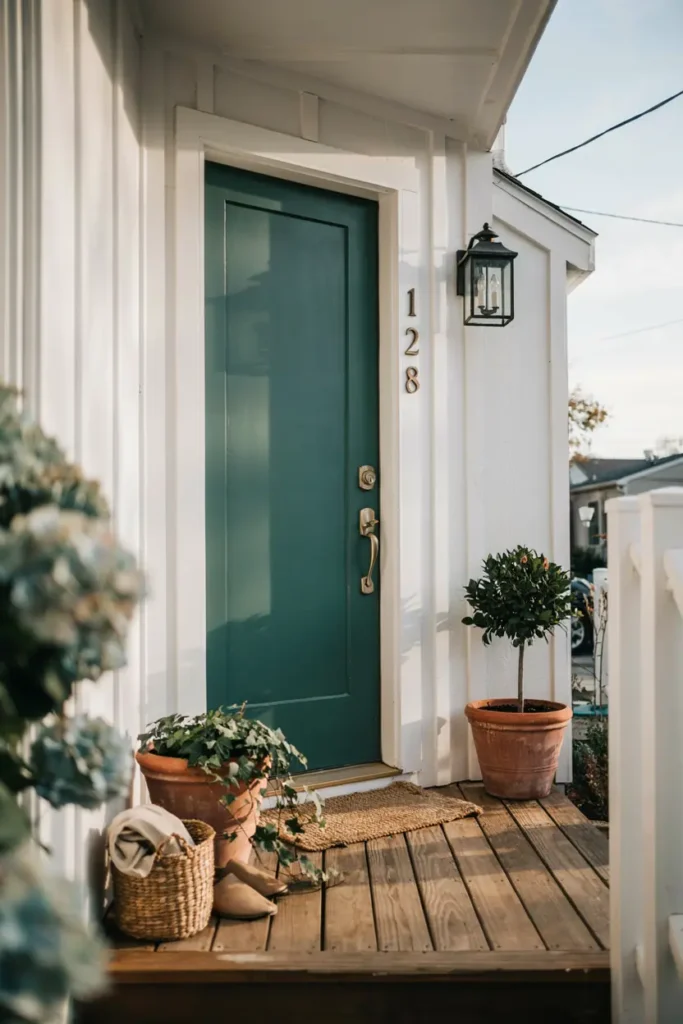
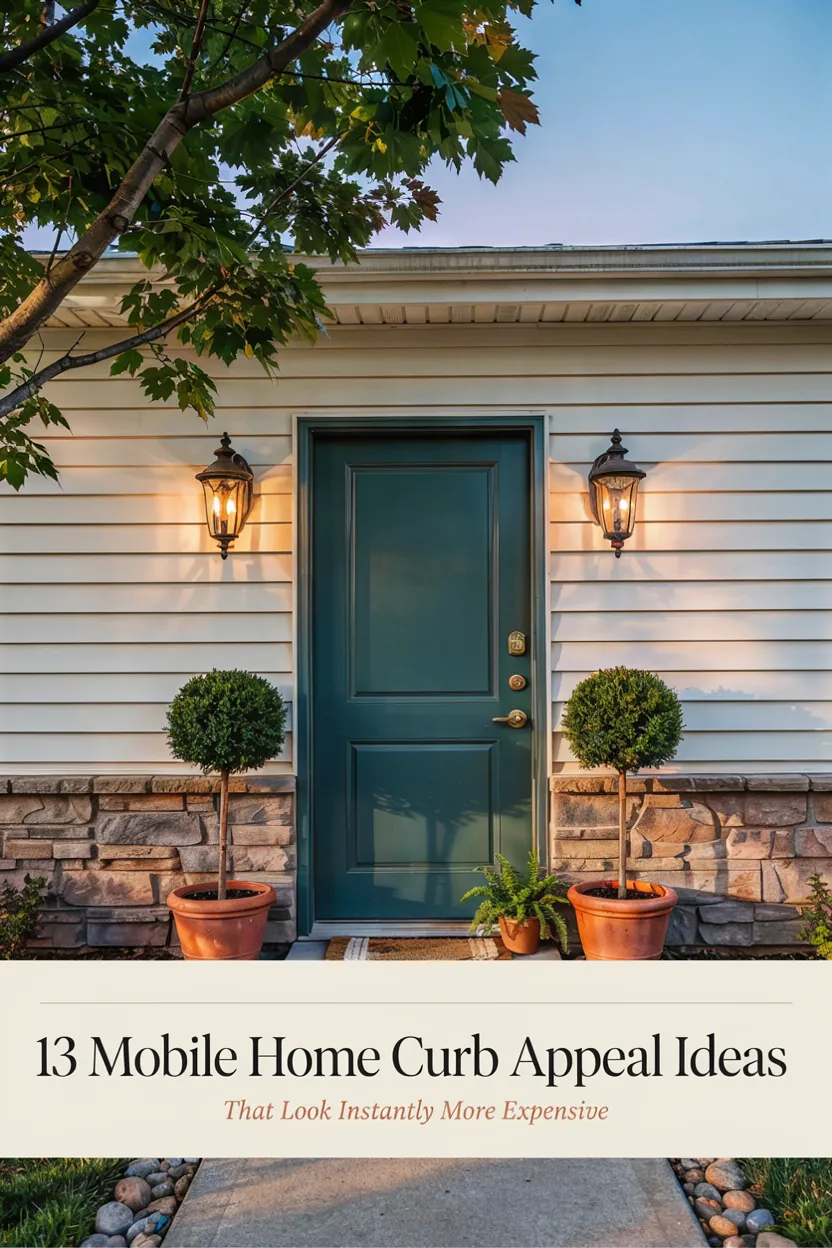
Builders give mobile homes forgettable doors, which is exactly why a bold one works so hard. A front door in deep green, oxblood, or soft black instantly signals intention — the visual cue that someone chose this, rather than settled for it. Because the door is small, the color risk is low, but it becomes the focal point of the entire facade. It is the single highest return-per-dollar move in exterior design.
Use exterior satin paint over a lightly sanded, primed surface — two thin coats beat one thick one. Pick your color by testing large swatches at morning and evening light against your siding’s undertone. While the paint dries, upgrade the hardware: a matching lever set and kick plate in brass or matte black costs around forty dollars and makes the paint look twice as expensive. Finish with a thick doormat, and the entry is done.
2. Faux Stone Skirting on the Street Side
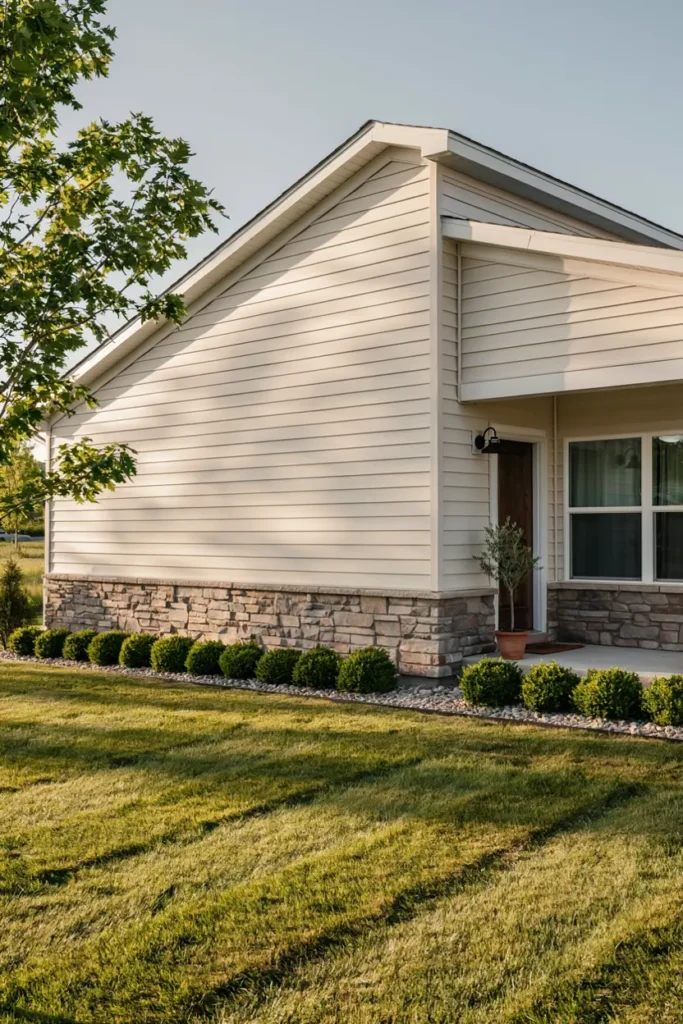
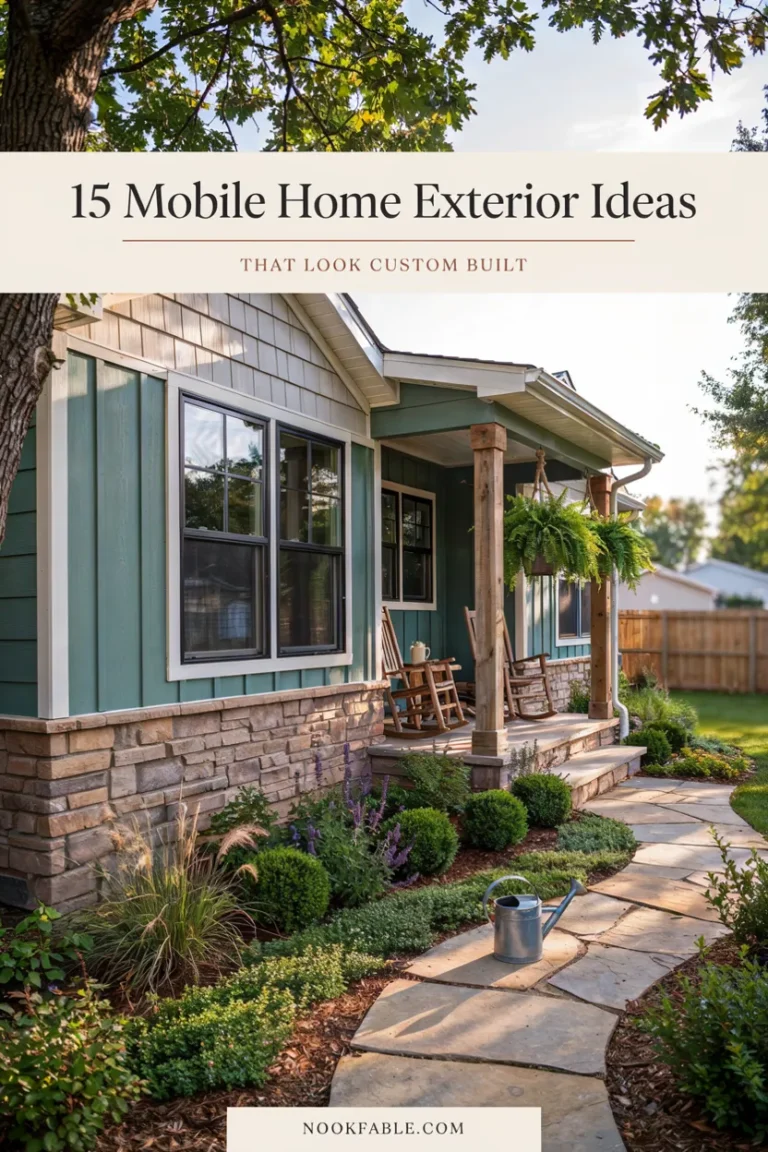
Nothing betrays a manufactured home faster than wavy vinyl skirting — and nothing disguises it better than faux stone. Stone-look panels visually anchor the house to the ground, giving it the weight and permanence of a site-built home. From the street, the eye reads texture and shadow at the base and concludes “foundation,” which quietly upgrades everything sitting above it. It is the difference between a home that sits on land and one that belongs to it.
Budget trick: panel only the sides visible from the street and driveway, keeping standard vinyl elsewhere — most visitors never notice. Choose panels rated for ventilation or add vents to match code, and pick tones that echo your roof color for cohesion. Installation is screw-and-level simple over existing framing. Finish the base with a tidy gravel strip, which sharpens the line and stops mud splash-back on your new stone.
3. Oversized Modern House Numbers
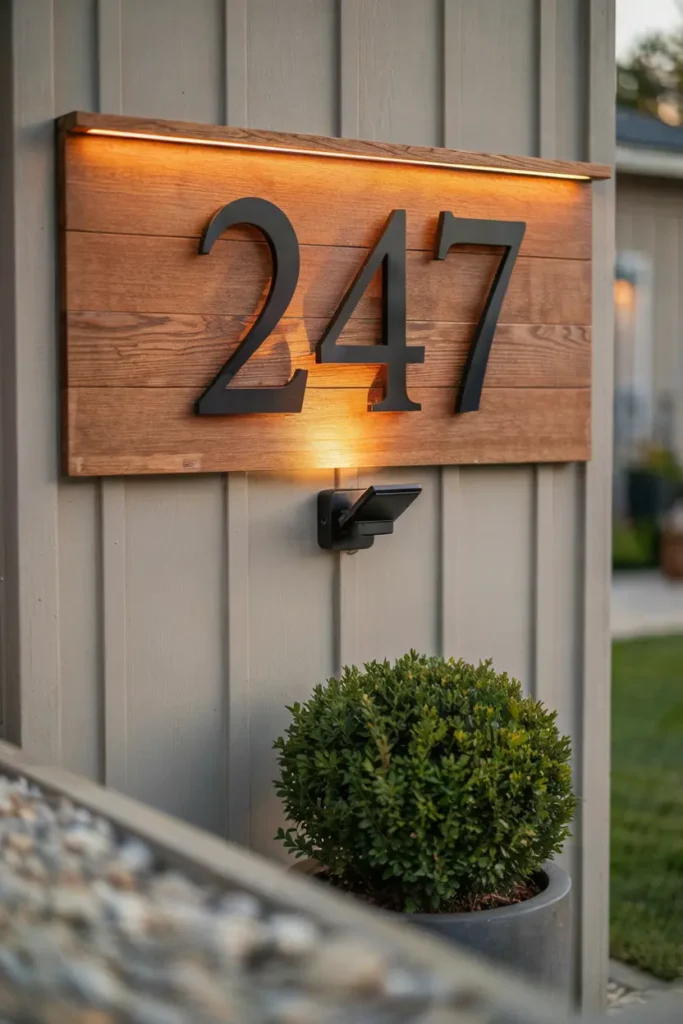
House numbers are jewelry for a facade, and most mobile homes wear the equivalent of a plastic name tag. Swapping tiny builder numerals for oversized modern ones — six to eight inches, in matte black or brushed metal — adds an architectural touch that visitors register instantly, even if they can’t say why. It’s a detail borrowed from high-end new builds, and it costs less than dinner out.
Mount the numbers on a simple stained-wood or painted board first, then attach the board to the siding — the backing plate creates depth and keeps you from drilling extra siding holes. Position them at eye level near the door or on a porch post, and aim a ten-dollar solar spotlight at them for nighttime polish. Match the finish to your door hardware and light fixtures so the entry reads as one designed set.
4. A Small Portico That Changes the Whole Facade
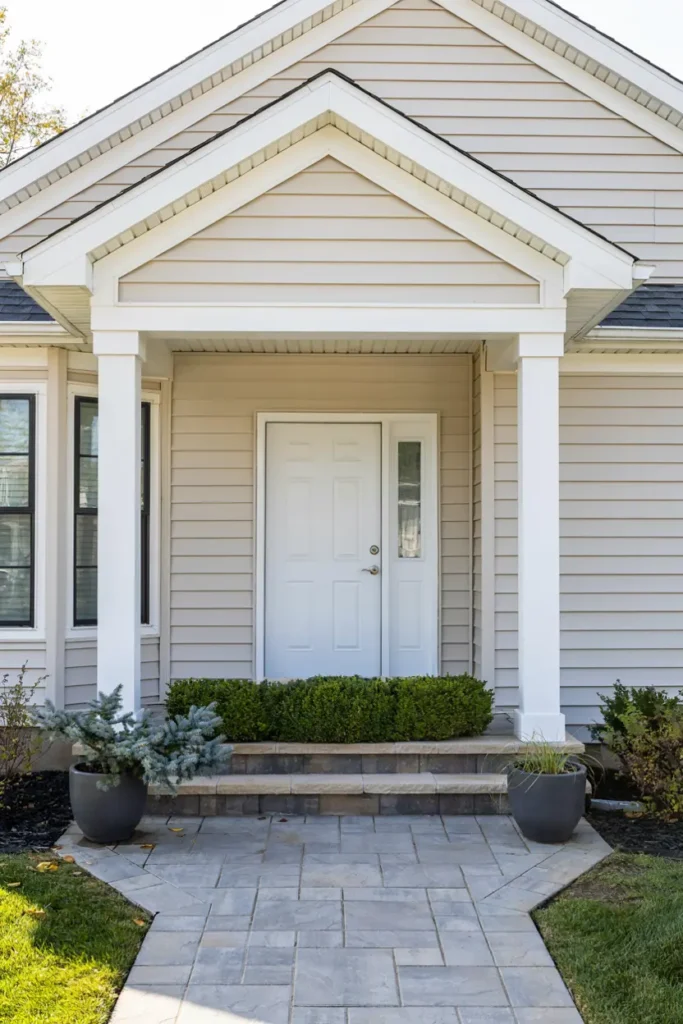
Most mobile homes have doors that open flat off the wall — no shelter, no ceremony. A small portico or gable roof over the entry adds the one thing money usually can’t fake: architecture. It breaks the long roofline, casts real shadow, and frames the door the way a mat frames a picture. Of everything on this list, this is the upgrade that makes people ask whether you rebuilt the front of the house.
Prefab portico kits run a few hundred dollars and install over a weekend with a helper; match the shingles to your existing roof so it reads original rather than added. If a roof structure is beyond budget, a heavy-duty door awning in black metal delivers half the effect for under $150. Ground it with pavers or a landing pad below, and flank one side with a single tall evergreen planter.
5. Shutters and Trim in a Deliberate Contrast
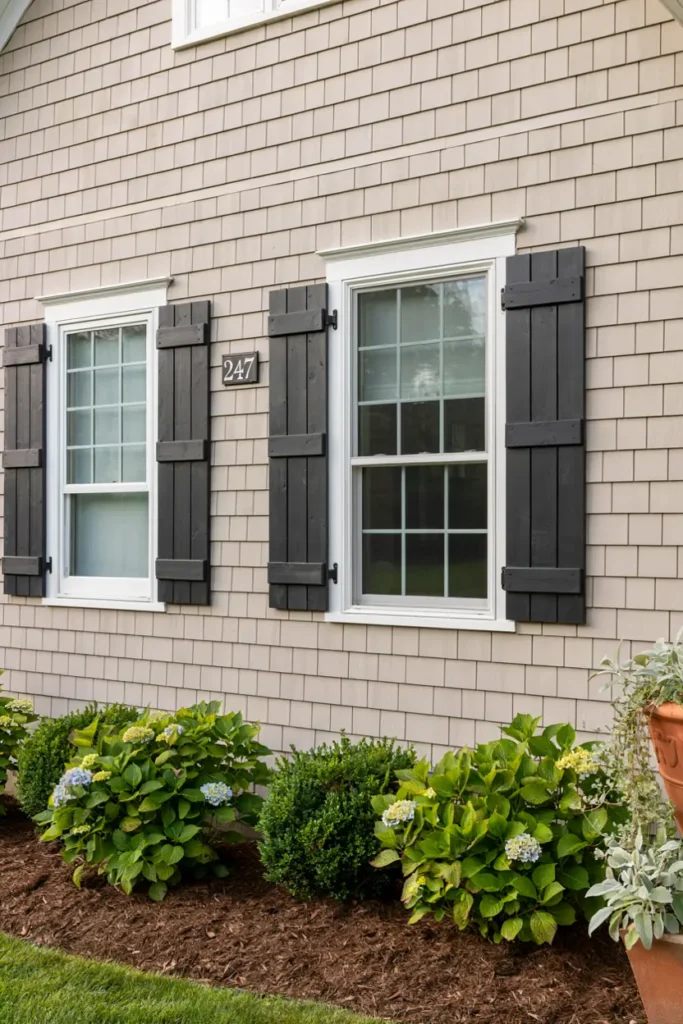
Windows without trim make a facade look unfinished — like a face without eyebrows. Adding shutters, or simply painting the existing trim in deliberate contrast, gives each window definition and rhythm across the front of the home. Dark shutters on light siding is the classic move because it adds depth and shadow lines that read “custom” from thirty feet away. The whole house suddenly looks composed instead of flat.
Vinyl board-and-batten shutters cost twenty to forty dollars per pair and screw directly to siding; size them to match the window height exactly, since undersized shutters are the most common giveaway. Stick to one contrast color across every window — matte black, deep navy, or forest green — and repeat it on the door or mailbox. If shutters aren’t your style, wide painted trim boards deliver the same defining effect with a more modern face.
6. Twin Planters That Frame the Door Like Columns
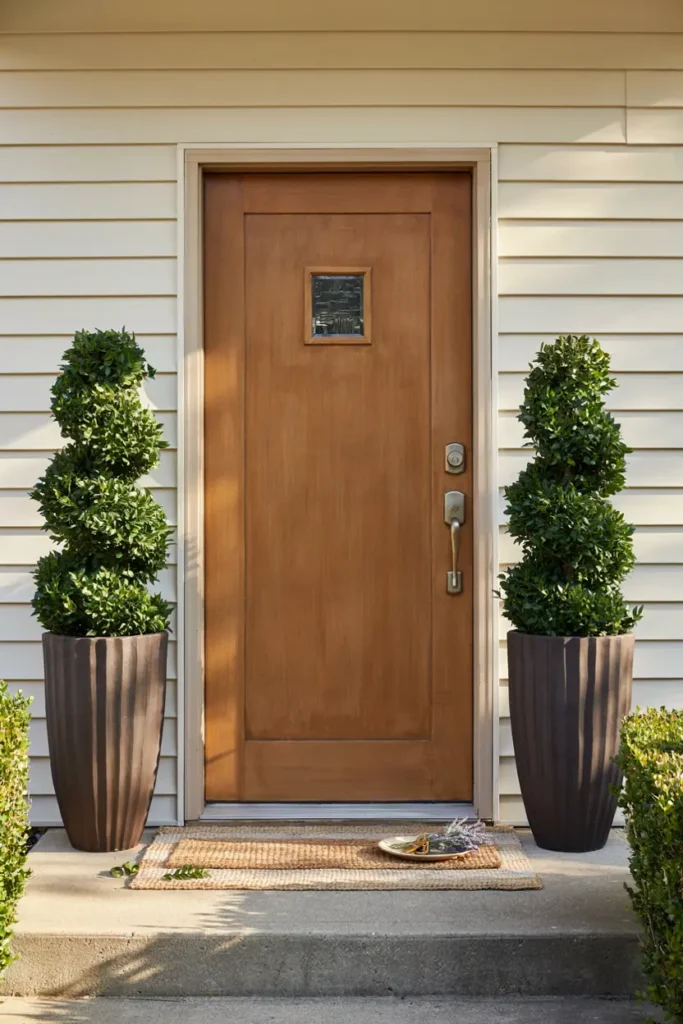
Symmetry is the oldest luxury trick in architecture, and it still works on a manufactured home stoop. Two identical tall planters flanking the door act like columns, giving the entry formality and presence no scattered pot collection can match. The eye loves the mirrored pair — it suggests order, care, and a household that has things handled. Even on the smallest landing, this one move makes the door feel important.
Go taller than feels natural: planters should reach knee-to-thigh height, or the effect collapses. Fiberglass and resin versions mimic stone convincingly at a quarter of the weight and price. Plant matching evergreens — boxwood, dwarf spruce, or arborvitae — so the frame survives winter, and underplant with trailing annuals for seasonal color. Layer a wide doormat over a larger jute rug beneath, and the whole entry composition is complete.
7. A Rock-and-Grass Border That Never Needs Watering
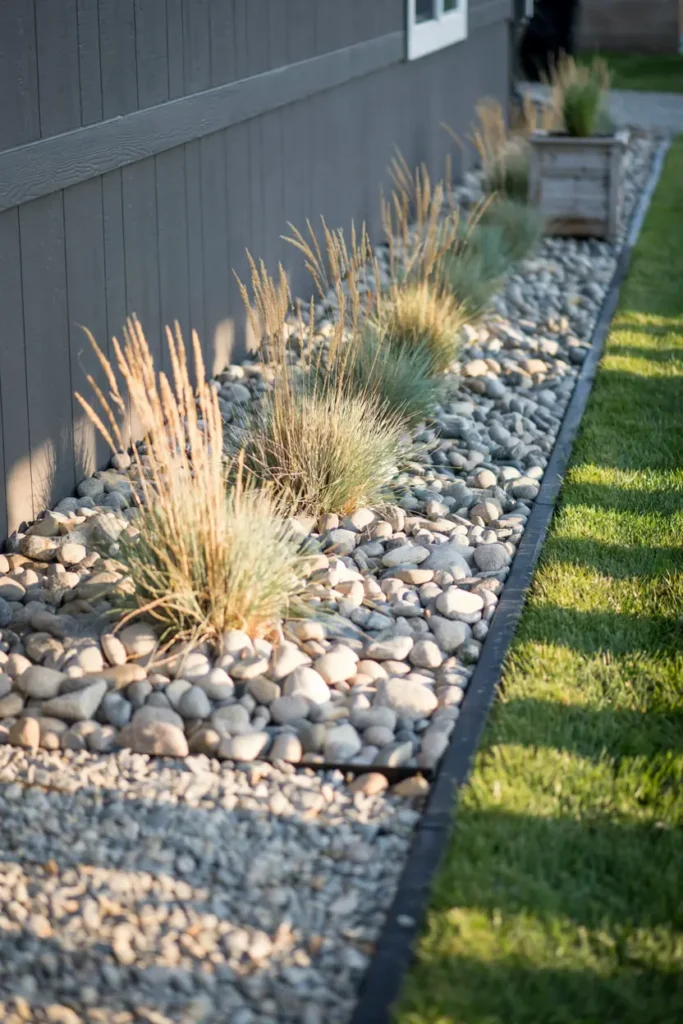
Traditional flower beds demand constant attention, and nothing looks cheaper than a neglected one. A modern border of river rock and ornamental grasses flips the equation: it looks intentional every single day of the year and asks for almost nothing back. The movement of tall grasses softens the home’s straight lines while the rock keeps edges permanently crisp — a combination straight out of new luxury developments.
Run the border along the street-facing foundation, two to three feet deep. Lay landscape fabric, set steel or composite edging, then alternate grasses — feather reed, fountain grass, blue fescue — every three feet before filling with smooth stone. Choose one rock color family only; mixed bags read messy. Water weekly the first summer while roots establish, then let it run on rain. Total cost usually lands under two hundred dollars for the full front run.
8. Swap the Wobbly Railing for Clean Black Metal
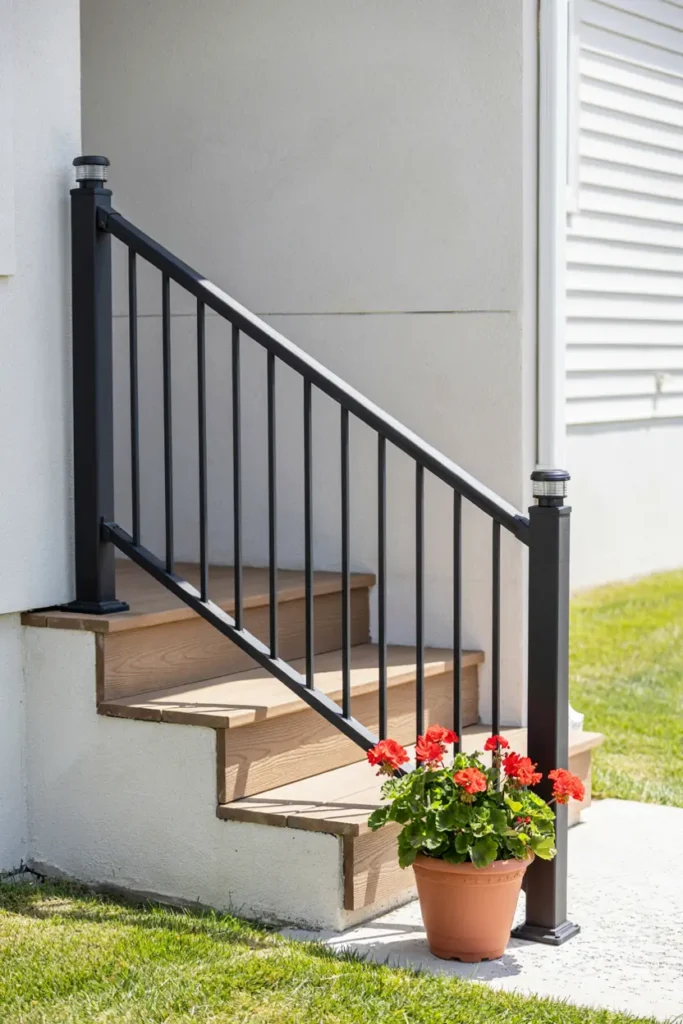
Rusted, wobbly, or mismatched stair railings quietly drag down everything around them — and they’re usually the first thing a guest touches. Replacing them with straight black aluminum railing sharpens the entire entry, the way new glasses sharpen a face. Black metal reads modern against every siding color, never needs repainting, and makes even older steps look rebuilt. Safety upgrade and style upgrade in one purchase.
Aluminum rail kits from home centers cut to length with a hacksaw and install with basic tools in an afternoon — no welding involved. Choose square balusters over decorative twists for the most current look. While you’re at it, re-tread the stairs with composite boards or fresh porch paint in a deep charcoal. Solar post-cap lights snap on top and give the entry a soft glow at night for about fifteen dollars each.
9. Define the Driveway Edge
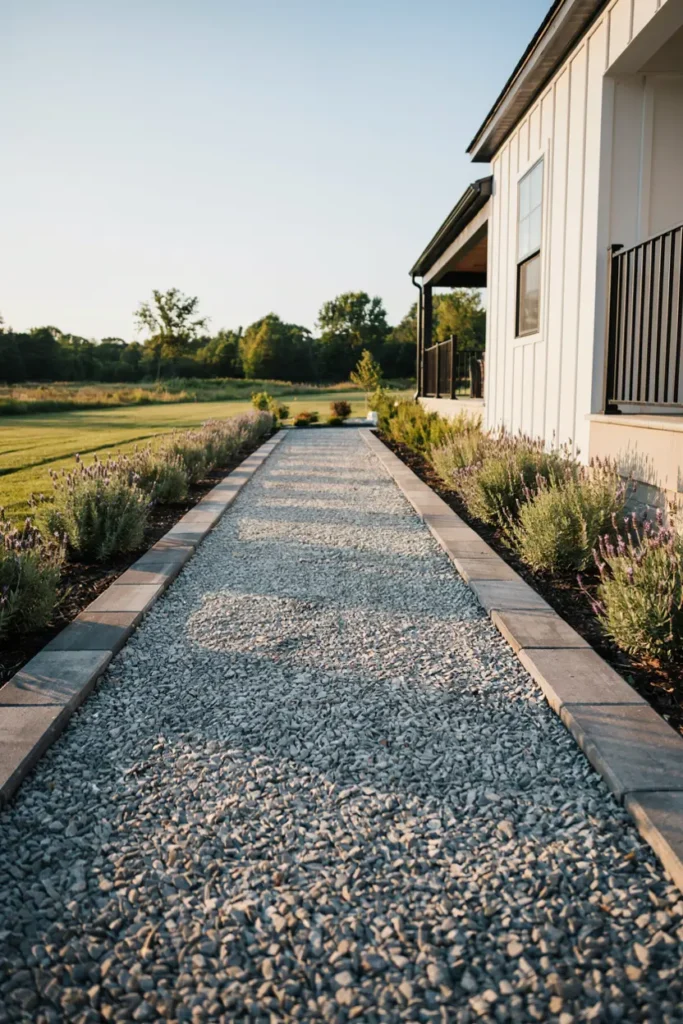
Driveways occupy a huge share of what people see from the street, yet they’re almost never styled. Simply defining the edges — pavers, brick, or steel edging holding a clean gravel or asphalt line — makes the entire approach look planned and maintained. Blurry driveway borders read as neglect; crisp ones read as landscaping. It’s the same surface, presented completely differently, and the eye grades the whole property accordingly.
Trench both edges, set concrete curb pavers or steel edging level with the drive, and backfill. If the gravel itself is thin and patchy, two fresh tons spread and raked costs surprisingly little and looks brand new. Plant a low repeating hedge — lavender, catmint, or dwarf boxwood — along the outer edge for softness. Solar bollard lights every ten feet complete the estate-driveway effect on a mobile home budget.
10. Matching Light Fixtures, Warm Bulbs Everywhere
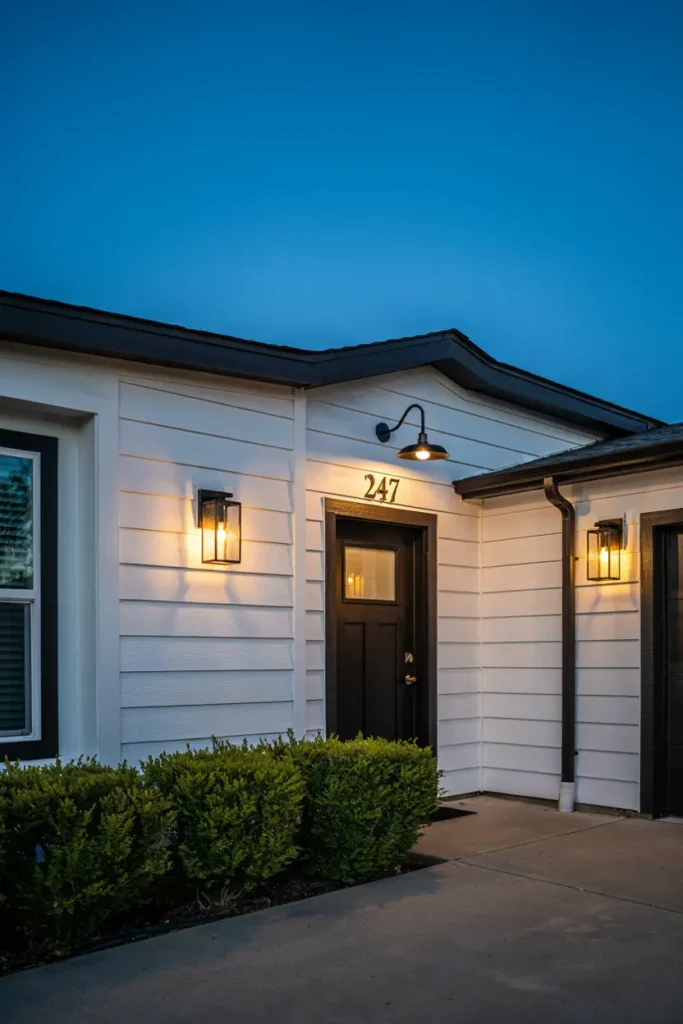
Drive through any expensive neighborhood at dusk and you’ll notice the homes glow — warmly, evenly, intentionally. Lighting is the most overlooked curb appeal category on manufactured homes, where a single bare bulb by the door is standard issue. Matching fixtures in two or three spots, all burning the same warm color temperature, make a home look established and welcoming from the street every single evening, automatically.
Replace the door sconce and any side-entry light with fixtures from the same family — black lanterns and gooseneck barn lights both flatter mobile home proportions. Commit to 2700K warm white bulbs everywhere; one mismatched cool bulb ruins the effect. Add a dusk-to-dawn photocell or smart bulbs so it happens without thought. Two coordinated fixtures plus bulbs typically costs under a hundred dollars — less than one month of gym membership for permanent nightly curb appeal.
11. A Layered Entry: Wreath, Mats, and One Lantern
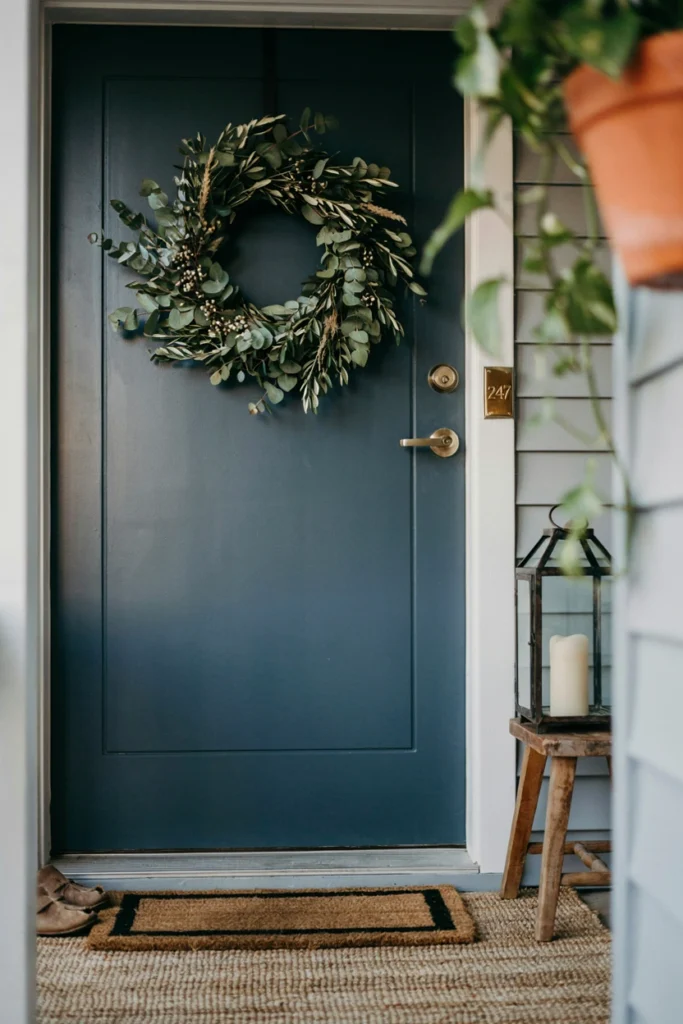
Once the big structure is handled, styling finishes the story. A full greenery wreath, layered doormats, and one oversized lantern turn a door into an entrance — the difference between a house you enter and a home that receives you. These are the details Pinterest loves because they photograph beautifully, but they earn their keep in person too: every arrival, including yours, starts with a small moment of welcome.
Choose a wreath sized generously for the door — twenty-two to twenty-six inches — in eucalyptus or olive that works year-round, swapping ribbon seasonally instead of rebuying. Layer a wide striped jute rug under a smaller coir mat for the boutique-hotel look. Set one large candle lantern with a battery pillar inside on the landing or a small stool. Total spend stays around sixty dollars, and every piece survives weather.
12. A Two-Tone Siding Refresh on the Gable
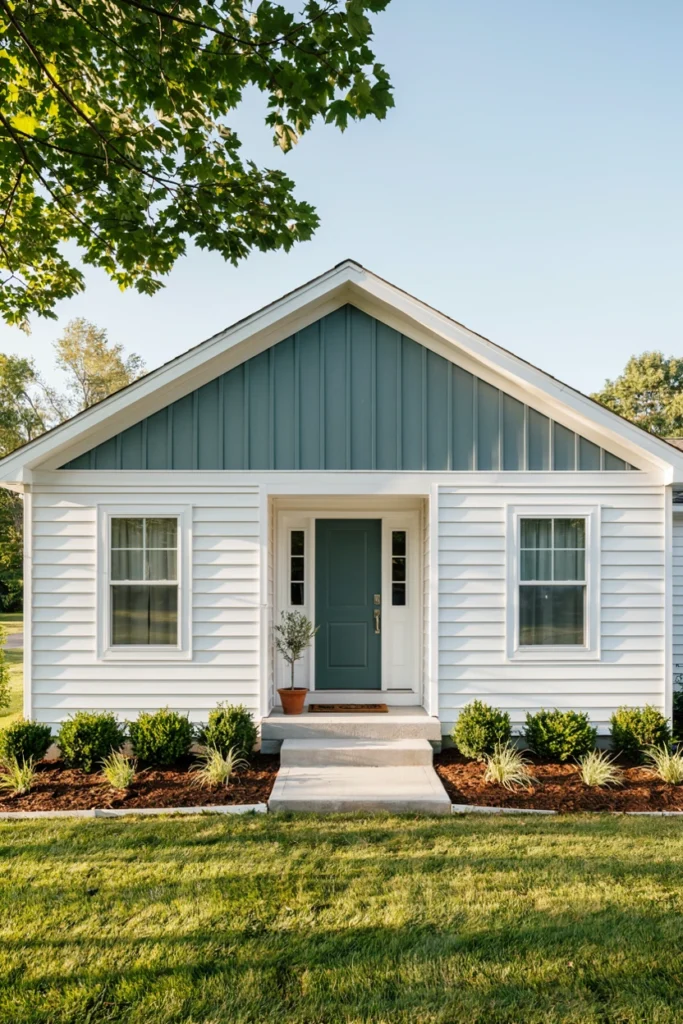
A full exterior repaint is a project; painting one accent section is a weekend. Adding a second color to the gable end, the entry wall, or a band of vertical siding breaks up the long single-tone box shape that makes manufactured homes look manufactured. Two-tone exteriors are the current signature of custom builds, and the technique translates perfectly: contrast creates depth, and depth photographs like money.
Pick the smallest architectural section that reads as deliberate — usually the triangle of the gable or the wall plane around the door. Pair one warm neutral with one deep accent: white with sage, greige with charcoal, cream with navy. Use high-bond exterior paint made for vinyl or metal siding, and tape your lines obsessively; crisp edges are the entire trick. One gallon usually covers an accent section twice.
13. A Low Picket Fence Across the Front
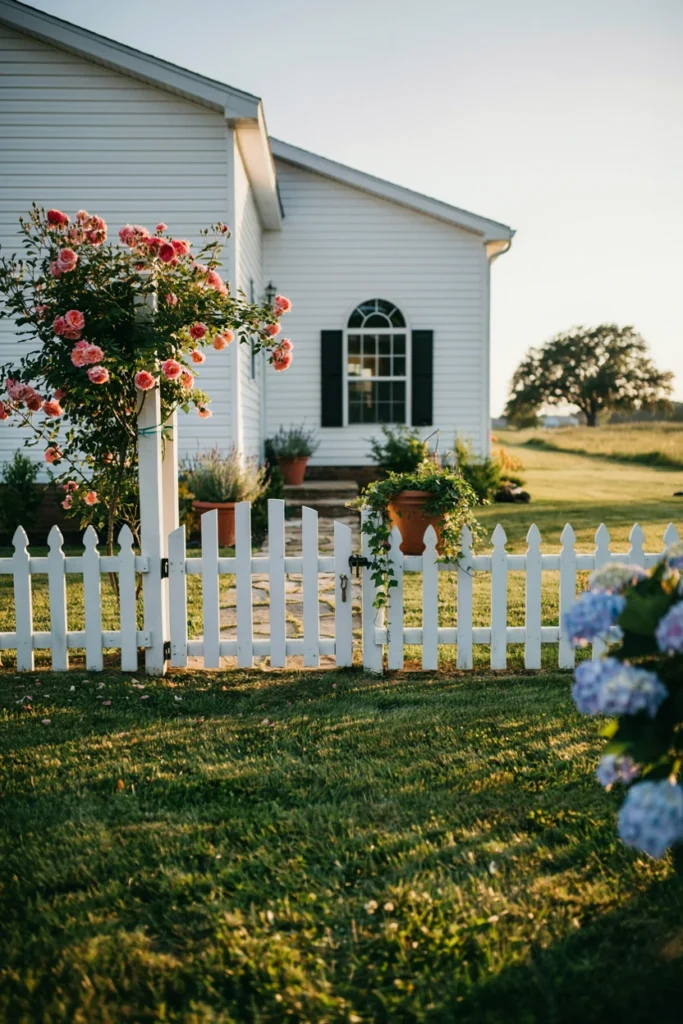
A low fence across the front yard does something psychological: it converts an open lot into a property. The boundary creates a foreground, a middle ground, and a destination — the same layered depth that makes cottage photos irresistible. For mobile homes especially, a picket or split-rail fence borrows a century of settled-home associations and lends them to your address. The home behind it immediately reads more permanent, more private, and more loved.
Vinyl picket panels never need painting and install on driven posts in a weekend; keep the height at three feet so it frames rather than hides the house. Align a simple arched gate with your front door to create that satisfying straight-line approach. Plant one climbing rose or clematis at a corner post and let it work slowly. White is classic, but a black split-rail version suits modern and rustic homes beautifully.
Conclusion
Expensive-looking homes are rarely about money — they’re about coherence. A defined base, framed windows, a door worth noticing, warm light after sunset, and edges that end crisply instead of fading into lawn. Every one of these mobile home curb appeal ideas works toward that same feeling of intention, and none of them requires a contractor’s phone number. Start with whatever bothers you most every time you pull in: the bare door, the wavy skirting, the railing that rattles. Fix that one thing well, and momentum tends to handle the rest of the list. Before you buy anything, though, save your favorite ideas to your Pinterest boards so you can plan the front of your home as one picture instead of a dozen impulse purchases. Then give it a season, stand across the street, and enjoy the double-take your house earns. Home is wherever you park it — it might as well look stunning parked there. Once the front is handled, carry the momentum around back with these mobile home outdoor space ideas.