15 Grass-Free Front Yard Ideas That Create a Beautiful Low-Maintenance Landscape
The perfect green lawn is starting to feel like a subscription you can’t cancel: mowing every weekend, watering every summer, fertilizing, edging, repeating. No wonder more homeowners are quietly replacing turf altogether. The best grass-free front yard ideas prove you’re not giving anything up — gravel courtyards, flowering ground covers, and structured planting beds often look dramatically better than the lawn they replaced, while cutting water bills and weekend chores to nearly nothing. Whether your yard bakes in full sun, sits in dry shade, or just refuses to grow decent grass no matter what you do, there’s a lawn-free design here that fits. Below are sixteen approaches, from soft flowering meadows to crisp modern hardscapes, each with practical steps to recreate it. Save your favorites, sketch your space, and get ready to retire the mower for good. I retired my own front lawn three summers ago and have not missed the mower once.
1. A Gravel Courtyard Anchored by Boulders

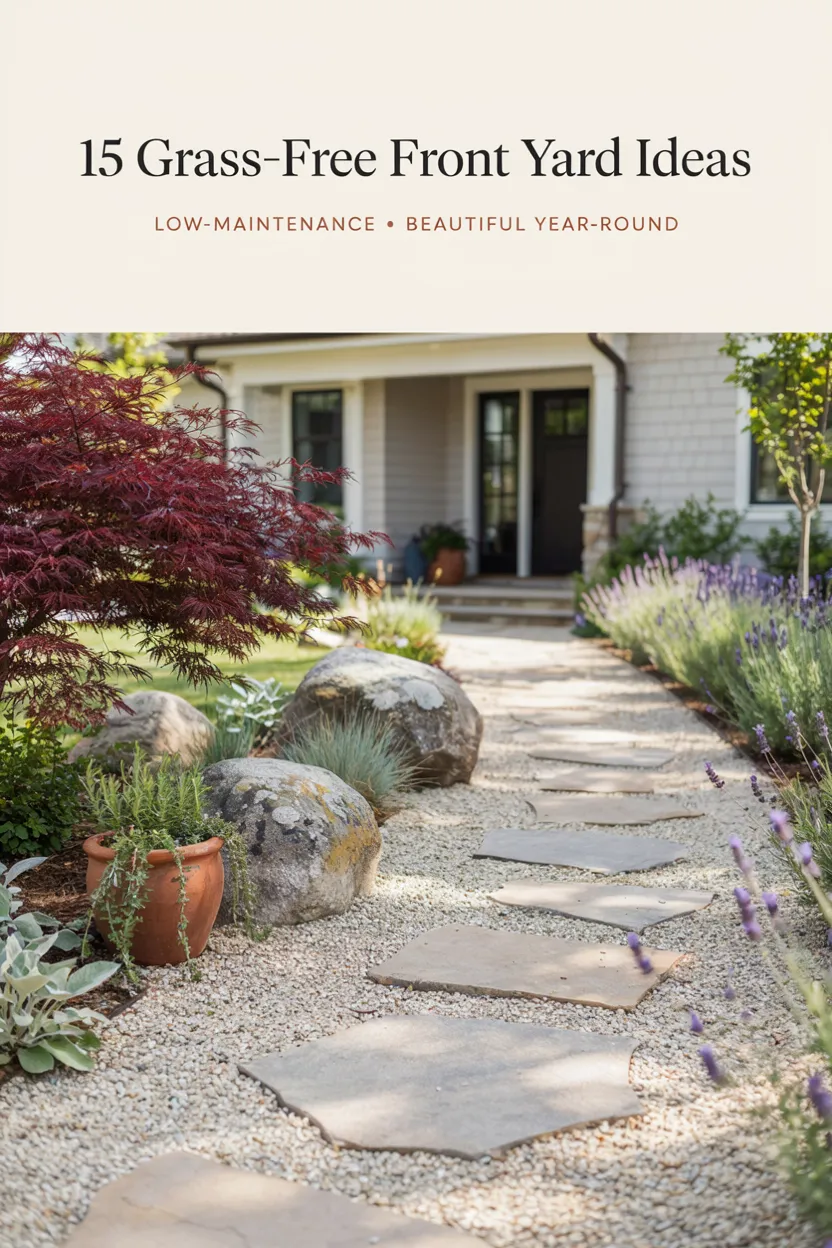
Gravel gets dismissed as a budget option, but designed well it reads high-end resort. A crushed granite courtyard punctuated by a few large boulders and one sculptural tree gives a front yard calm, order, and year-round structure — no brown season, no patchy corners. The boulders do the visual work grass never could, adding weight and permanence, while the gravel field makes even a small yard feel intentionally spacious.
Strip the turf, grade lightly away from the house, lay commercial landscape fabric, and spread three inches of three-quarter-inch crushed gravel — it locks underfoot better than rounded pea stone. Set boulders in odd numbers, buried a third deep so they look native, not delivered. One specimen tree, such as a Japanese maple or olive, breaks the flatness. Steel edging keeps lines crisp, and an annual rake-through is the entire maintenance calendar.
2. A Wildflower Meadow That Feeds the Bees
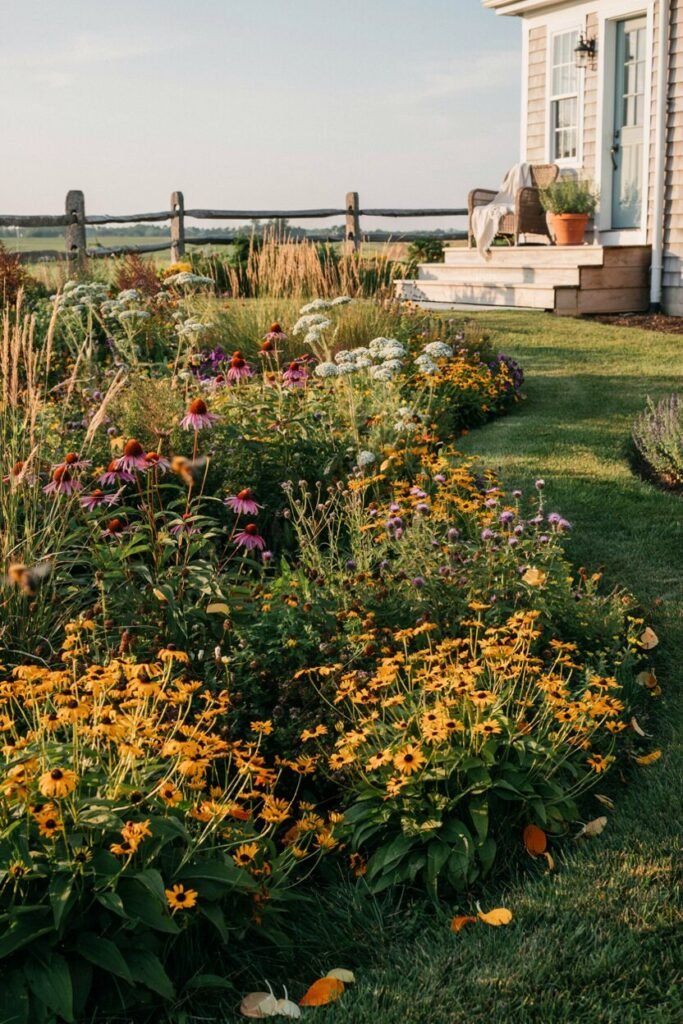
A meadow is the boldest answer to lawn culture: instead of fighting nature weekly, you hand the yard back to it beautifully. Native wildflowers bring waves of color from spring through frost, hum with pollinators, and change character every month — a living front yard that neighbors slow down to look at. Once established, it needs one cut a year. The trick is signaling intention, so it reads garden, not neglect.
Kill or strip the turf in fall, then sow a regional native mix — coneflower, black-eyed susan, yarrow, and native grasses form a reliable backbone in most zones. The intention signal matters most: mow a clean curving path through the middle, keep a tidy three-foot mowed border along sidewalks, and add one simple fence or sign. Water only until germination. By year two, the meadow runs itself on rain and one late-winter cut.
3. The Clover Carpet That Stays Green Without Trying
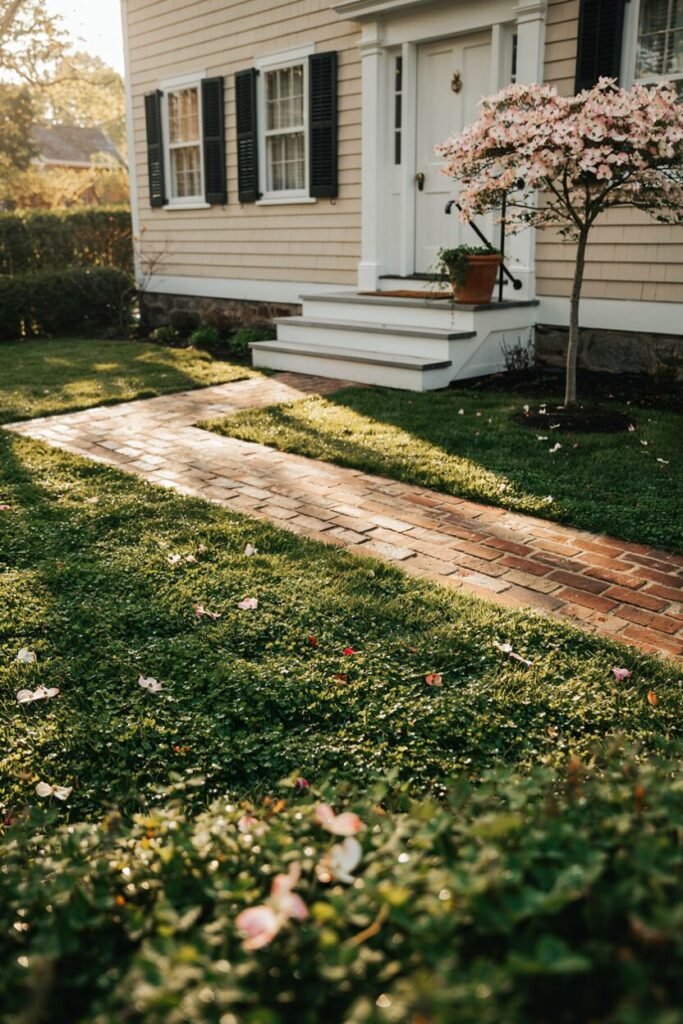
If you love the look of green but hate everything it demands, clover is the cheat code. Microclover stays low, dense, and vividly green through droughts that brown every lawn on the street — without fertilizer, because it makes its own nitrogen. It shrugs off dog spots, feels soft underfoot, and needs mowing a few times a season at most. From the curb, it simply looks like the healthiest lawn in the neighborhood.
Overseed directly into weakened existing grass in early spring, or strip and sow fresh for a pure stand — microclover varieties stay tidier than common white clover. Rake, seed, tamp, and keep moist for two weeks; that’s the whole install. It thrives in sun to part shade and tolerates foot traffic well. Expect gentle white blooms in early summer that bees adore; if blooms aren’t your thing, one quick mow removes them.
4. Creeping Thyme Between Everything
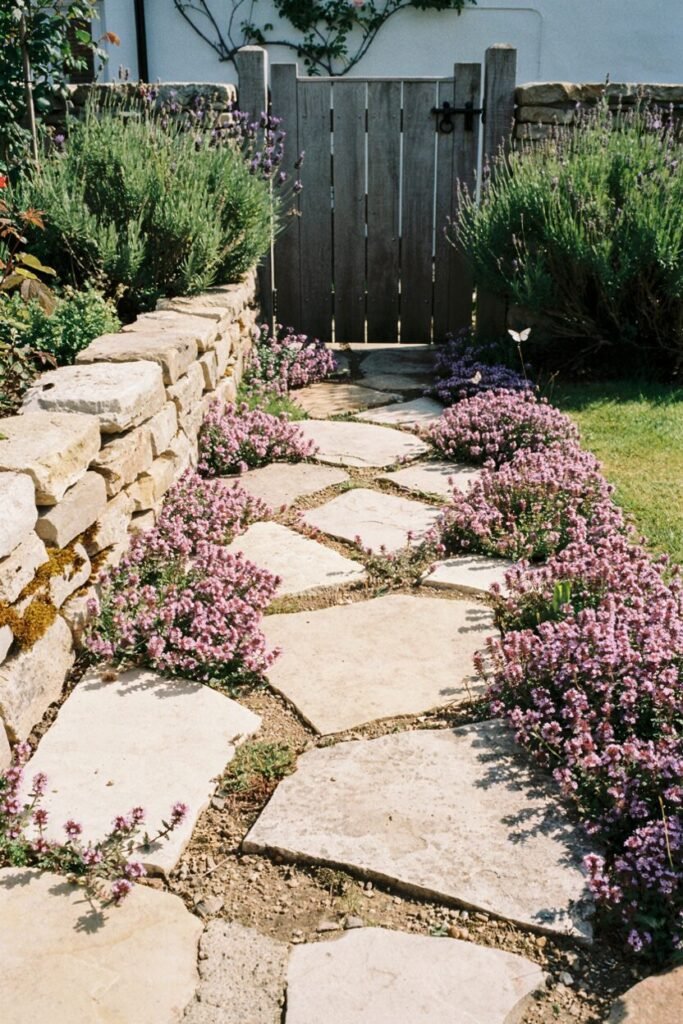
Creeping thyme turns the ground itself into the garden. Between flagstones and across open beds, it forms a dense, walkable mat that erupts into pink-purple bloom each summer and releases scent with every step. It’s the ground cover that makes visitors stop mid-path and ask what it is. For sunny, well-drained front yards, few grass alternatives deliver more charm per square foot — or ask less in return.
Plant plugs about a foot apart in spring; they knit together within two seasons. Thyme demands sun and drainage — in heavy clay, work in coarse sand or plant on a slight mound. Pair it with generous flagstones set at walking stride, letting thyme fill every joint. It handles light foot traffic happily but not daily play, so route active zones onto the stones. Once established, rain is usually all the water it wants.
5. A Rock Garden With Alpine Texture

Slopes are where lawns go to die — scalped by mowers, carved by runoff. A rock garden turns that liability into the best-looking yard on the block. Layered stone holds the grade while pockets of alpine plants add color and texture that changes through the seasons. The style photographs beautifully precisely because it’s dimensional: shadows, strata, and tiny plants tucked into crevices give the eye somewhere to travel.
Set the largest stones first, tilted back into the slope and buried a third deep for stability, arranging in natural-looking shelves. Backfill pockets with gritty, fast-draining soil, then plant tough alpines — sedum, hens-and-chicks, creeping phlox, dwarf fescue. Mulch every gap with gravel to suppress weeds and keep crowns dry. Water the first summer only. It’s heavy work once, then decades of nearly maintenance-free structure.
6. Cottage Beds With a Path Down the Middle

The boldest cottage yards skip lawn entirely: beds run fence to porch, and a path is the only walkway. What sounds like chaos reads as abundance when it’s edged well — flowers at every height, roses climbing the porch, and boxwood keeping one crisp line along the path so the whole picture stays composed. It’s the highest-romance option on this list, and the one that turns a front yard into a destination.
Structure first: lay the path (brick or flagstone, gently curved), then edge it with something evergreen and clipped. Fill beds in three layers — shrubs at the back, perennials like catmint and salvia in the middle, self-seeders like alyssum at the path edge. Plant in drifts of three to five, repeating varieties so it reads designed. Mulch heavily the first two years while plants close ranks; after that, they crowd out weeds themselves.
7. Drifts of Ornamental Grasses That Move

Here’s the irony: the best replacement for grass is grass — just the kind you never mow. Ornamental grasses planted in broad drifts bring something turf never had: movement. They catch wind, glow backlit at sunset, and stand golden through winter when everything else has gone flat. Massed along a walk or across a whole yard, they deliver modern-prairie drama with almost embarrassing ease.
Choose two or three varieties at different heights — feather reed grass for vertical structure, fountain grass mid-level, Mexican feather grass for low softness — and plant each in generous swaths rather than mixed randomly. Space at mature width, mulch between, and water through the first summer. The entire annual maintenance is one cutback to six inches each late winter. Corten or concrete edging sharpens the look into something architectural.
8. A Paver-and-Ground-Cover Checkerboard

For lovers of clean lines, the paver checkerboard is the signature move: oversized concrete squares alternating with living green panels, reading as pure geometry from the street. It keeps real greenery in the yard while eliminating every blade of mowable lawn, and it turns the whole approach to the front door into something that looks drawn rather than grown. Small yards benefit most — the grid makes them feel designed to the inch.
Use twenty-four-inch pavers on a compacted sand base, leaving equal gaps planted with dwarf mondo grass, sedum, or thyme depending on your sun. Keep the grid perfectly square to the house; the crispness is the style. One multi-stem tree offset in a corner softens the geometry, and a simple bench makes the courtyard usable. Trim the green squares twice a year with shears — that’s the entire upkeep.
9. A Dry Creek Bed That Solves Drainage Too
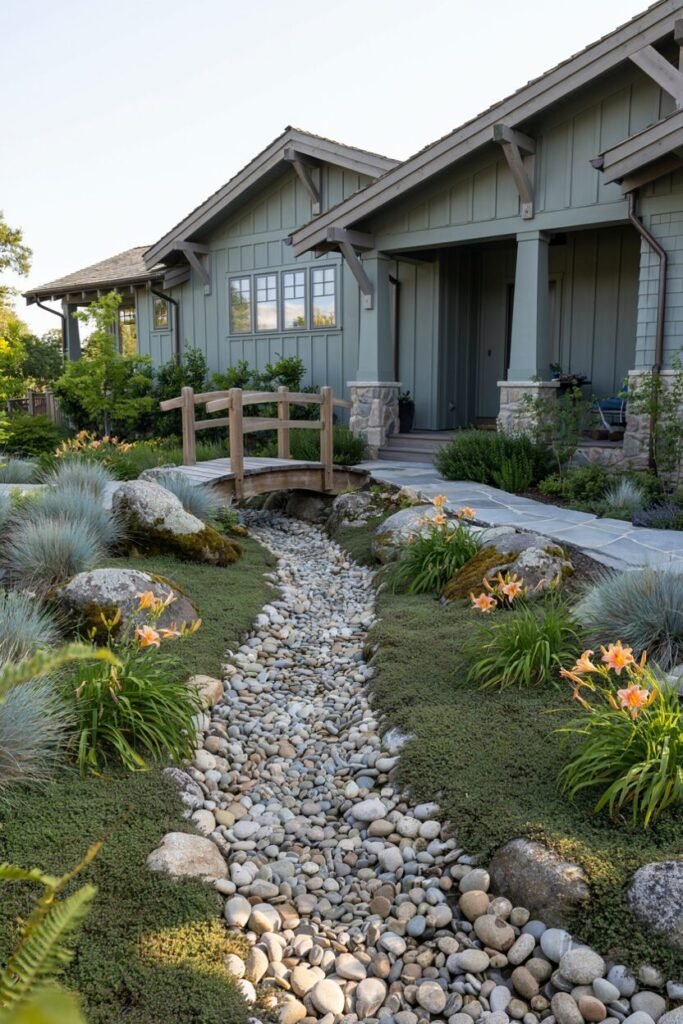
A dry creek bed is landscaping that multitasks: it looks like a naturally wandering stream, and during storms it actually becomes one, steering runoff away from the foundation. As a lawn replacement it’s brilliant for yards with drainage headaches — the design problem becomes the design feature. The curves lead the eye through the yard, and the contrast of smooth stone against grasses reads effortlessly natural.
Trace a lazy S-curve following the yard’s actual water flow, dig a shallow swale a foot deep, and line it with fabric. Fill with river rock in mixed sizes, placing the largest boulders at the outside of each bend as a real stream would deposit them. Plant the banks with moisture-tolerant clumps — daylilies, blue oat grass, iris. A short footbridge where the path crosses adds the storybook touch that makes the whole yard.
10. A Succulent Tapestry for Hot, Dry Yards

In hot climates, fighting for a lawn means losing twice — first the water bill, then the lawn anyway. A succulent tapestry surrenders gracefully and wins: agaves, barrel cacti, and echeveria planted in sweeping color bands create a front yard that looks like living sculpture. The textures are outrageous, the water use is nearly zero, and the yard looks identical in August when every lawn nearby has given up.
Group plants by scale — bold agaves as anchors, mid-size aloes and barrels in clusters, low sedums and echeveria flowing between like groundwater. Plant through decomposed granite mulch on unamended, well-drained soil; rich dirt actually harms most succulents. Sweep colors in bands rather than polka-dotting varieties everywhere. In frost-prone zones, substitute hardy sedums and sempervivums, which survive snow while keeping the same tapestry effect.
11. A Shade Garden Where Grass Always Failed
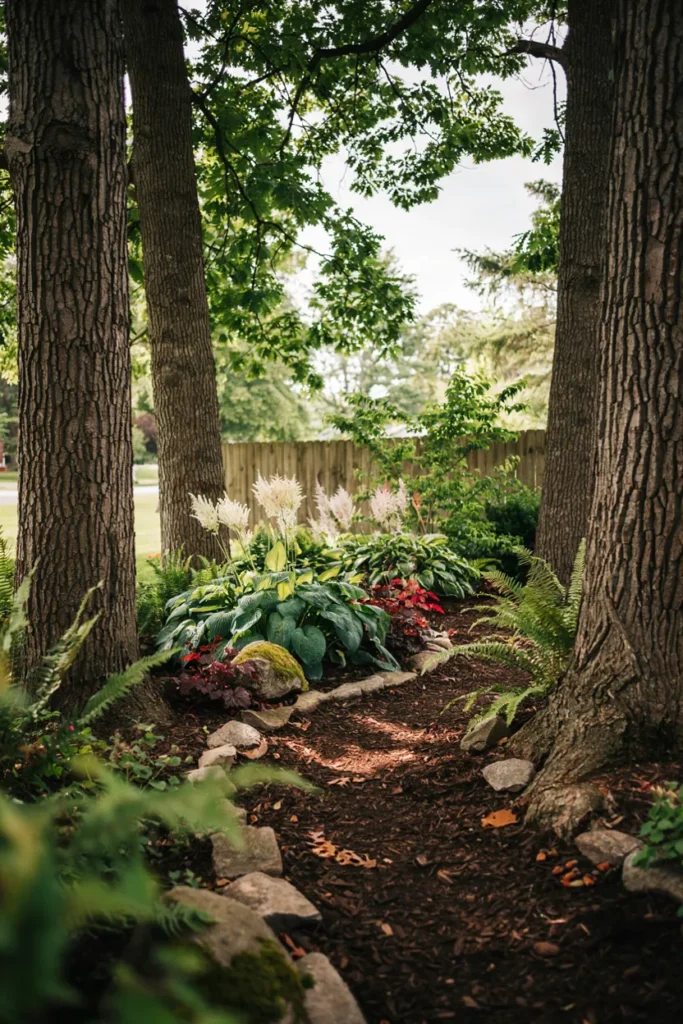
Grass under mature trees is a decades-long argument you can’t win — too much shade, too many roots, never enough light. A layered shade garden ends the argument beautifully. Hostas, ferns, and astilbe thrive exactly where turf sulks, building a cool, textured understory that makes the whole property feel like it backs onto a forest. What was the yard’s worst patch becomes its most serene.
Work with the roots, not against them: plant small plugs in pockets between major roots rather than tilling, and top everything with two inches of bark mulch. Layer heights — ferns and astilbe behind, hostas in the middle, heuchera and sweet woodruff at the front edge. Repeat a few varieties in drifts for calm. Water the first season while roots establish; after that, shade itself keeps the moisture in.
12. Corten Planters on a Gravel Field
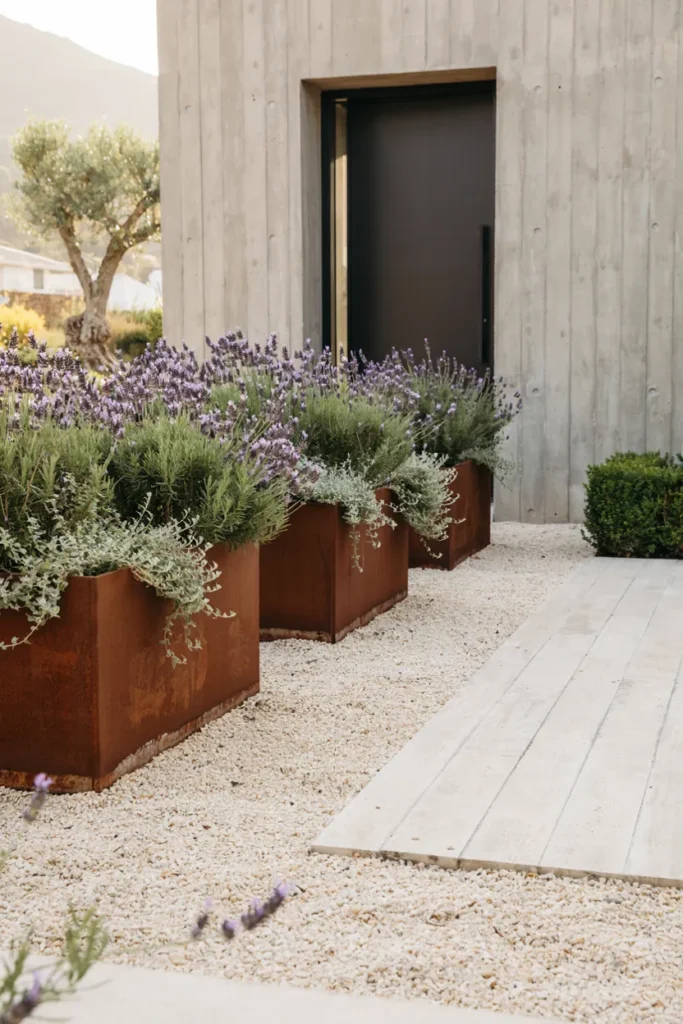
Raised corten steel planters floating on a gravel field is the look architecture magazines can’t quit — and it happens to be one of the easiest grass-free layouts to actually build. The rusted steel warms up the minimalism, the contained planting keeps maintenance in three tidy rectangles, and everything else is walkable gravel. It’s the rare high-design yard that a weekend gardener can keep perfect in ten minutes a month.
Position two or three long planter boxes parallel to the walkway or facade, leaving generous gravel space between. Fill with structured, fragrant, drought-happy plants — lavender, rosemary, ornamental alliums — one variety per box for maximum graphic impact. Corten arrives raw and develops its patina over a season. Pre-made boxes cost less than custom welding; even galvanized troughs deliver a similar effect on a tighter budget.
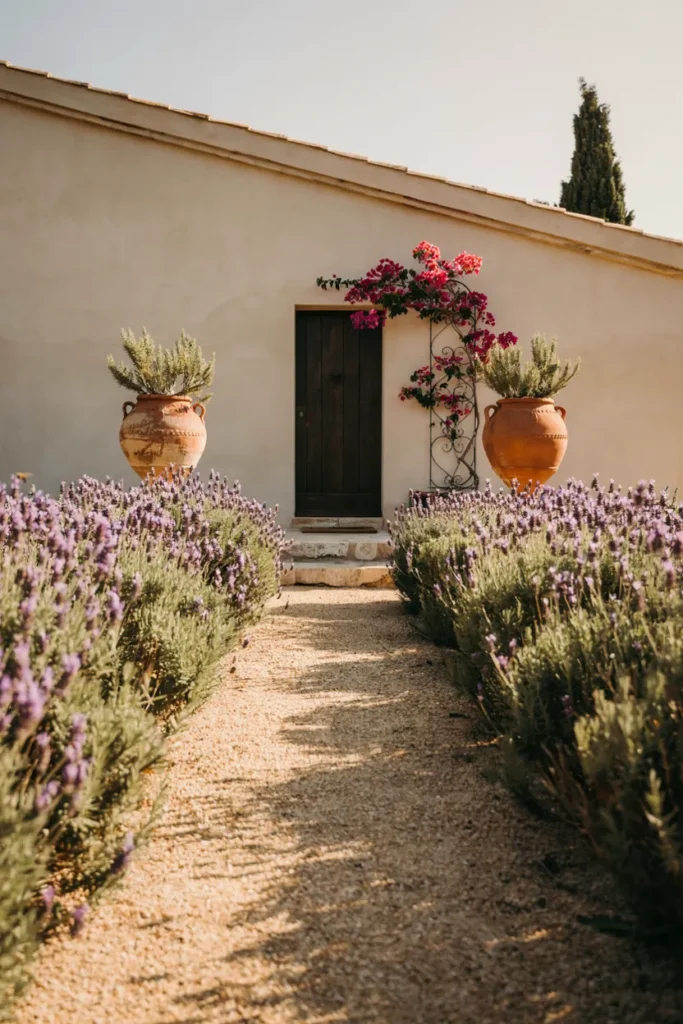
13. Lavender Rows Along a Granite Path
The most radical grass-free idea reframes the question entirely: what if the front yard weren’t something to look at, but somewhere to be? A paved courtyard with a low perimeter wall converts wasted lawn into an outdoor room — morning coffee facing the street life, evening drinks under string lights. In neighborhoods where backyards are shaded or tiny, reclaiming the front as living space can double a home’s usable outdoors.
Define the perimeter with a seat-height wall, fence, or dense hedge for just enough enclosure, keeping a welcoming gate aligned with the door. Pave generously in bluestone, brick, or large concrete pavers, sloped subtly away from the house. Furnish like a room: a bench or bistro set, one statement tree in a huge pot, layered planters at the corners. String lights overhead finish the conversion from yard to destination.
14. A Boxwood Parterre for Instant Formality
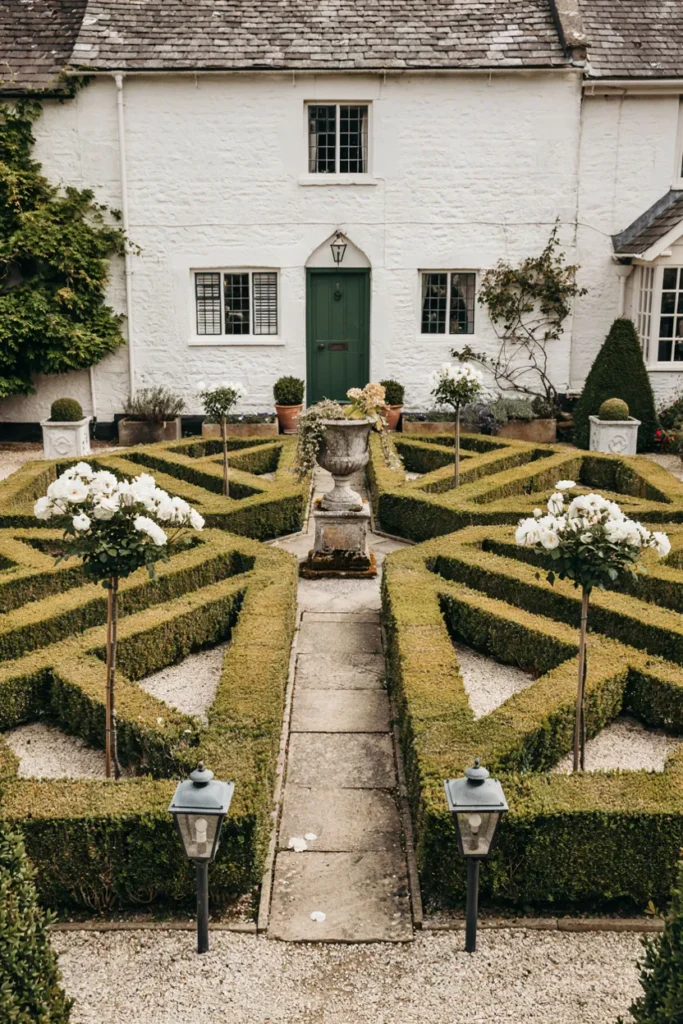
A parterre — low clipped hedges laid out in a geometric pattern — is what estates used before lawns were fashionable, and it still outclasses them. Scaled to a modest front yard, even a simple diamond of boxwood filled with pale gravel reads instantly formal and permanent. It’s green architecture: structure in January, crispness in July, and a front yard that looks curated rather than maintained.
Draw the pattern with stakes and string first — symmetry is everything, so measure from the front door’s centerline. Plant dwarf boxwood or ilex a foot apart along the lines; they knit into solid low walls within three seasons. Fill the compartments with gravel, white roses, or seasonal color, and center the composition on one urn or standard tree. Two trims a year keeps it razor sharp.
15. A Zen Gravel Garden You Rake Instead of Mow
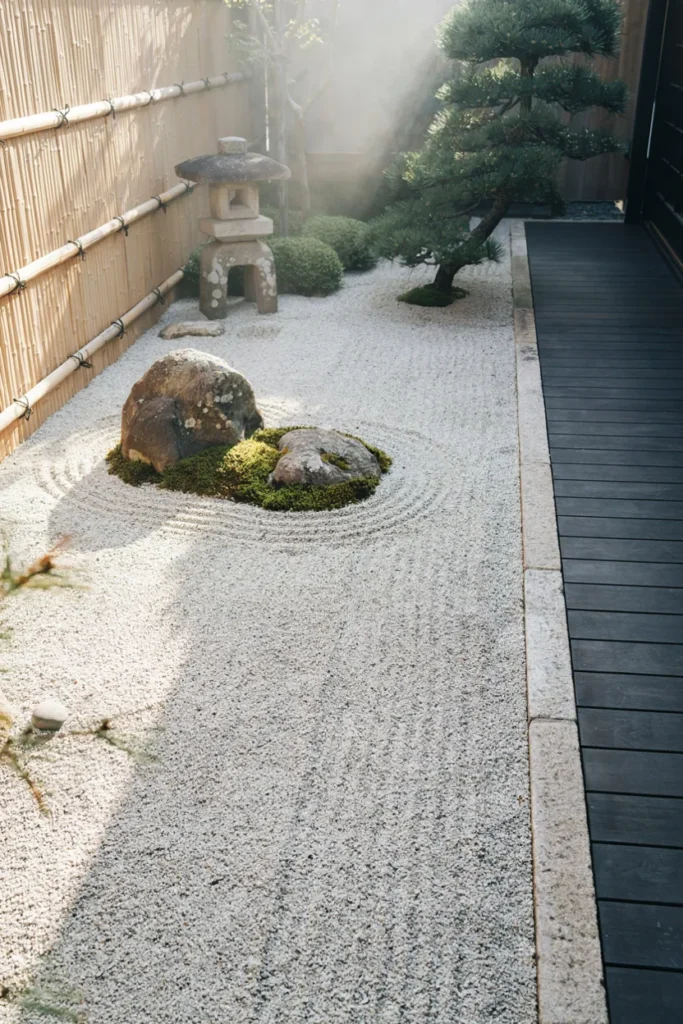
The zen garden replaces the lawn’s weekly demand with a monthly ritual: raking gravel into ripples instead of mowing rows. Around a few moss-edged boulders and one sculptural pine, raked patterns turn the ground itself into quiet art that looks composed in every season. For minimalist homes — or anyone whose idea of yard work involves less noise, not more — it’s the most peaceful front yard that exists.
Keep the palette strict: silver-gray fine gravel, two or three boulders set low and asymmetrically, one cloud-pruned pine or Japanese maple, and moss or mondo grass softening the stone bases. A bamboo or horizontal-slat screen along one edge frames the composition. Lay fabric beneath three inches of gravel, and buy a wide wooden rake — the patterns take five minutes and are genuinely the best part.
Conclusion
Retiring a lawn isn’t really about giving something up — it’s about choosing what your front yard gives back. Gravel and stone return weekends. Ground covers and meadows return color, scent, and pollinators. Courtyards return actual living space you’ll use every week. Whichever direction fits your climate and your home’s style, the best grass-free front yard ideas share one principle: strong structure first — paths, edges, one anchor feature — then plants that thrive on neglect in your specific conditions. Start with the corner of the yard that frustrates you most and convert it first; momentum will carry the rest. Save your favorite ideas to your Pinterest boards so you can compare them against your own yard’s sun, slope, and shade before buying a single plant. Then enjoy the strange new silence of a Saturday morning with nothing to mow. Your yard — and your summer water bill — will thank you for years. And if the house behind the new yard deserves equal attention, start with these front yard design ideas.