15 Mobile Home Outdoor Space Ideas That Feel Cozy, Stylish, and Budget-Friendly
Your mobile home outdoor space might be the most underrated square footage you own. While everyone else obsesses over kitchens and living rooms, a little attention outside can give you a second living area for a fraction of the cost — a place for morning coffee, weekend dinners, and slow summer evenings. The best mobile home outdoor space ideas don’t require a contractor or a big budget. They work with what you have: a small porch, a strip of yard, a concrete pad, or a simple deck. In this guide, you’ll find fifteen ways to turn those in-between spaces into spots that feel cozy, styled, and genuinely useful. Some take a weekend, some take an afternoon, and almost all of them are renter-friendly and easy to undo. Save the ones that fit your space, and start with just one corner. Half of these come straight from my own client notebook — the ones people actually finished.
1. A String Light Ceiling Over the Patio

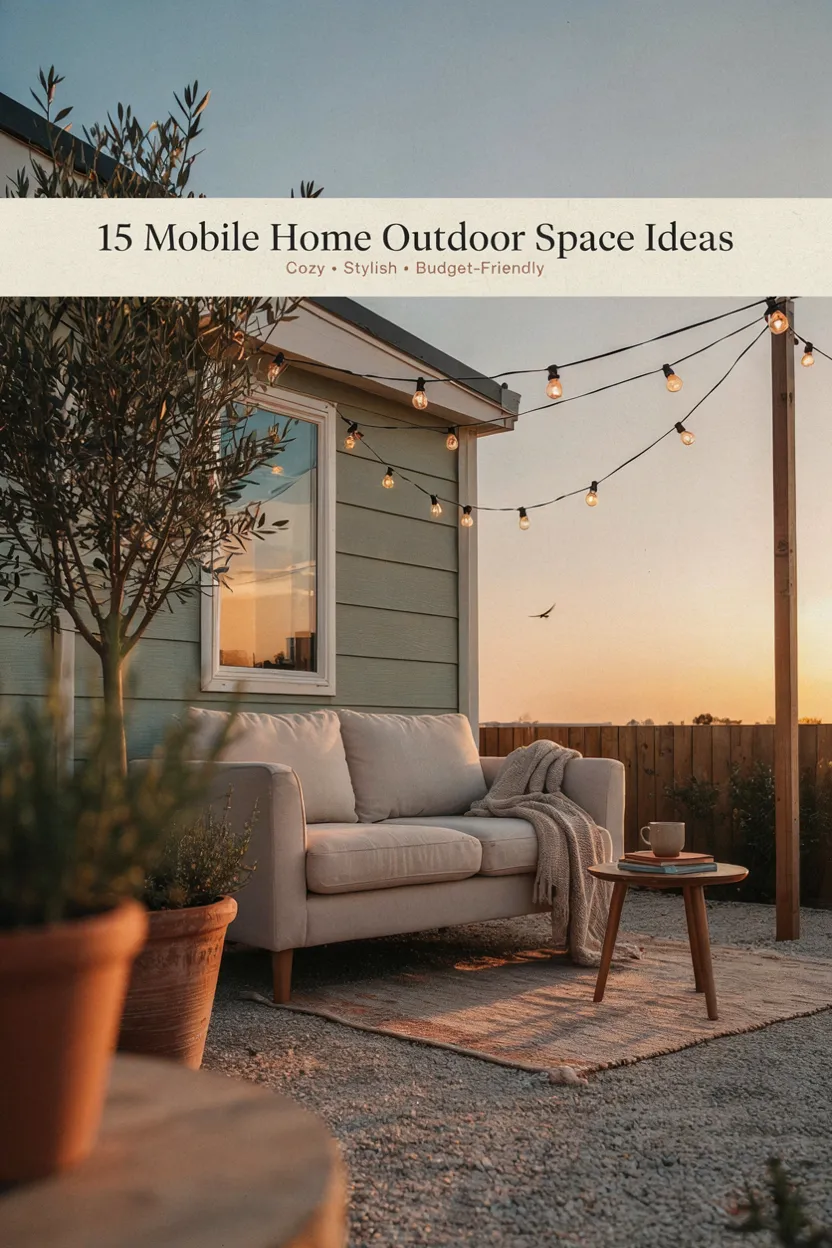
Nothing transforms a plain patio faster than a ceiling of warm string lights. Overhead lighting creates an instant sense of enclosure, which is exactly what most mobile home outdoor areas are missing — that feeling of being in a room rather than just outside the door. Once the sun drops, the space glows instead of disappearing, and suddenly your patio works for dinners and late conversations, not just daytime sitting. It reads charming from the street, too.
Run two or three rows of outdoor-rated bulb lights from the home’s trim to a fence, a shepherd’s hook, or simple wooden posts set in planter buckets filled with concrete — a classic renter trick that avoids digging. Choose warm white bulbs, never cool. Underneath, keep the palette calm: a neutral outdoor rug, one loveseat or a pair of chairs, and a small side table. Solar versions cost less to run, and dollar-store zip ties keep the lines neat.
2. A Gravel Fire Pit Corner That Skips the Concrete Work

A fire pit gives a backyard something most decorating never can: a reason to stay outside after dark. For mobile home backyards, a gravel pad is the smart base — it defines the zone, keeps chairs level, protects against stray embers, and costs a fraction of poured concrete. The circle of seating instantly feels intentional and social, like the space was planned rather than leftover. On cool evenings, it becomes the most-used spot on the property.
Mark out a ten-to-twelve-foot circle, lay landscape fabric, and spread pea gravel about two inches deep. Set a steel or cast-iron fire bowl in the center — the portable kind, so it moves with you. Surround it with four Adirondack or folding chairs, add a basket of blankets, and keep a metal bucket of sand nearby for safety. Check your park’s fire rules first; where open flames aren’t allowed, a propane fire table delivers the same glow with less smoke.
3. The Porch Swing Moment

A porch swing does double duty: it’s seating, and it’s personality. On a covered mobile home porch, a swing signals that this is a home where people linger — it softens the whole facade and gives the entry a storybook quality. The gentle movement makes it the seat everyone gravitates toward, and unlike a full furniture set, it needs only a few feet of depth to work beautifully.
Confirm your porch ceiling joist can carry the weight, or choose a freestanding A-frame swing stand, which works even on open decks. Wood swings with black hardware suit nearly every exterior color. Style it with two outdoor pillows and one throw, then flank the door with matched planters — ferns for shade, geraniums for sun. Keep the floor simple with a flat jute-style mat. Secondhand swings sand and repaint easily, which keeps this well under a hundred dollars.
4. A Built-In Bench Along the Deck Rail

Small decks fill up fast with chairs — legs everywhere, nothing to walk around. Building a simple bench along the railing solves the seating problem while keeping the floor open, which makes the whole deck look bigger and calmer. It’s the trick that turns a landing into a lounge: seating for four in the footprint two chairs used to take, with a clean, custom look that quietly upgrades the entire back of the house.
A basic L-shaped bench is a beginner-friendly build with 2×4 framing and deck boards, screwed to the existing rail posts. Top it with outdoor cushions in one solid color — oatmeal, olive, or charcoal read most expensive. Add a slim coffee table, then group three herb planters at one end so the corner smells as good as it looks. Storage-minded builders can hinge the seat for hidden bins underneath, which mobile home living never has enough of.
5. An Outdoor Rug That Makes the Concrete Pad a Room
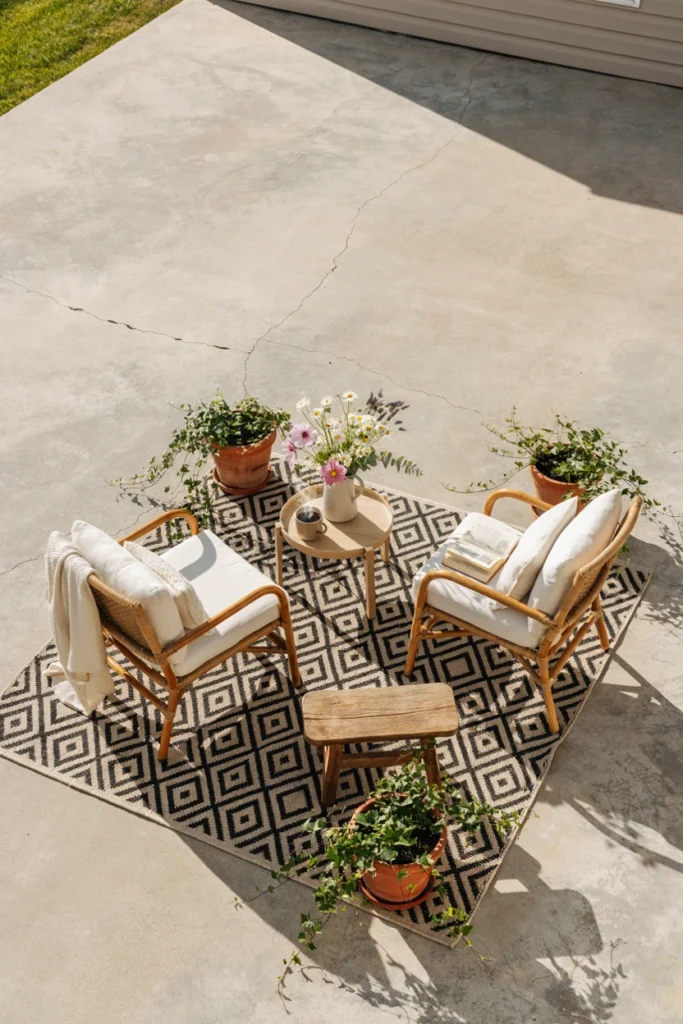
A bare concrete pad is the most common mobile home outdoor space — and the most ignored. One generously sized outdoor rug changes everything, because rugs are how the eye decides where a “room” begins and ends. Suddenly the chairs belong together, the space has a color story, and the pad stops feeling like a parking spot. It’s the highest-impact, lowest-effort move on this list, and it happens in the time it takes to unroll it.
Size up: the rug should cover most of the pad, with all front furniture legs on it. Polypropylene rugs handle rain and hose-cleaning, and bold geometric patterns hide dirt best. Arrange seating to face — two chairs opposite a bench or loveseat — rather than lined against the house. Finish the edges with a few pots of trailing greenery so the concrete border softens. End-of-season sales regularly put big outdoor rugs under forty dollars.
6. Planter-Lined Steps That Welcome You Up
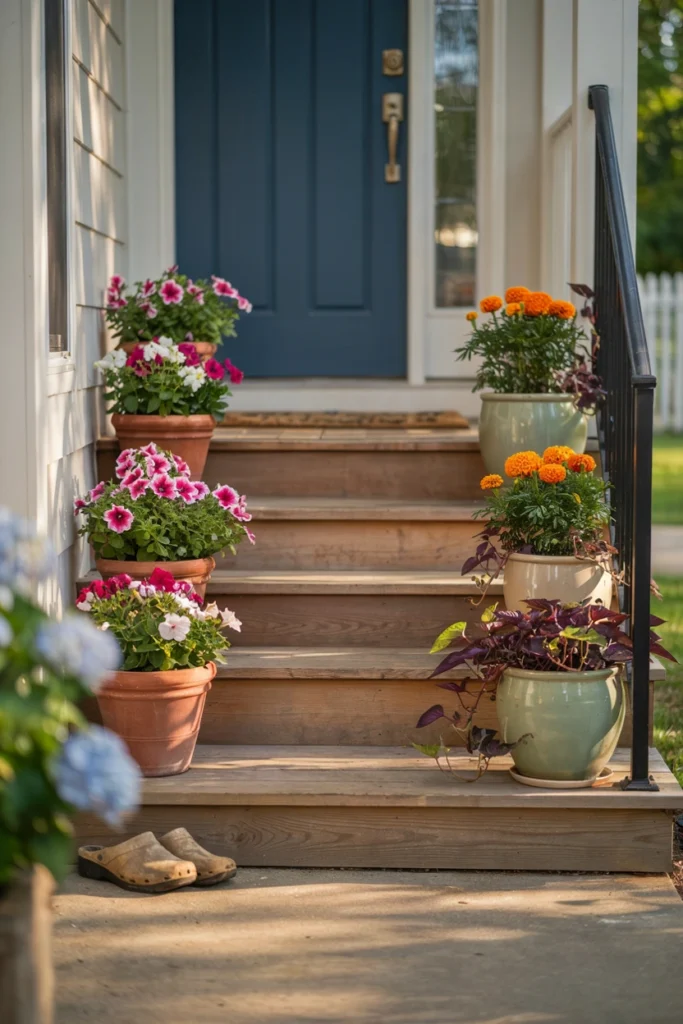
Entry steps are the handshake of a mobile home, and most of them are completely bare. Lining each step’s edge with potted flowers turns a purely functional climb into a small moment of arrival — color at every level, greenery softening the metal or wood, and an entrance that photographs like a cottage. It’s also the friendliest kind of curb appeal: visible from the street, welcoming at the door, and rearrangeable whenever the mood strikes.
Use pots in graduated sizes, largest at the bottom, keeping one side of each step fully clear for safe footing. Repeat one pot material — all terracotta, or all glazed in a single color family — so the collection reads styled instead of scattered. Sun-loving annuals like petunias and marigolds give the most color per dollar; add one trailing vine for softness. Painting the door a deep contrasting color while you’re at it doubles the effect for ten dollars of paint.
7. A Lattice Privacy Wall With Climbing Vines
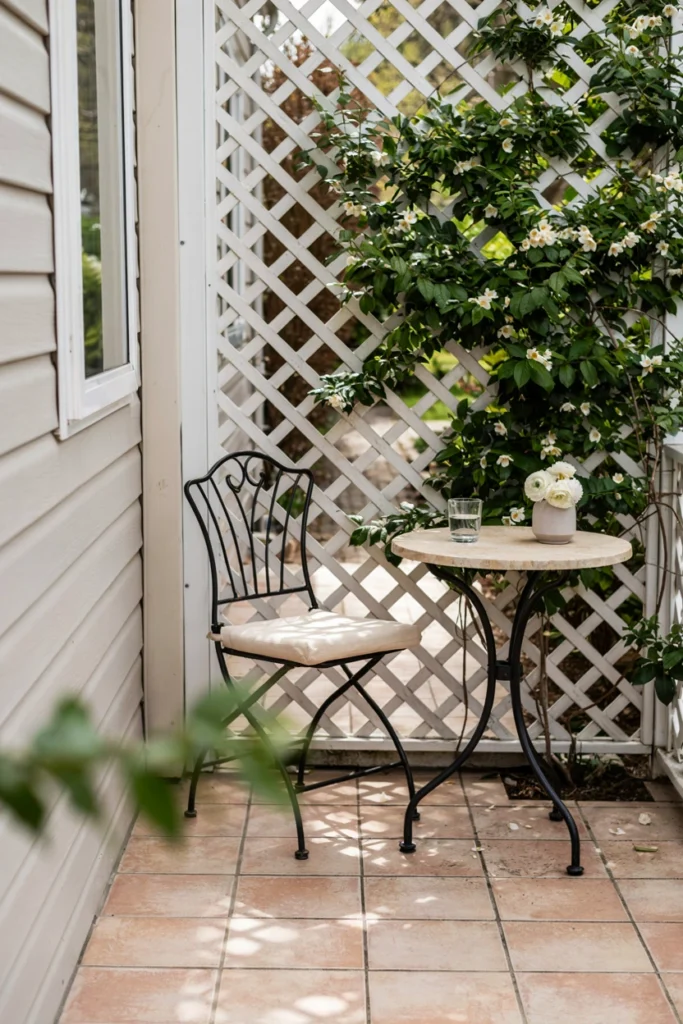
Mobile home lots often sit close together, and nothing kills the urge to sit outside like feeling watched. A lattice screen planted with climbing vines builds privacy the beautiful way — a living green wall instead of a fence-like barrier. The dappled light coming through the gaps keeps the space bright while making it feel tucked away, and within a season or two the vines turn a hardware-store panel into something that looks landscaped and lush.
Anchor two or three lattice panels to sturdy posts or the deck frame on the side facing neighbors. Plant star jasmine or clematis in large containers at the base — containers keep roots away from skirting and move if you do. Train stems weekly with garden ties until they take over on their own. Tuck a bistro set into the sheltered pocket, and paint the lattice white or soft black to match your trim for a finished, intentional look.
8. A Shade Sail Lounge for Hot Afternoons
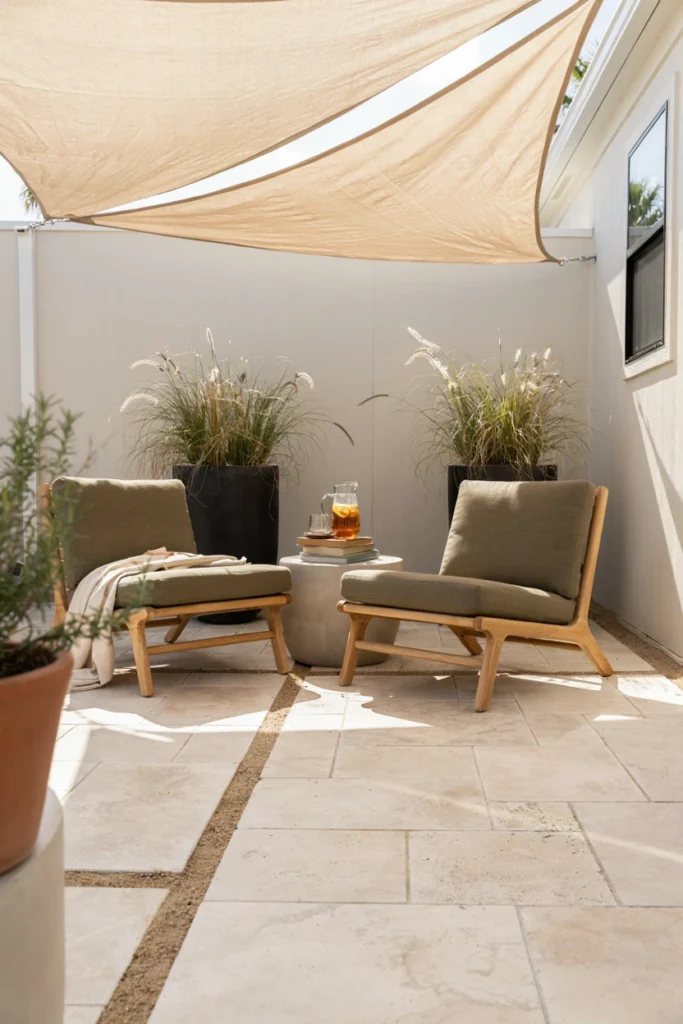
Full sun makes many mobile home yards unusable from noon to five — the hours you most want to be outside in summer. A shade sail fixes that for far less than an awning, and honestly looks more current. The taut, angled fabric adds architecture to a plain exterior, cuts the temperature underneath dramatically, and instantly designates a lounge zone. The effect is a little bit resort, even over plain grass or gravel.
Mount one corner to the home’s fascia or a secure bracket, and run the others to steel posts set in concrete-filled planters or ground anchors. Angle the sail rather than hanging it flat — it sheds rain and looks sharper. Sand, taupe, or charcoal fabrics keep it sophisticated. Underneath, choose low, casual seating and one hardy planter of ornamental grass. Quality sails run forty to eighty dollars and pack away in one drawer for winter.
9. A Slim Dining Nook on the Side Deck
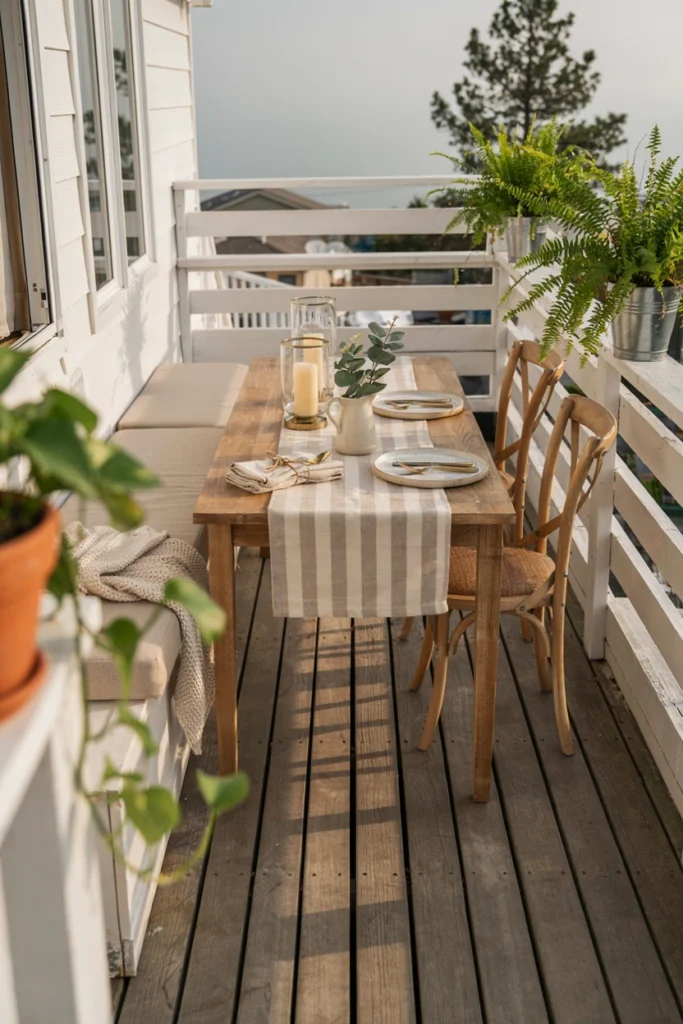
Eating outside turns an ordinary Tuesday dinner into something worth lingering over, but most mobile home decks seem too narrow for a dining set. The fix is orientation: a slim rectangular table pushed parallel to the railing, with a bench tucked on one side. Benches slide fully under the table when not in use, so the walkway stays clear. The result is a genuine al fresco dining spot in a footprint most people write off.
Look for tables under thirty inches deep — console-style outdoor tables work brilliantly. Pair the bench side with two folding chairs opposite that can hang on wall hooks between meals. Dress it simply: a washable runner, two lanterns with battery candles, and hanging ferns on the rail above to frame the scene. A secondhand wooden table sanded and sealed for outdoor use keeps the whole nook under seventy-five dollars.
10. Window Boxes That Dress Up the Whole Facade
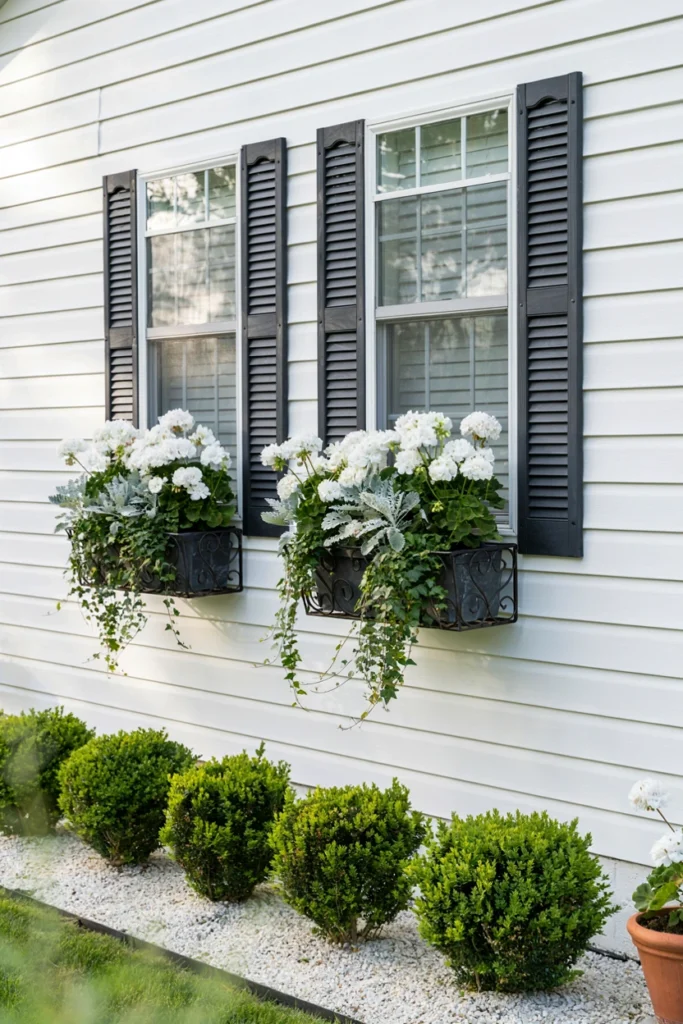
Window boxes are the rare upgrade that improves the view from both sides of the glass. On a mobile home, they do something subtler, too: they break up long horizontal siding lines and make the whole exterior read more like a cottage. Overflowing with white blooms and trailing ivy, they suggest a home that’s cared for down to the details — which is precisely what buyers, neighbors, and Pinterest saves respond to.
Choose lightweight resin or metal boxes and mount them into studs or with siding hooks made for manufactured homes, keeping weight modest with potting mix rather than garden soil. Plant the classic formula — a thriller, a filler, and a spiller — like geraniums, dusty miller, and ivy. Stick to two flower colors maximum across all boxes. Self-watering inserts cut maintenance to weekly, and two boxes typically transform the facade for under sixty dollars.
11. A Pea Gravel Bistro Corner Under a Tree
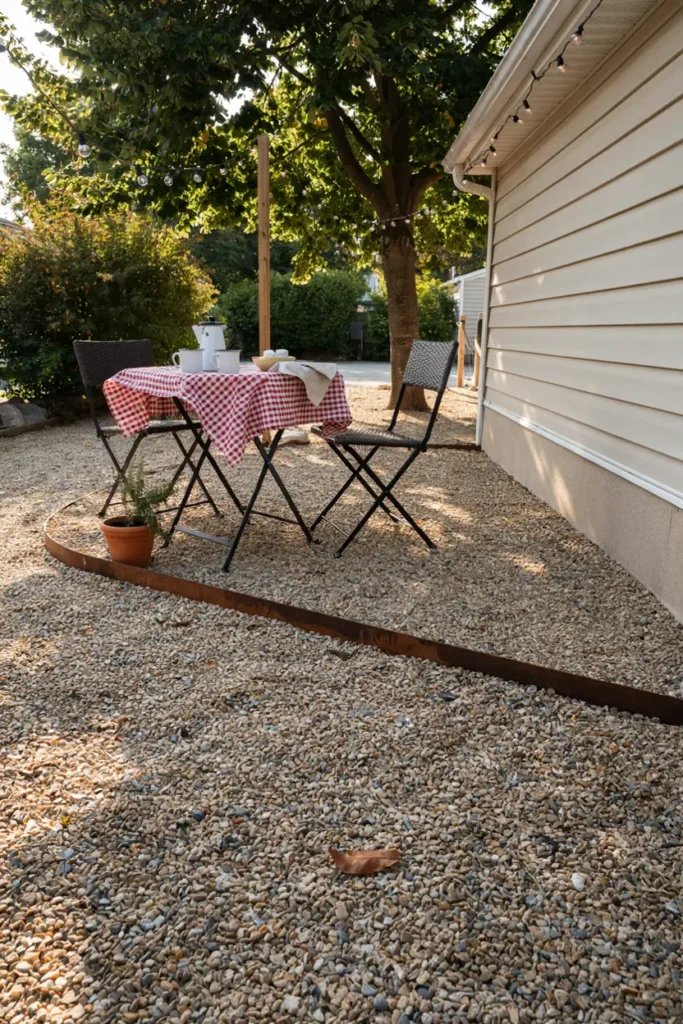
Not every outdoor idea needs to touch the home itself. A small pea gravel pad under a shade tree — just big enough for a bistro table and two chairs — creates a destination in the yard, and destinations are what make small properties feel bigger. There’s something quietly European about it: gravel underfoot, coffee on a folding table, dappled light. It’s the kind of corner that gets used every single morning once it exists.
Clear a six-by-six-foot patch, edge it with steel or brick, lay fabric, and pour two inches of pea gravel — one afternoon, roughly fifty dollars. A folding bistro set stores flat in winter and comes in every color; matte black stays timeless. Run one strand of cafe lights from the tree to a single post for evenings. Keep styling minimal: a cloth, a candle, and whatever you’re drinking. The simplicity is the charm.
12. A Living Wall on the Blank Side of the House
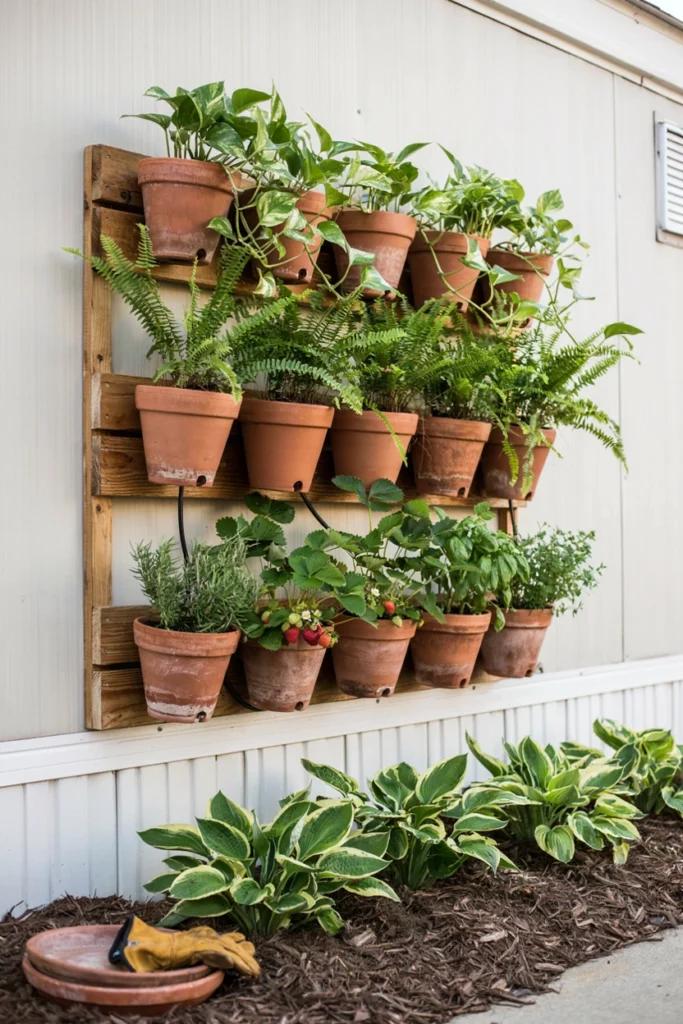
Every mobile home has one long, blank side wall that nobody knows what to do with. A vertical garden turns that dead space into the lushest view on the property — rows of potted greenery climbing the wall like living wallpaper. Because it grows up instead of out, it works even where the side yard is only a few feet wide, and it softens all that flat siding better than any trellis or paint job could.
Build or buy a slatted wood frame that leans against or mounts to the wall studs, then hook on lightweight pots — a mix of trailing pothos, ferns, herbs, and even strawberries. Repeat the same pot style throughout for cohesion. Position it where it gets morning sun but afternoon shade, and group thirstier plants on lower rows where watering is easier. Start with one four-foot section; it fills in fast and expands whenever you’re ready.
13. A Solar-Lit Path That Ties It All Together
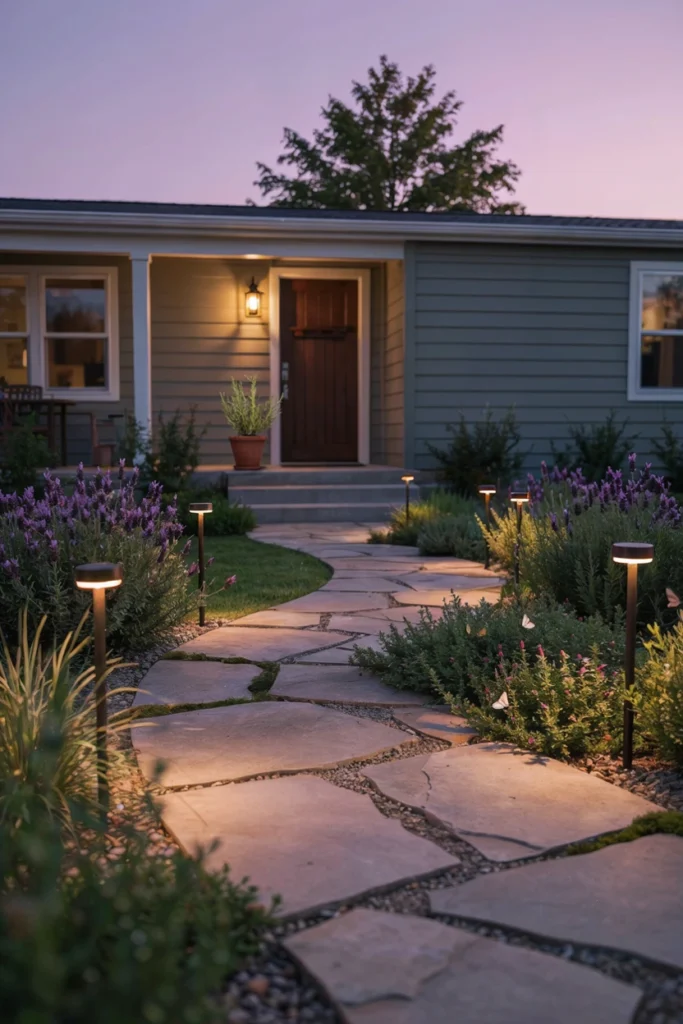
Paths do invisible work: they connect the driveway, the door, and the patio into one property instead of scattered zones. Add solar lights along the edges and the yard earns a second life after sunset — a soft, glowing route that makes the whole lot feel established and cared for. For mobile home yards especially, a defined path signals permanence, which is exactly the feeling most manufactured-home landscaping is missing.
Lay concrete stepping stones in a gentle curve rather than a straight line; curves photograph better and feel more natural underfoot. Set them level with the soil so mowing stays easy. Space warm-white solar stakes every three to four feet — skip the cool blue-toned ones — and plant creeping thyme or low lavender between stones for scent and softness. Twelve stones and a set of lights typically comes in around eighty dollars, no wiring required.
14. The Carport Lounge Conversion
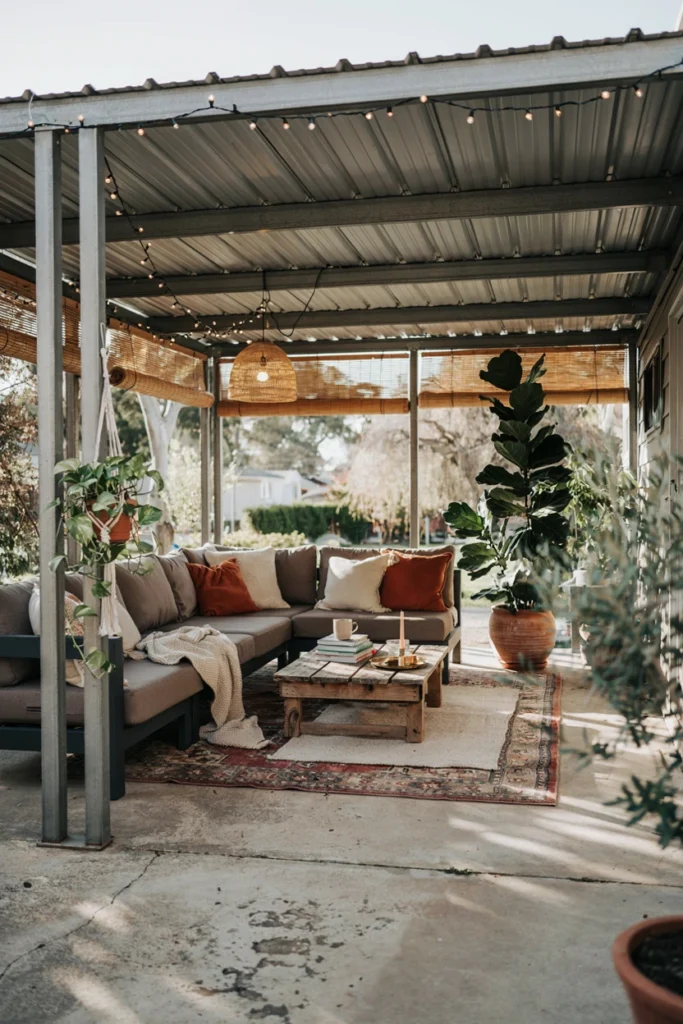
If your car can live in the driveway, your carport can become the best room of the house. It already has the two expensive parts — a roof and a floor — so it shelters furniture from sun and rain that would wreck an open patio setup. Hung with shades and layered with rugs, a carport lounge feels like a true outdoor living room: usable in summer heat, light rain, and every season in between.
Define the lounge with one large outdoor rug, then arrange a weatherproof loveseat or sectional against the most sheltered side. Bamboo roll-up blinds between the posts add privacy and filter western sun for about fifteen dollars each. String lights along the roofline handle evenings, and one dramatic potted plant makes it feel decorated rather than parked-in. Because everything stays dry, thrifted indoor-outdoor furniture survives here beautifully — a huge budget advantage.
15. Fresh Skirting and a Planting Bed to Finish the Look
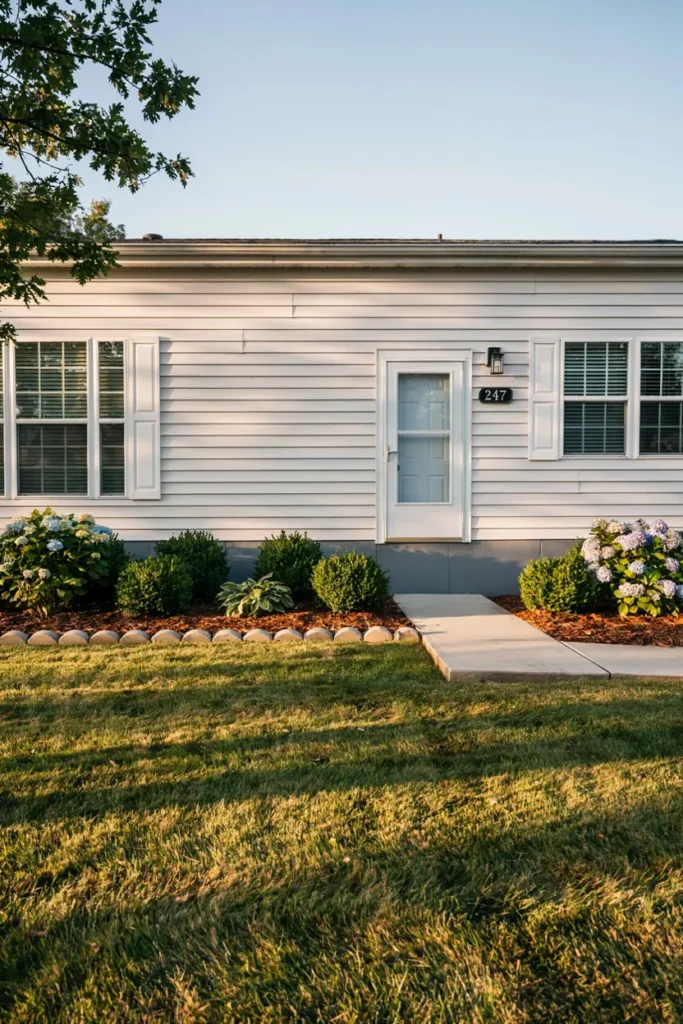
Skirting is the foundation line of every mobile home, and when it’s faded or dented, nothing styled above it ever quite lands. Refreshing the skirting and anchoring it with a planted bed is the single change that makes the entire property look finished. The dark base grounds the home visually, the greenery blurs the line between house and yard, and together they create the settled, permanent look that raises both pride and resale value.
Paint vinyl skirting with exterior paint made for plastics — charcoal, deep bronze, or black reads most modern — or replace damaged panels with faux-stone versions on the street-facing side only to save money. Along the base, dig a slim bed, edge it with stone, and plant a repeating rhythm of boxwood, hosta, and one flowering shrub like hydrangea. Two inches of dark mulch finishes it. This weekend project routinely delivers the biggest before-and-after on the block.
Conclusion
The best part of upgrading a mobile home outdoor area is how quickly small moves add up. A rug defines a room, lights extend the evening, a few planters soften every hard edge — and none of it requires permits, contractors, or a big renovation budget. Whether you start with the front steps or the back corner of the yard, the goal is the same: outdoor spots that feel comfortable, polished, and genuinely functional for everyday life. Pick the two or three mobile home outdoor space ideas that match your lot, your light, and your weekends, and let the rest wait for next season — outdoor spaces are meant to grow slowly. If a few of these sparked something, save your favorites to your Pinterest boards so they’re ready when the weather and the budget line up. Your coziest room might turn out to be the one without walls.