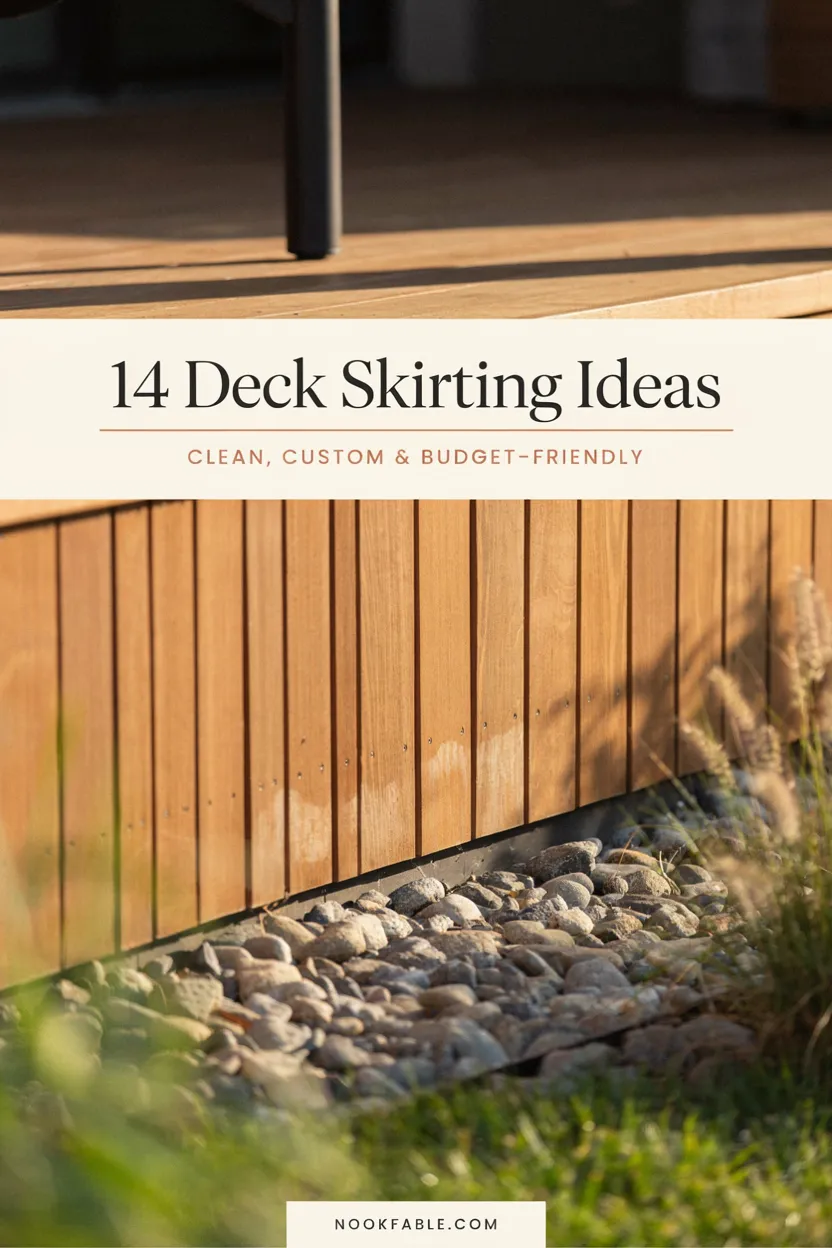
14 Deck Skirting Ideas That Make Your Backyard Look Clean and Custom
Every deck has an underworld — that shadowy gap between the boards and the ground where hoses coil, critters browse real estate, and the whole backyard quietly loses its polish. Skirting is the fix, and it’s wildly underrated as a design decision. The right skirting turns a floating platform into finished architecture, hides the storage chaos, keeps skunks from homesteading, and can even carry the yard’s style all by itself. Save the styles that match your deck and house, because this weekend-sized project delivers one of the biggest visual upgrades a backyard can get. Skirting is my quiet obsession as a stylist — it is the hem that finishes the whole outfit.
1. Horizontal Slats That Modernize Everything Above
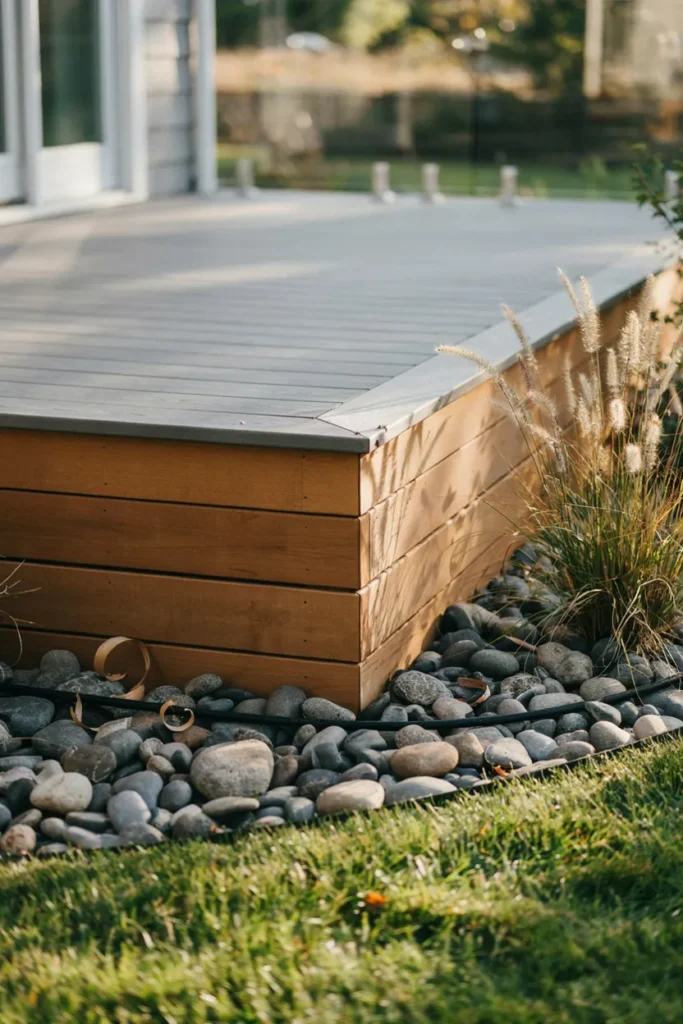
Horizontal slats do for deck skirting what they did for fences: instant modernization. The parallel lines with breathing gaps wrap the deck base in tailored shadow-stripes, ventilate the underworld naturally, and make even an older deck above read current. Of every skirting style, this one adds the most design value per board — the deck stops standing on legs and starts sitting on architecture.
Rip or buy one-by-four cedar slats and run them on vertical nailers between posts, gapped a consistent half inch — a spacer block keeps the rhythm honest. Stain to match or deliberately contrast the deck boards. The gaps handle airflow automatically, no vents needed. Finish the ground line with steel edging and a rock or gravel border so the bottom slat never touches soil.
2. Framed Lattice, the Classic Done Properly
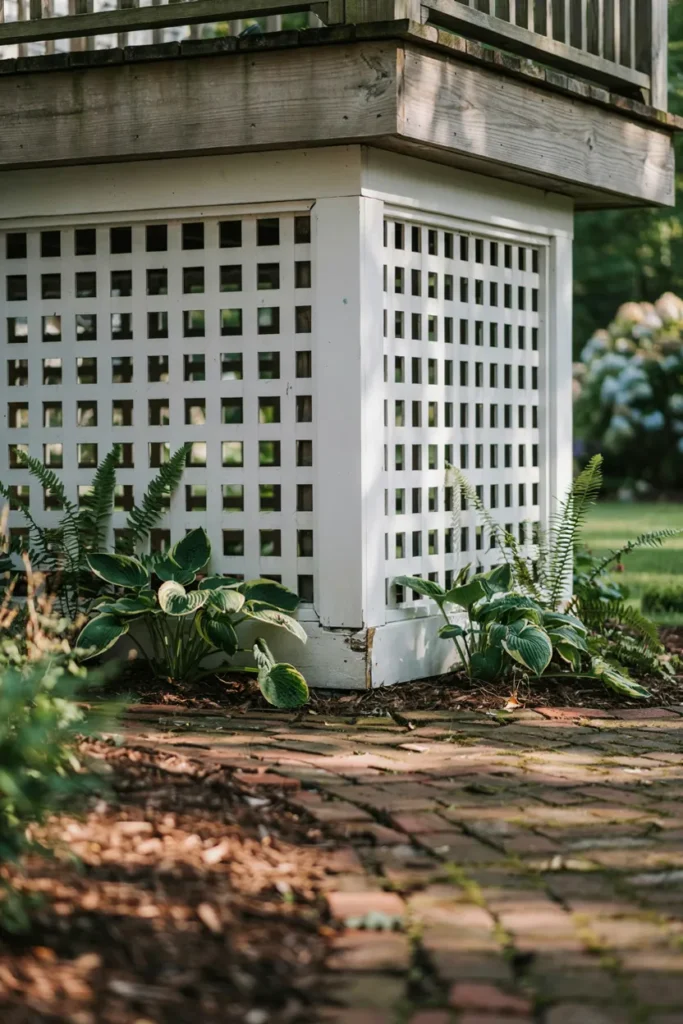
Lattice earned its bad reputation from bad installs — floppy sheets stapled to posts, edges raw, sagging by June. Framed properly, it’s still a classic for good reason: airflow, critter resistance, and cottage charm at the lowest price point in the category. The entire difference between cheap-looking and charming is the frame — every panel bordered in trim like a picture.
Choose square-grid lattice over diagonal for a more current read, in PVC or thick wood panels rather than bargain thin sheets. Frame each section in one-by-four trim, mitered corners, everything painted as one unit. Line the back with hardware cloth where raccoons audition. Painted to match the house trim, framed lattice reads intentional for roughly two dollars a square foot.
3. Solid Vertical Boards for the Built-In Look
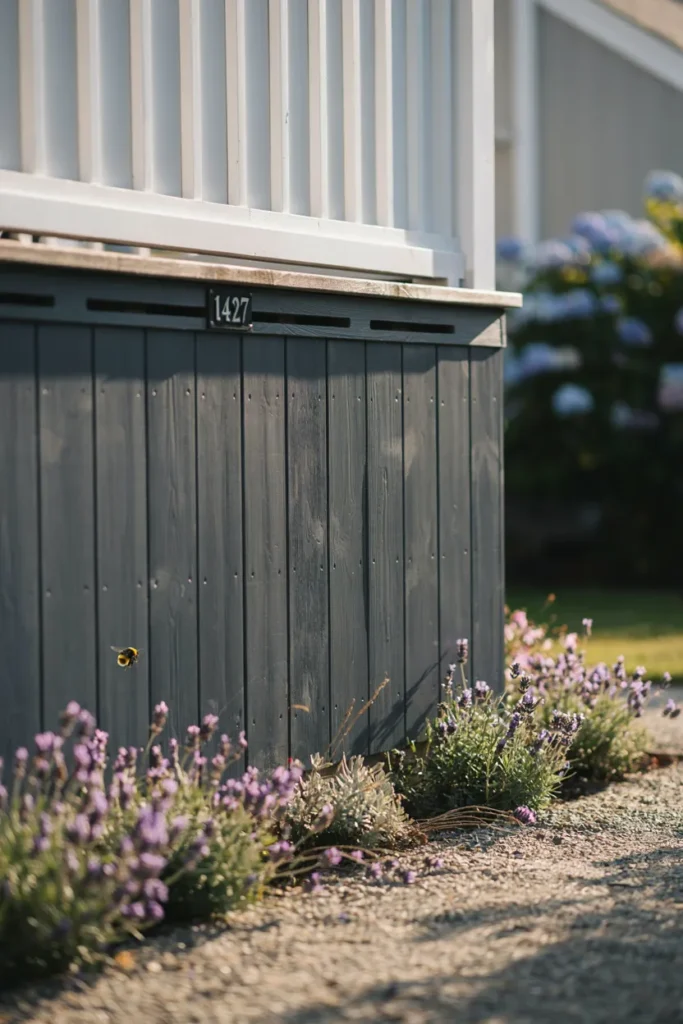
For the fully finished look — deck as extension of the house rather than furniture beside it — nothing beats solid vertical boards. Tongue-and-groove or tightly butted planks close the underworld completely, take paint like siding, and give the deck visual foundation. Painted the house’s trim or accent color, the skirt makes the whole structure look architect-specified.
Solid skirting demands deliberate airflow: leave a concealed vent strip under the deck rim or set discreet louvered vents every eight feet, or trapped moisture will find the framing. Pressure-treated nailers, cedar or PVC boards, and a two-inch ground gap hidden by gravel keep rot away. Dark colors ground the deck dramatically; matching the house unifies the backyard elevation.
4. Faux Stone Panels With Real Presence
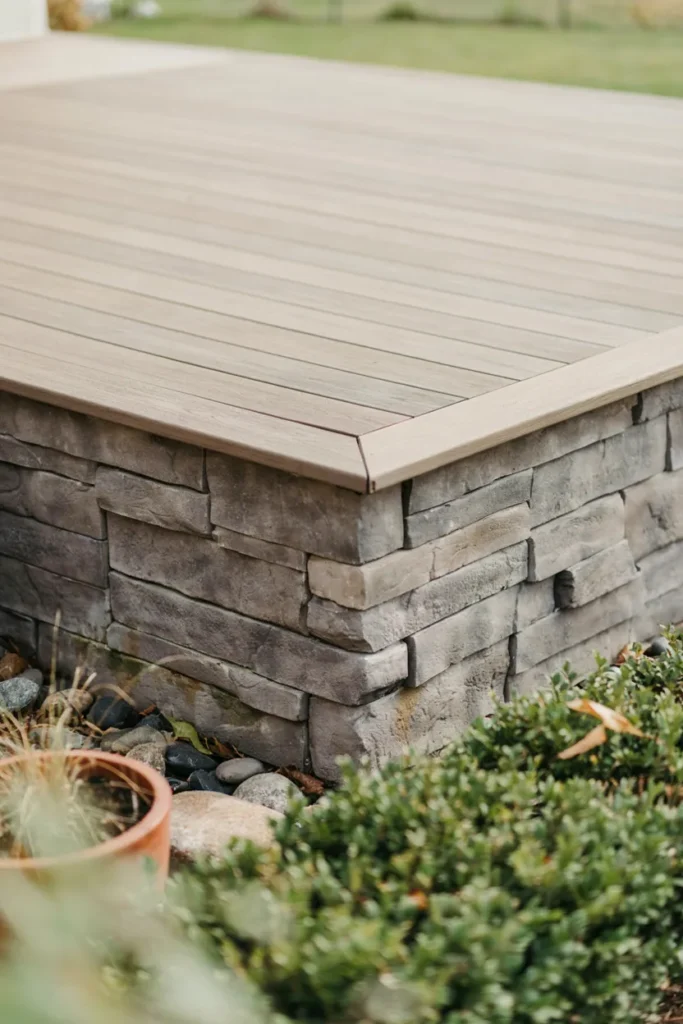
Stone at the base is how expensive houses meet the ground, and polymer faux-stone panels bring the effect to deck skirting at a fraction of masonry cost or weight. Good panels — deep relief, varied coloration — read convincingly from six feet, giving the deck the anchored, permanent look of a stone foundation without a mason’s invoice or a footing.
Buy panels with random repeat patterns and finished corner pieces; visible seams and wrapped corners are what betray the fake. Screw to framing over a moisture gap, never trap against soil. Choose tones sampled from the house or patio, one shade darker than the siding. Combine with a gravel ground border and the illusion becomes near-total at normal viewing distance.
5. Black Aluminum Privacy Panels
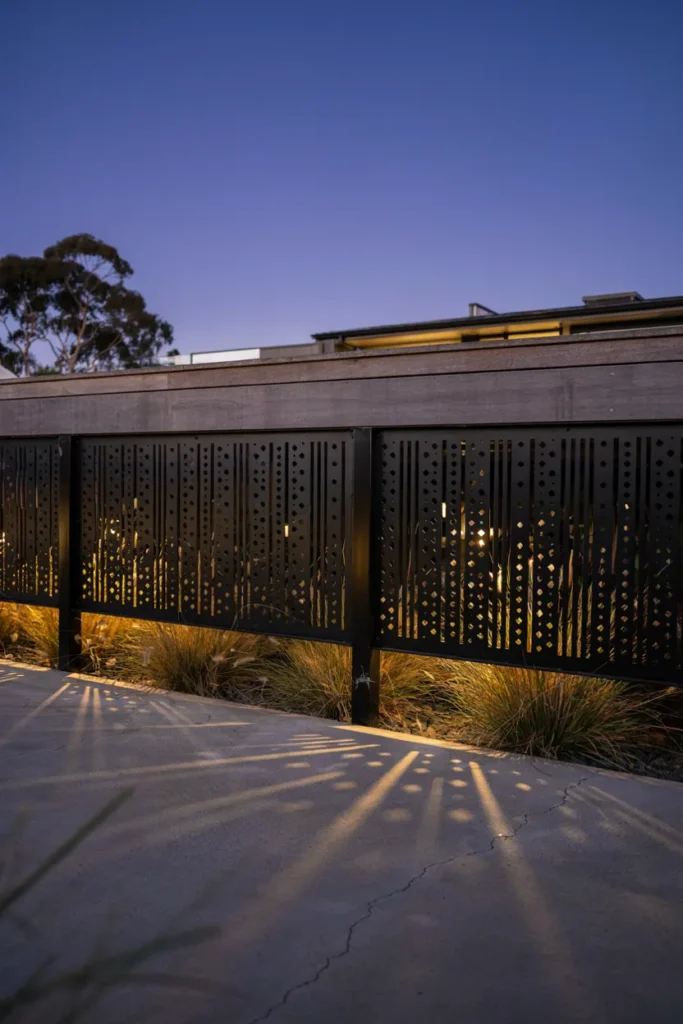
Laser-cut aluminum panels — the material of high-end balcony screens — make the boldest skirting on this list: crisp black geometry that never rots, warps, or asks for paint. The perforated patterns ventilate beautifully, and lit softly from behind at night, the deck base becomes a glowing design feature. It’s skirting as jewelry for unapologetically modern homes.
Panels mount to standard framing with matching black screws; choose linear or slat-look patterns over florals for longevity of taste. Powder-coated aluminum handles sprinklers and snow indefinitely. Cost runs premium per square foot, so many use metal on the visible faces and simple black-painted boards on the hidden sides. One low-voltage strip behind the panels finances the nighttime drama.
6. Corrugated Steel, Farm-Modern and Forever
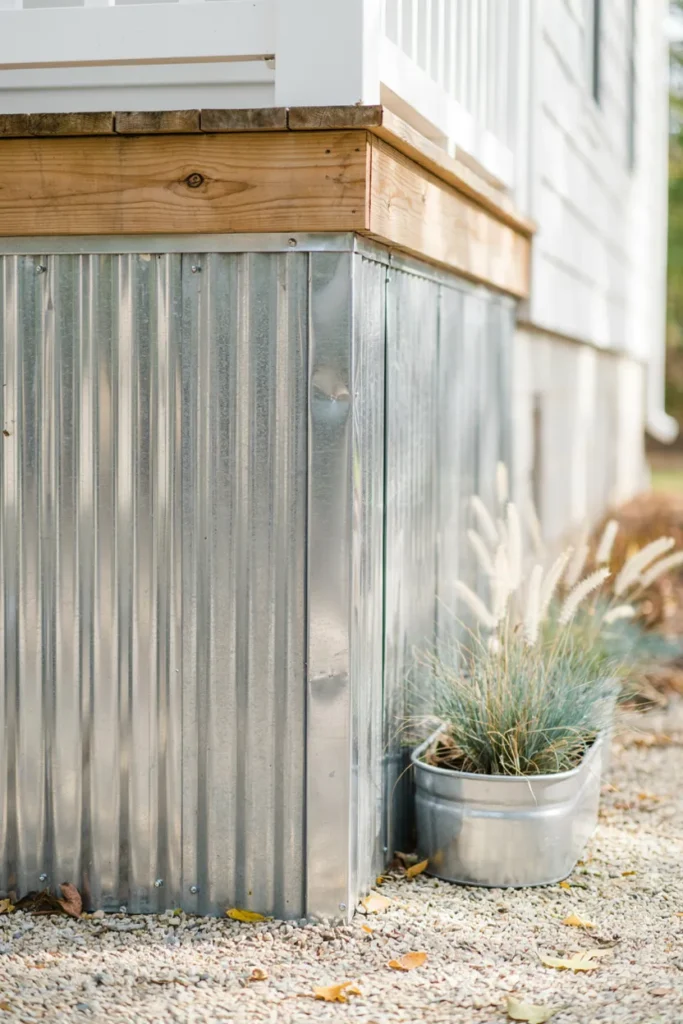
Corrugated steel brings barn honesty to the deck base: rippled galvanized panels that cost little, install fast, and literally outlast the deck above. Run horizontally, the corrugations read modern-farmhouse; the silver patina flatters wood tones and stays handsome through decades of weather. It’s the skirting for anyone whose style file includes stock tanks and gooseneck lights.
Cut panels with snips or a metal blade, hem sharp edges, and frame every section in cedar trim so the metal reads chosen rather than salvaged — the trim is ninety percent of the custom effect. Pre-weathered and matte-black versions suit different palettes. The material self-ventilates at its wavy ends and shrugs off trimmer strikes that destroy lattice.
7. Skip Panels Entirely: Plant a Hedge Skirt
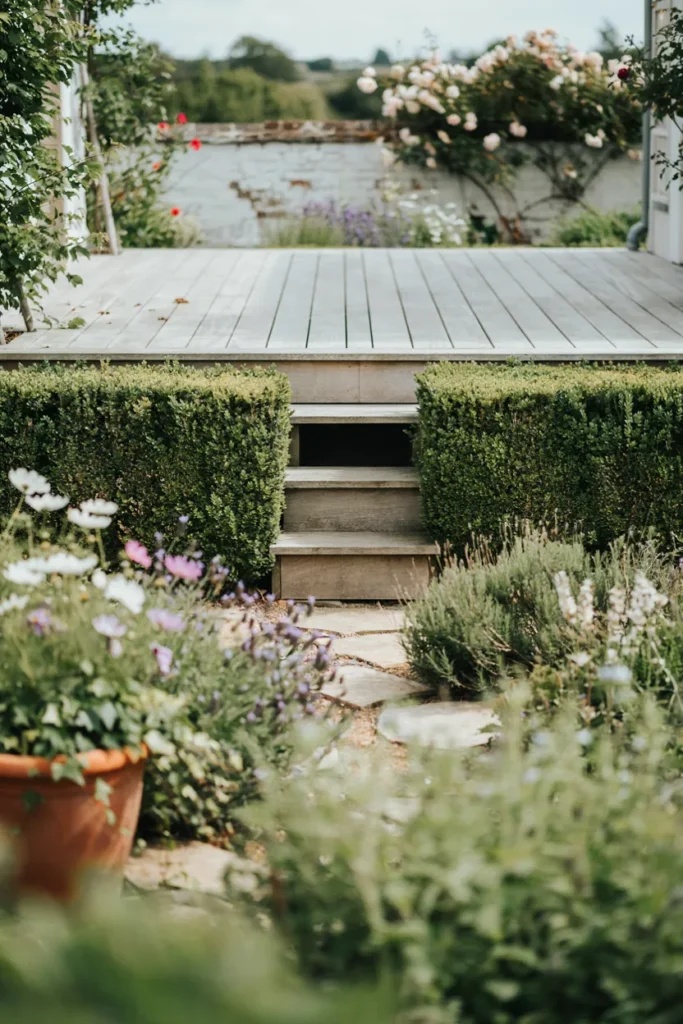
The greenest skirting isn’t built — it’s planted. A dense low hedge along the deck base hides the underworld behind living texture, softens the whole structure into the garden, and improves every year instead of weathering. The deck appears to float on a green cushion, and maintenance is a twice-yearly trim instead of paint and panel repair.
Dwarf boxwood, inkberry holly, or dwarf yew build the classic evergreen skirt; plant eighteen inches from the deck face at nursery-tag spacing and expect full closure in two to three seasons. Line the gap behind with gravel and hardware cloth so the hidden zone stays critter-honest. Where winters bury shrubs, pair a shorter hedge with a simple board skirt behind it — green in summer, tidy in snow.
8. Composite Skirting That Matches the Deck Exactly
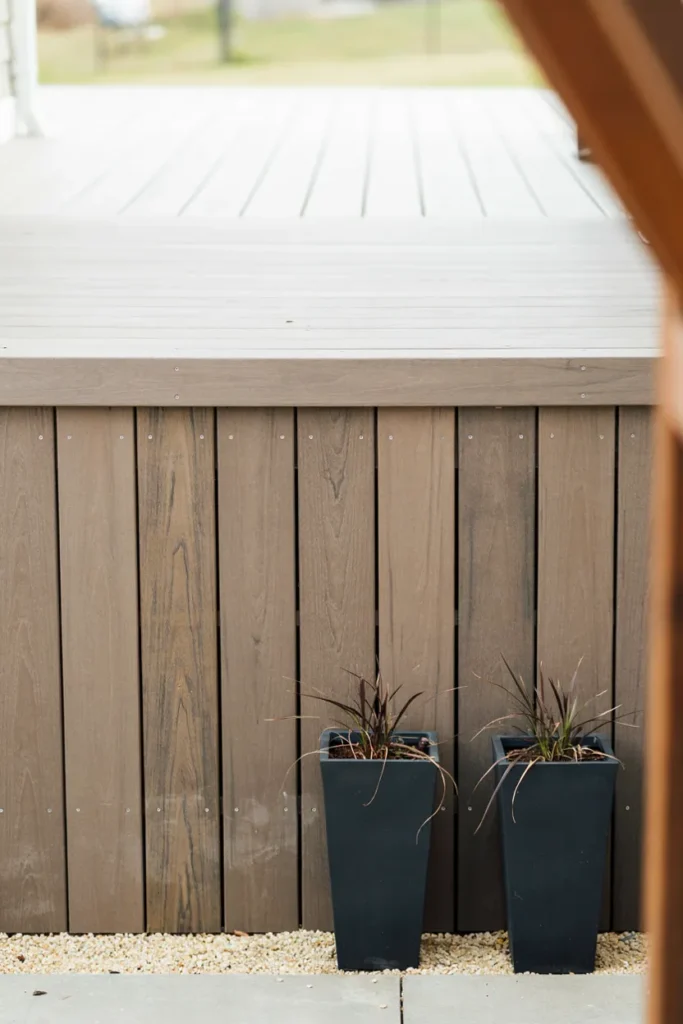
Composite deck owners hold the easiest custom card: skirt with the same boards the deck is built from. Deck and base merge into one seamless object — same color, same grain, no maintenance argument between materials — reading like a factory-designed unit rather than a platform with an afterthought. Nothing looks more intentional than a material that simply continues.
Order matching or coordinating fascia and square-edge boards from your deck line while the batch colors align. Run them vertically on treated nailers with hidden fasteners, gapped slightly or vented at the rim for airflow — composite tolerates moisture but framing still breathes. The leftover deck boards from the original build often cover half the skirt for free.
9. Louvered Skirting That Breathes on Purpose
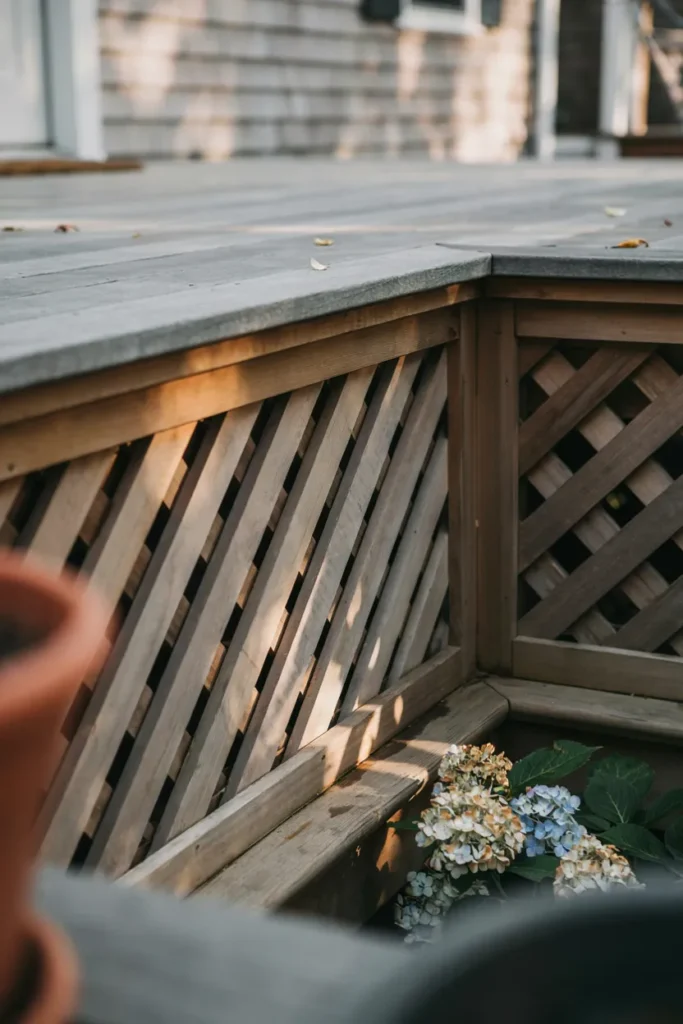
Louvered skirting is the engineer’s choice wearing the craftsman’s clothes: angled slats that block every sightline into the underworld while moving more air than any other closed style. The shutter-like panels shed rain away from the framing, keep the dark zone dry and mold-free, and catch raking light in stripes that make the deck base genuinely beautiful twice a day.
Build panels with slats set at thirty to forty-five degrees in simple frames, or buy louvered PVC sections ready-made. Angle everything downward-outward so water exits. The style suits humid climates and shaded decks best — exactly where solid skirts breed mildew. Oil or stain before assembly; painting installed louvers is the yard’s most tedious afternoon.
10. A Brick Knee Wall for Permanent Polish
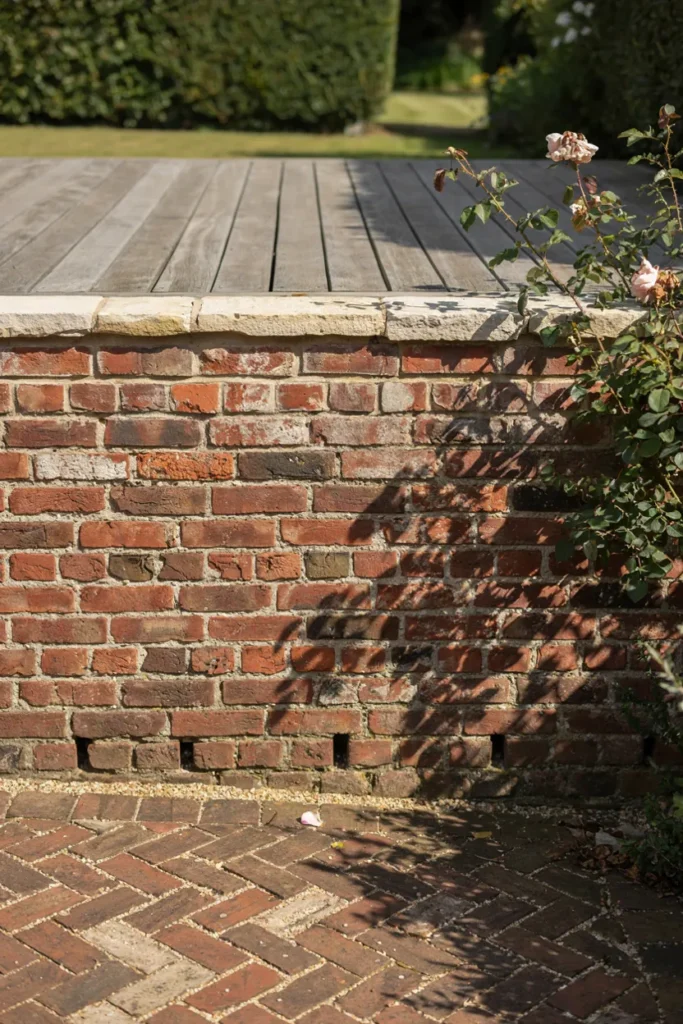
For decks attached to brick homes, a masonry knee wall is the endgame: the house’s own material continuing under the deck, making platform and building read as one construction. Brick skirting never needs paint, never sags, shrugs off trimmers and hoses, and adds the kind of permanence appraisers quietly note. It’s the most expensive option here and the only one that’s truly forever.
A single-wythe wall on a small concrete footing suits most deck heights; leave weep gaps every few courses for the airflow rule and match mortar tone to the house. Reclaimed brick blends instantly with older homes. Cap with stone or rowlock brick just below the deck rim. Where budget objects, brick only the front face — the return corners sell the whole story.
11. Bamboo and Reed, the Weekend Budget Fix
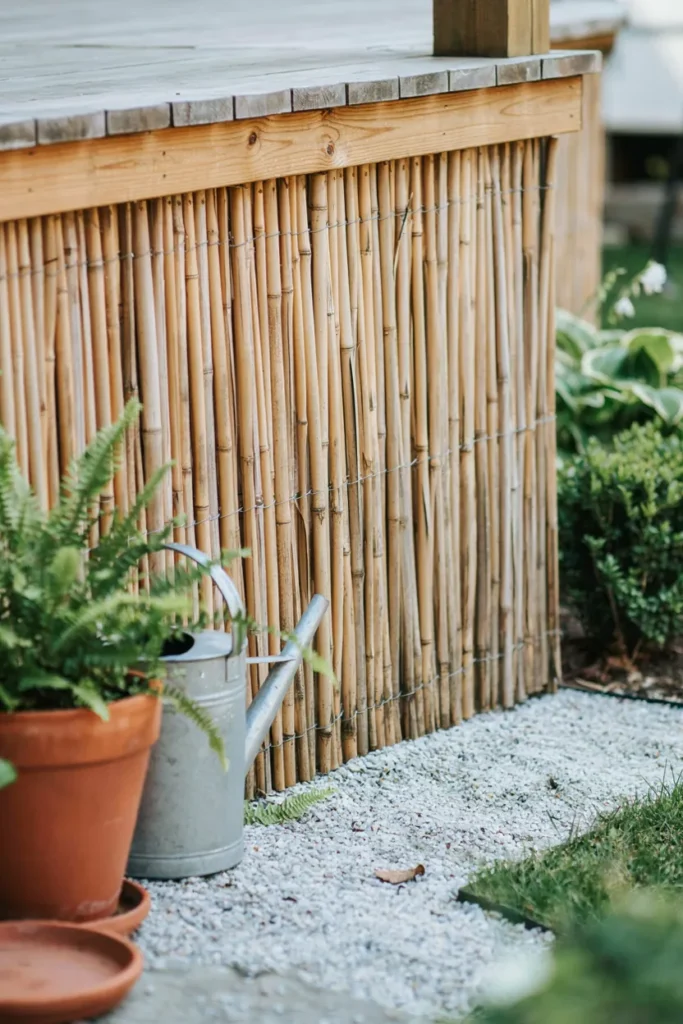
Renting? Saving? Skirting a temporary deck? Reed and bamboo roll fencing closes the gap for pocket change — natural texture, tropical warmth, and installation measured in minutes with a staple gun. Framed with a simple wood border, the humble roll reads beach-house intentional rather than budget patch, and replacing a weathered section costs less than a takeout dinner.
Stretch the roll taut against a light frame or existing posts, staple high and low, and trim the bottom clear of soil contact. The cedar frame border is non-negotiable — raw roll edges are what read cheap. Expect three to five honest years from natural reed, longer from synthetic lookalikes. At under a dollar per square foot, it’s the best-looking temporary answer in the category.
12. A Door That Disappears Into the Design
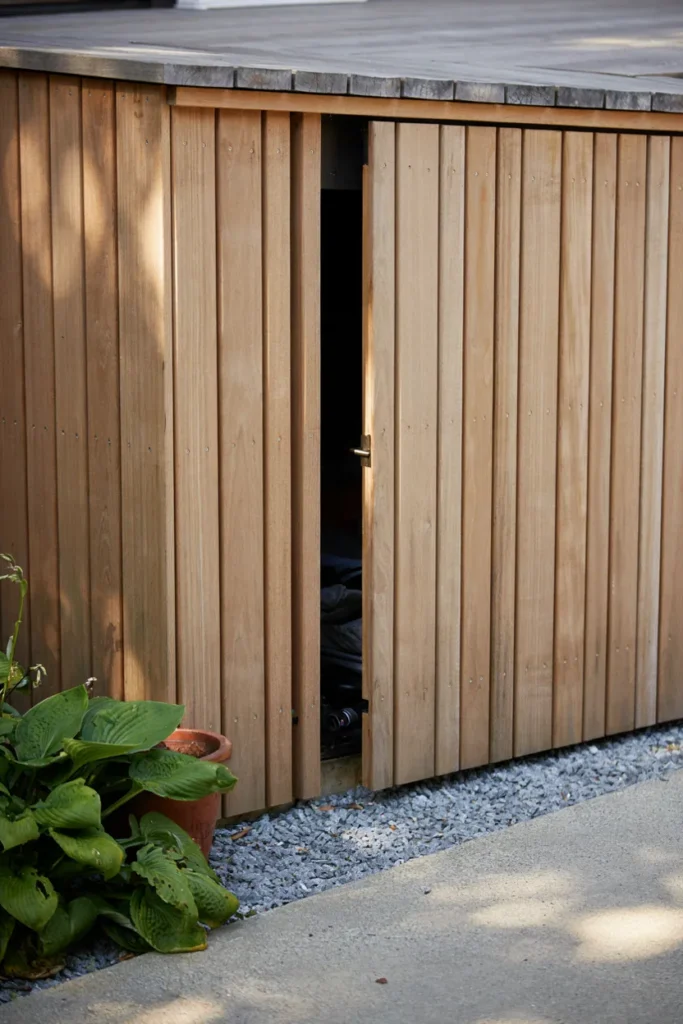
Whatever skirting style you choose, you’ll need in — pipes, storage, the ball that always rolls under. The custom move is a door that vanishes: skirting pattern continuing across a hinged panel, seams falling on the design’s own lines, a flush pull instead of a shed latch. Visitors never spot it, and the skirt keeps its unbroken tailored line.
Build the door as a framed section of the same material, hinged on the back side with heavy-duty butts and closed with magnetic catches or a flush ring pull. Align pattern lines across the seam obsessively — that alignment is the entire illusion. Place it on the least-viewed face but biggest-access side, sized generously; crawling through a hatch once cures undersizing forever.
13. The Gravel Border That Finishes the Bottom Line
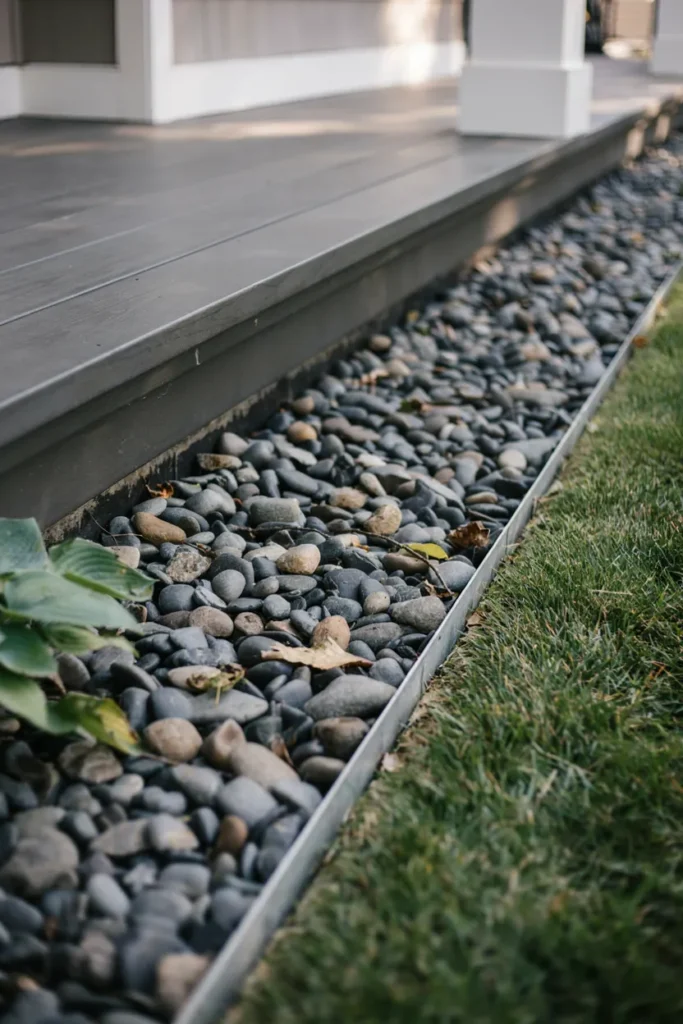
The most-skipped detail in skirting is the last four inches: where panel meets planet. Skirting that dives straight into grass gets trimmer-chewed, splash-stained, and rot-prone — and looks unfinished no matter how good the panels are. A gravel border solves all four: a clean stone band that drains splash, ends mowing damage, and underlines the whole deck like a signature.
Trench a strip eight to twelve inches wide along the skirt, lay fabric, set steel or composite edging at the lawn side, and fill with river rock or crushed granite two inches deep. Keep the skirt bottom floating an inch above the stone — the shadow gap reads custom and keeps materials dry. This fifty-dollar detail upgrades every skirting style on this list.
14. Light the Skirt for the Evening Shift

After dark, lit skirting performs a magic trick: the deck appears to float on a cushion of light. A warm LED strip under the rim washing down the panels, plus recessed dots at the stair risers, turns the base into the yard’s nighttime architecture — safer stairs, glowing texture, and a resort mood that runs on pennies of electricity per evening.
Mount weatherproof strip lighting under the deck’s rim board angled down the skirt face — the top-down wash flatters every panel style, slats most of all. Warm white only, on the same dusk timer as the yard. Recessed pucks in stair risers handle safety code and beauty in one fixture. Hide drivers inside the access door; visible cords undo the floating spell.
Conclusion
Skirting is the rare project where the cheapest square footage on the property delivers the most visible polish. Close the gap well and everything above it improves — the deck reads custom, the yard reads maintained, and the space underneath finally works for you instead of the raccoons. The rules that carry across all of these deck skirting ideas are few and firm: frame every material like it was chosen, respect the airflow that keeps framing dry, plan the access door before the last panel, and finish the ground line with the gravel border that ties it all down. Style-wise, let the house vote — slats for modern, lattice and brick for tradition, steel for the farmhouse, hedge for the gardener. Save your favorite treatments to your Pinterest boards, measure the perimeter this weekend, and turn the backyard’s messiest sightline into its cleanest one. The deck’s been waiting years for a proper hem on its outfit. Skirting an above ground pool deck instead? The same playbook applies — start with these above ground pool deck ideas.