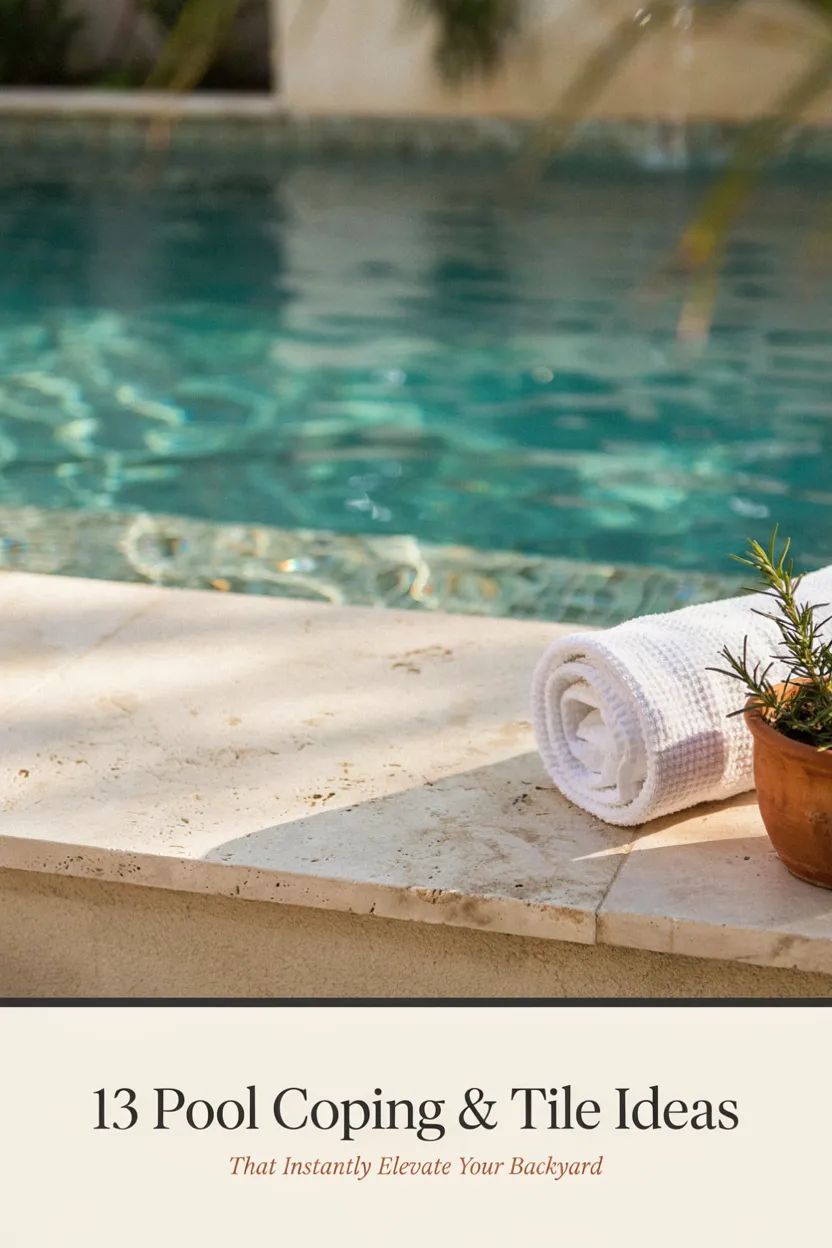
13 Pool Coping and Tile Ideas That Instantly Elevate Your Backyard Oasis
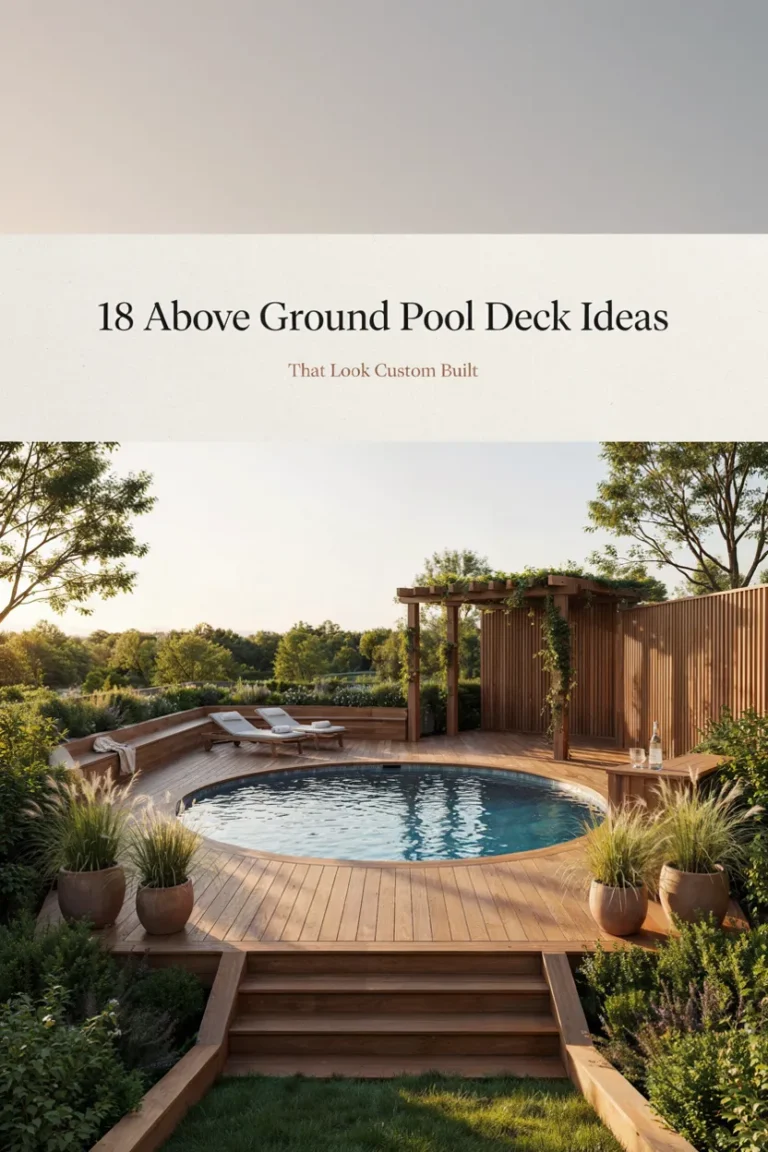
Ask a pool designer where luxury actually lives and they’ll point to two places most homeowners overlook: the coping under your hand and the tile at the waterline. The water is just water everywhere — it’s the frame that decides whether a pool reads builder-basic or boutique resort. That’s good news for anyone upgrading, because coping and tile are the renovation you can do without touching the pool’s bones. These pool coping and tile ideas cover thirteen combinations that transform how a backyard oasis looks and feels: warm travertine and shimmer-glass waterlines, seamless modern edges, handmade zellige, even the humble brick making its comeback. Each includes the practical detail — slip, heat, cost, upkeep — that brochures skip. Save the looks that match your style, because once you notice coping, you can never unsee the bad kind. On shoots, the waterline is always where my camera ends up — it is where pools win or lose.
1. Tumbled Travertine, the Barefoot Classic
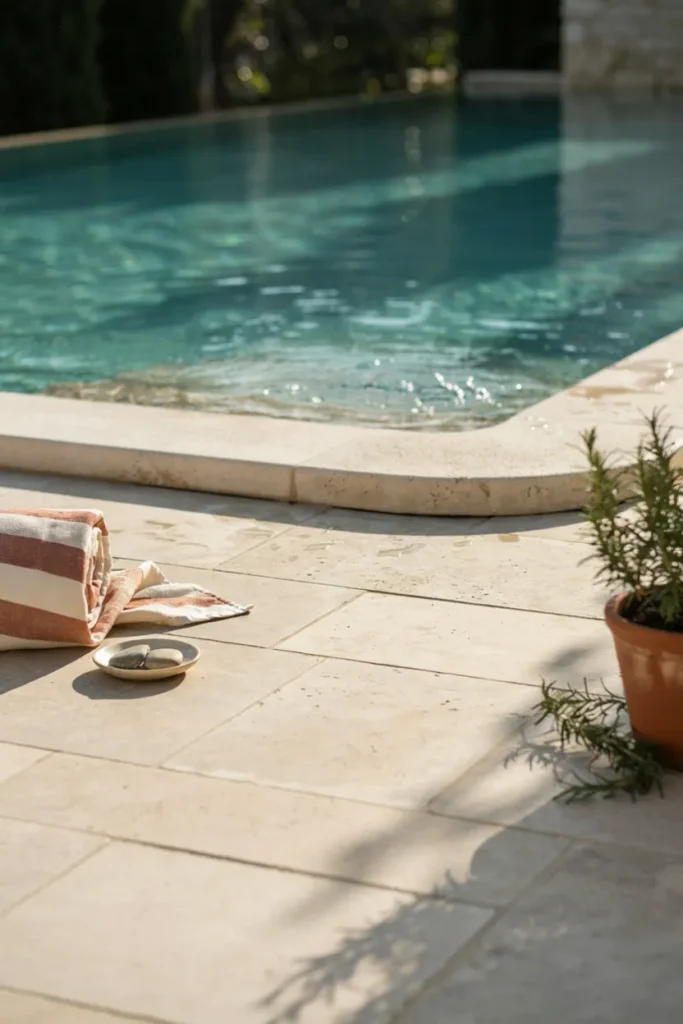
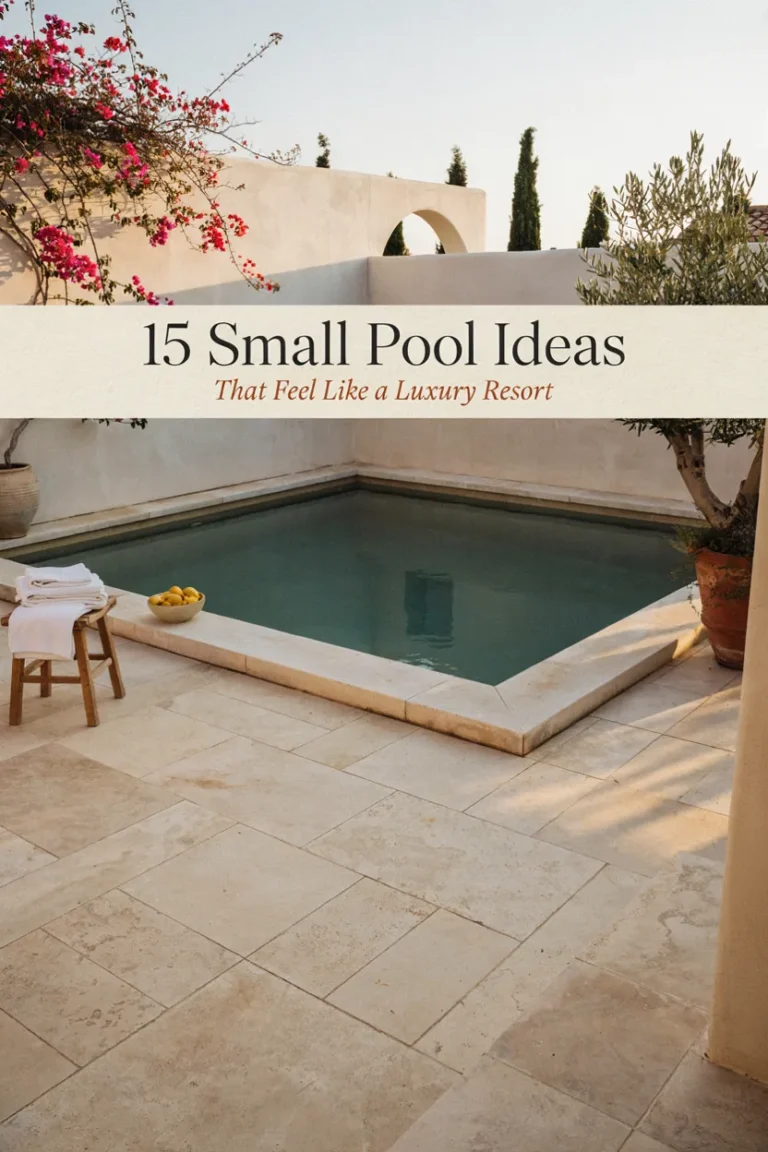
Travertine keeps winning pool decks for one underrated reason: bare feet. The porous ivory stone stays remarkably cool in full sun and grips when wet, while its tumbled edges and soft pitting give that sun-washed Mediterranean patina no manufactured product quite fakes. As coping, a travertine bullnose rounds gently into the water — warm, timeless, and flattering to every water color from turquoise to deep gray.
Choose cross-cut, tumbled travertine in ivory or walnut tones, with a bullnose or eased edge profile for comfortable sitting. Run the same stone into the deck for a seamless resort field, or border it with grass joints for softness. Seal every two to three years against pool chemicals. It’s mid-priced, widely available, and the safest beautiful choice on this list — the little black dress of pool edges.
2. A Glass Mosaic Waterline That Catches Fire
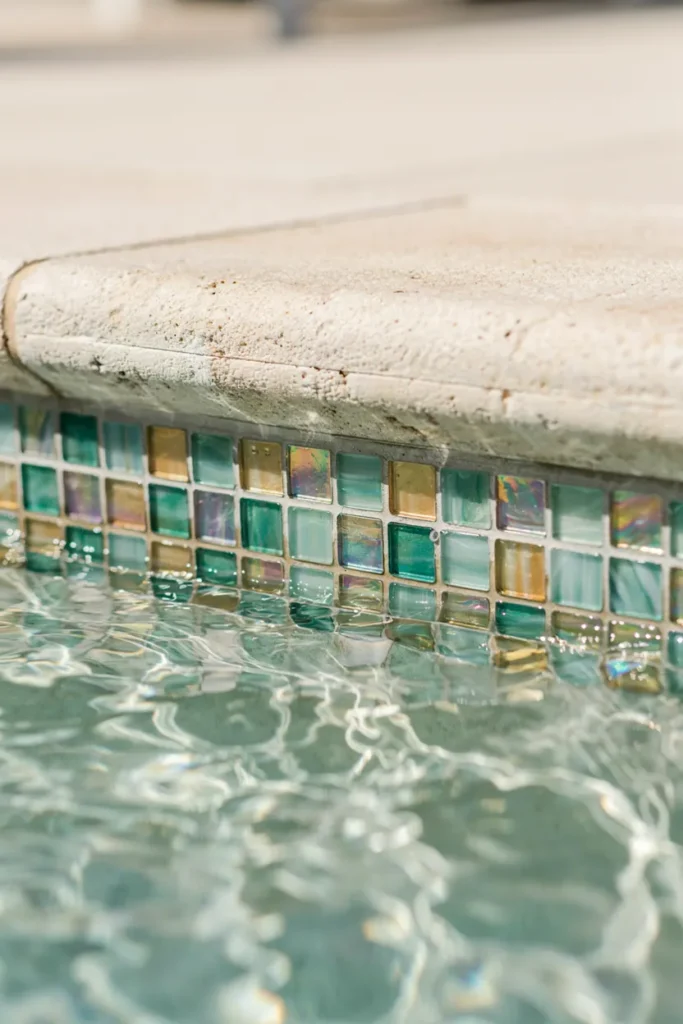
The waterline band is only six inches tall, but it’s where sunlight and water perform all day — and glass mosaic turns that stage into jewelry. Iridescent glass shifts color as light moves, throwing sparkle across the pool’s surface in a way ceramic never will. It’s the single most glamorous upgrade per square foot in pool design, which is why every high-end build seems to shimmer at the line.
Because the band is small, splurging is affordable: even premium glass rarely exceeds a few hundred dollars of material on a modest pool. Blends of aqua-teal-gold warm the water’s color; silver-blue blends cool it. Insist on pool-rated glass and an installer who uses white thinset — shadows telegraph through glass. Brush the line weekly to keep calcium from dulling the fire.
3. Handmade Zellige in Deep Emerald
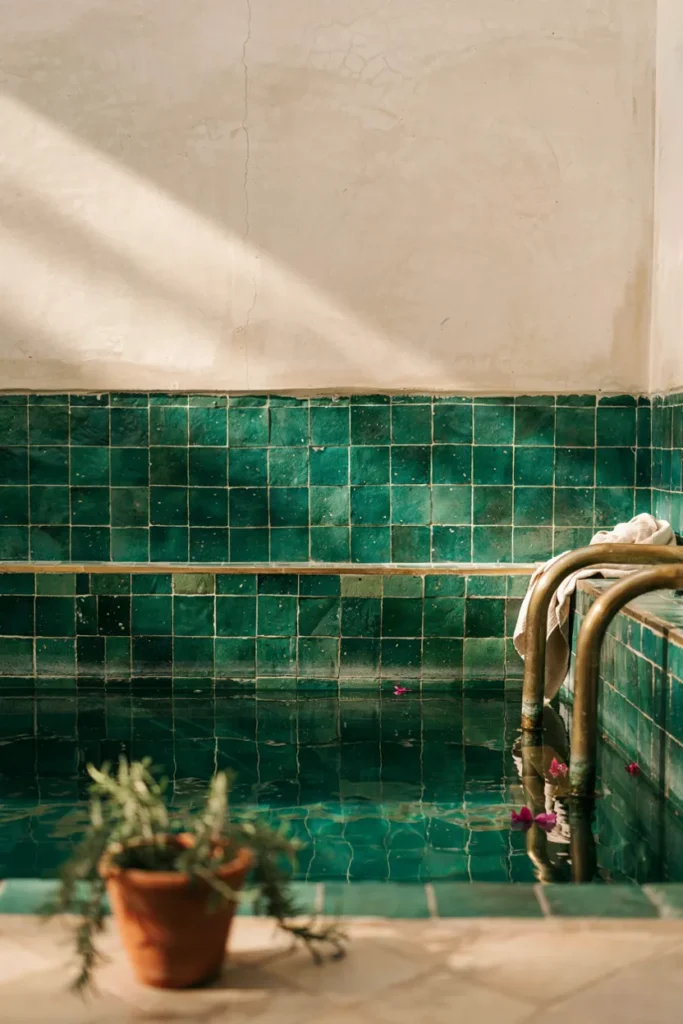
Zellige is the anti-perfect tile: hand-cut, hand-glazed, every piece catching light at its own angle. At a pool waterline or up a raised spa wall, deep emerald or cobalt zellige gives the water an old-world richness that machine tile can’t counterfeit — the difference between a pool and a riad courtyard. The slight irregularity is the luxury; it reads as craft from across the yard.
True zellige is porous, so confirm pool-rated, properly sealed stock from the supplier — several now produce swim-certified lines. Use it where eyes linger: the waterline, a fountain wall, spa dam. Greens read organic against plants; blues classic; white does quiet shimmer. Expect lippage and embrace it — installers who over-level zellige kill exactly what you paid for.
4. Charcoal Granite for the Knife-Edge Modern Look
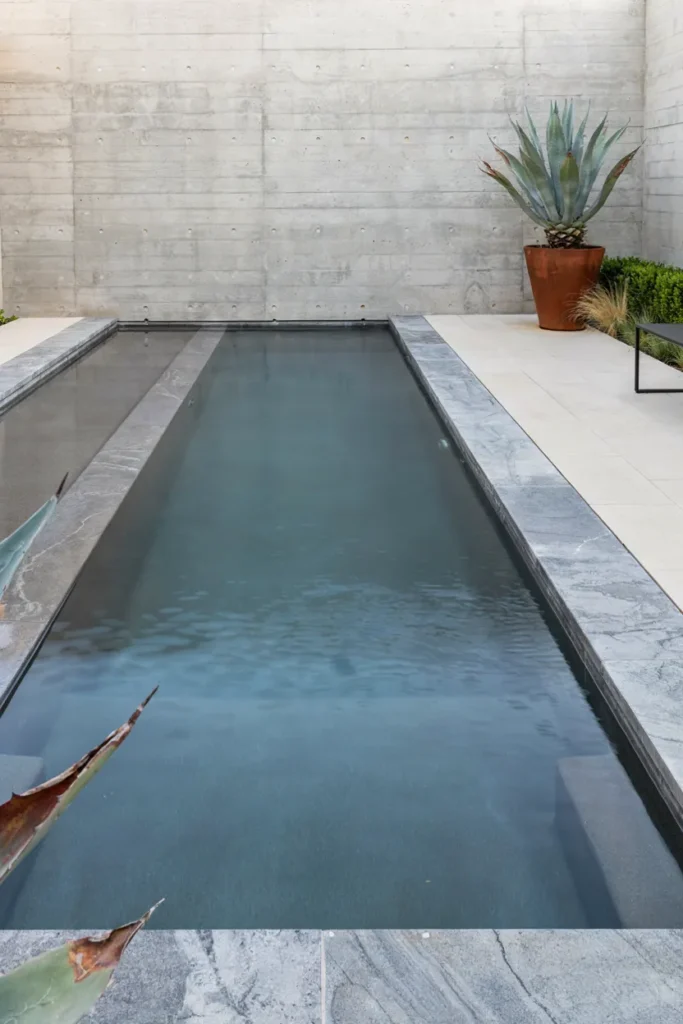
Modern pools live and die by their lines, and charcoal granite draws the sharpest ones. Square-edged dark coping against a pale deck creates a graphic frame that makes water look deeper, calmer, and more architectural — the pool as a designed object rather than a backyard feature. Granite shrugs off chemicals, frost, and decades, making it the workhorse behind most minimalist showpieces.
Specify a flamed or leathered finish for slip resistance — polished granite is a skating rink when wet. Keep edges square and overhangs minimal; the crispness is the style. Pair with large-format pale pavers and wide joints, and carry the dark tone into a matching waterline tile so the frame reads continuous. One warning honest designers give: dark stone gets hot, so plan shaded sitting edges.
5. The Invisible Edge: Cantilevered Concrete
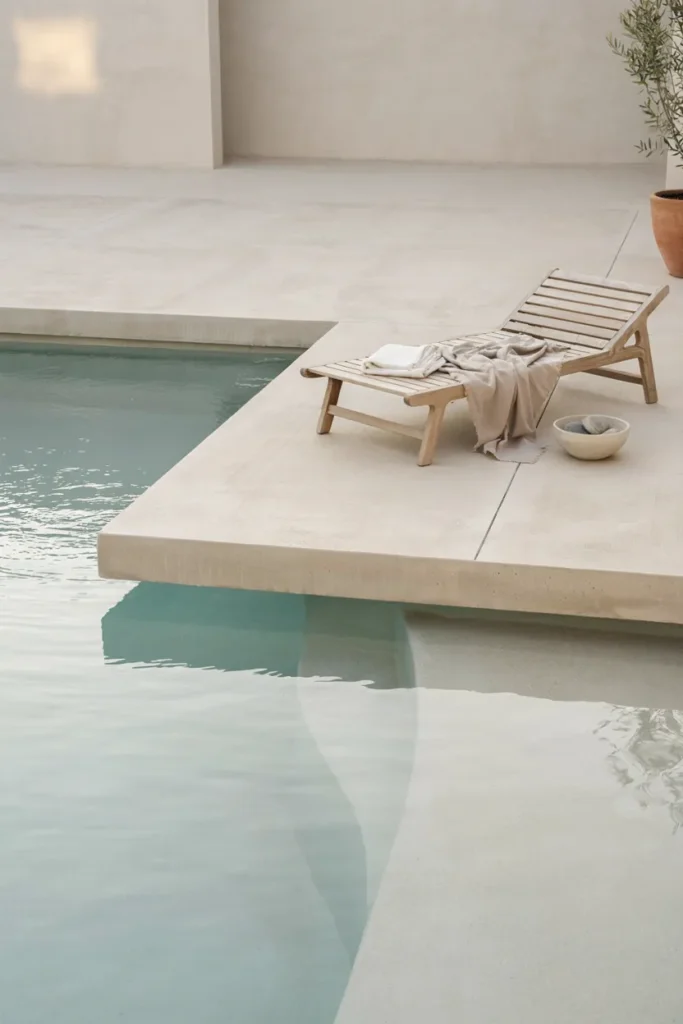
The most luxurious coping can be none at all. Cantilevered concrete extends the deck straight over the pool edge in one uninterrupted plane — no border, no color change, just surface and then water. The effect is spa-like calm: fewer lines, bigger-looking deck, and a pool that feels carved from the patio rather than dropped into it. Minimalists consider this the endgame.
The look is formed during decking: foam forms shape the concrete overhang, later ground smooth. Insist on a light broom or sandwash texture for grip and a drip groove underneath so water doesn’t track back. It’s the budget-friendliest premium look in the category — often cheaper than stone coping — but demands a crew that has done it before. Ask for photos of their last three.
6. Wood-Look Porcelain, Zero Splinters
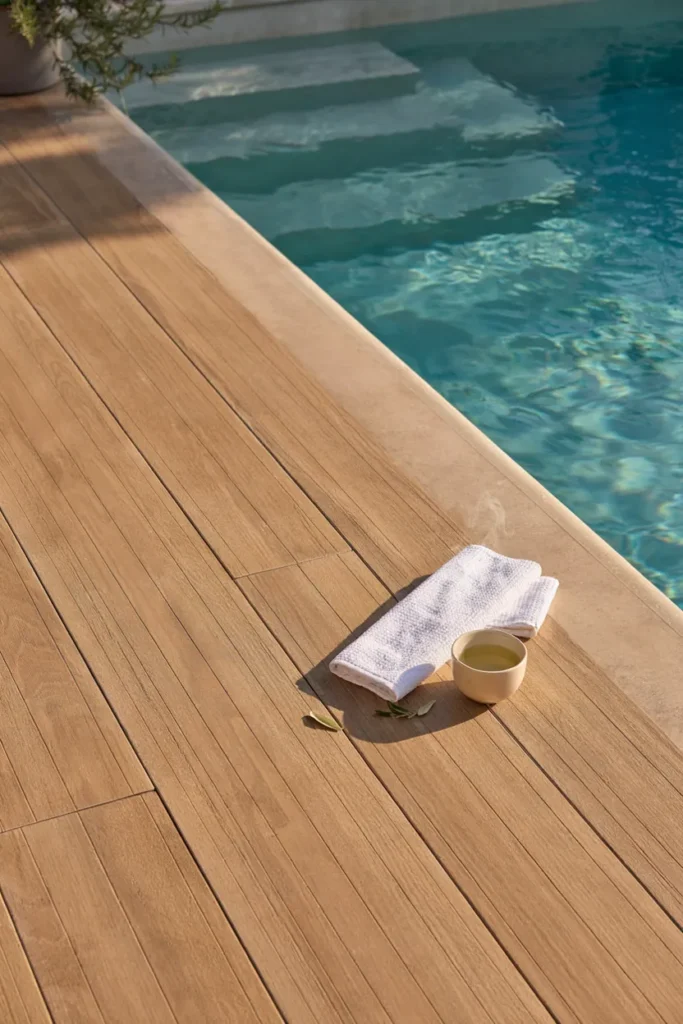
Everyone wants the warmth of a wooden pool deck; nobody wants the splinters, sealing schedule, or gray-out. Wood-look porcelain planks solved the argument. Today’s versions carry grain so convincing you check twice, while being frost-proof, chemical-proof, cool-footed, and utterly indifferent to water. Run matching plank coping at the edge and the whole pool wears Scandinavian warmth with tile’s work ethic.
Choose planks rated R11 or textured “grip” finishes for wet zones, in long formats laid parallel to the pool’s long side — it stretches the space visually. Verify the collection includes a coordinating bullnose or grip coping piece; mismatched edges break the illusion. Order twenty percent extra from one batch, since wood-look patterns vary by production run. Hose, done: that’s the maintenance chapter.
7. A Talavera Accent Band With Real Personality
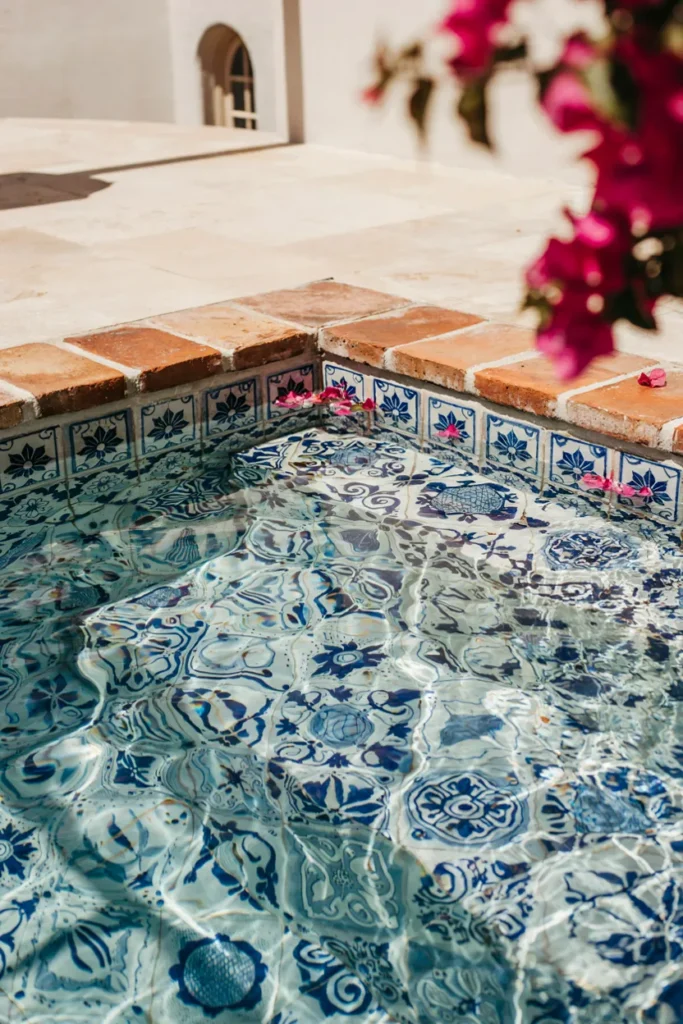
Some pools take themselves too seriously. Hand-painted Talavera tile — cobalt florals, geometric medallions — brings back the joy, especially on step risers and waterlines where the pattern ripples underwater like a moving mural. It’s the signature of Spanish colonial and hacienda pools, and one accent band delivers more personality than any expensive shape change ever could.
Use pattern strategically: step faces, the waterline, or a fountain bib — full-pool pattern exhausts the eye. Pair with warm terracotta-toned coping and plain plaster so the painted tile owns the show. Buy frost-proof, pool-rated versions of the style rather than interior craft tile. Mixing two or three coordinating patterns along steps looks collected; five looks like a tile store exploded.
8. All-White Marble for Full Glow
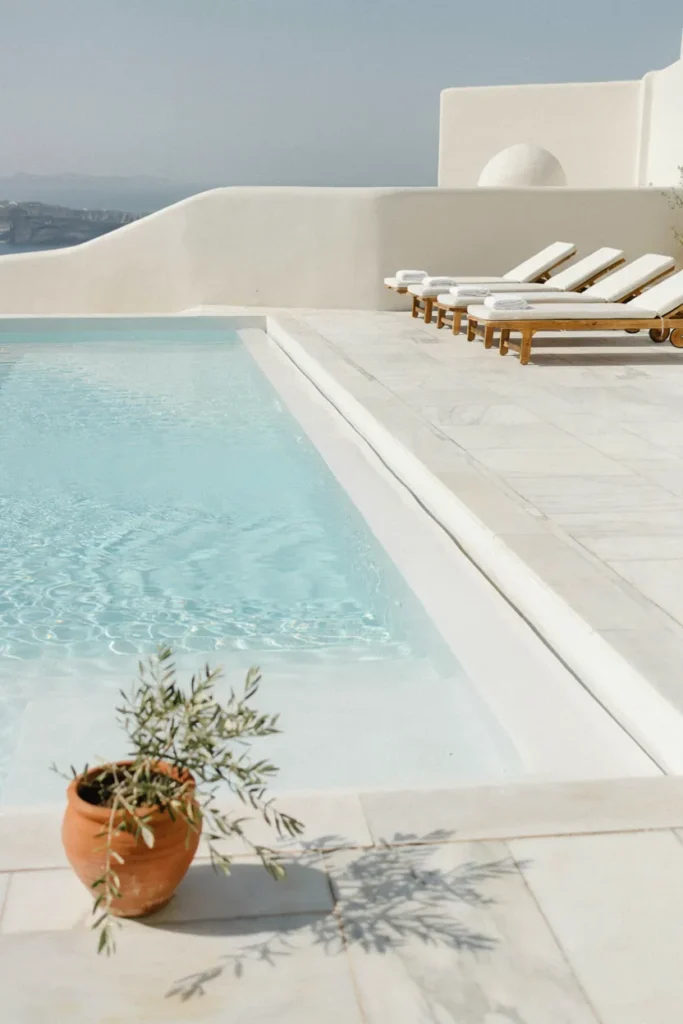
White-on-white is the boldest quiet choice in pool design: marble coping, pale deck, white interior, and suddenly the water glows an unreal crystalline blue that photographs like the Aegean. Everything brightens — the yard, the light, even the temperature reading of the space. It’s the highest-glamour finish family, and it makes small pools look like editorial shoots.
Tumbled or sandblasted marble keeps grip and stays surprisingly cool; polished belongs nowhere near water. Expect gentle patina — white stone lives, stains lift with poultice, and sealing twice a year is the honest tax on glamour. Keep contrast to one dark element, a bronze rail or charcoal planter, so the glow stays uninterrupted. Sunglasses genuinely required at noon.
9. Pebble Interior That Turns Water Lagoon-Blue
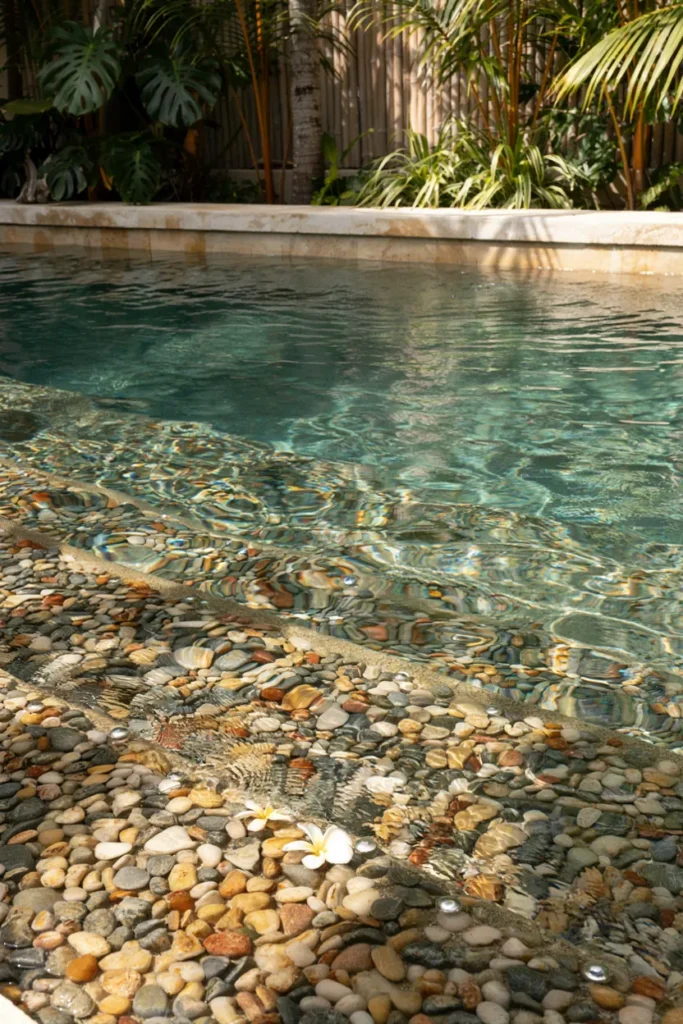
Plaster gives pools their color, but pebble finish gives them a soul. Millions of exposed river pebbles — often seeded with glass beads that glint like sunlight on shallows — turn the entire interior into texture, and the water into lagoon blues and greens no flat plaster achieves. It’s the finish behind most “is that a natural pool?” double takes, and it outlasts plaster by a decade.
Pebble blends decide your water color: browns and tans read tropical green, grays and blues read deep lagoon. Ask dealers for wet samples photographed underwater, never dry boards. Mini-pebble textures feel smoothest underfoot; add glass bead percentage for sparkle on tanning shelves where sun hits shallow water. Costs run above plaster but amortize over its twenty-plus-year life.
10. Reclaimed Brick Coping, Quietly Vintage
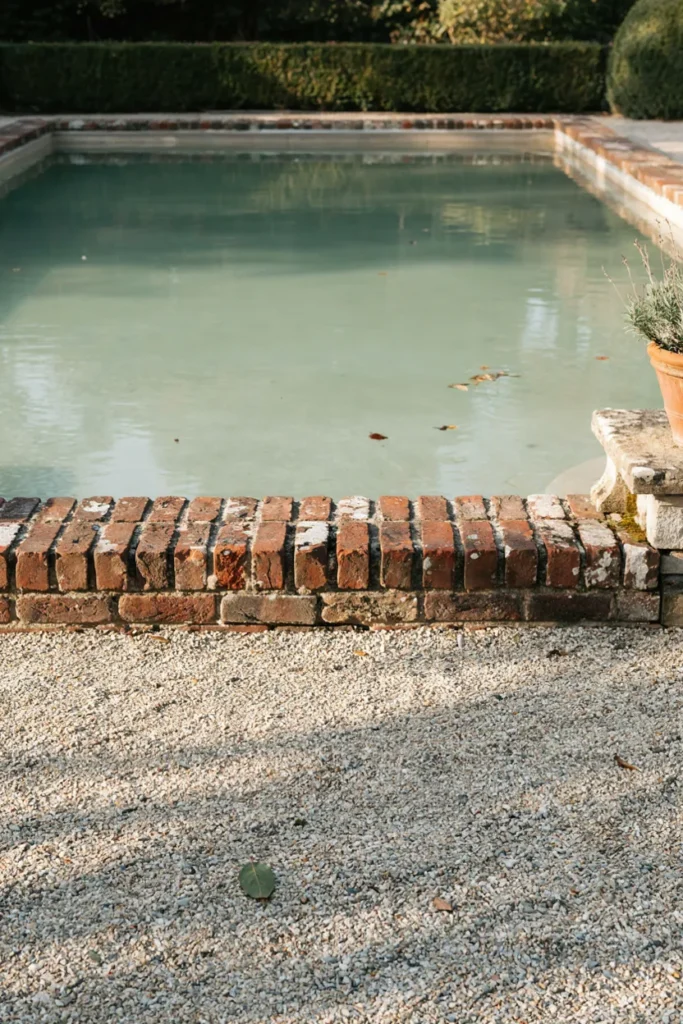
Brick coping is how a brand-new pool borrows fifty years of history. Reclaimed clay bricks in a soldier course — soft edges, rosy variation, honest mortar lines — read English estate and Virginia garden at once, pairing effortlessly with boxwood, gravel, and older homes that modern coping argues with. While trends cycle through grays, brick just keeps looking inevitable.
Source true reclaimed or tumbled new brick rated for freeze-thaw and wet use; interior brick spalls at the waterline. Lay a soldier course (bricks on edge, long side out) for the classic profile, mortared tight. Pair with celadon or gray plaster rather than bright blue — the muted water completes the vintage read. Seal against chlorine splash, and let moss find the shady joints.
11. An Iridescent Spillway Wall Between Spa and Pool
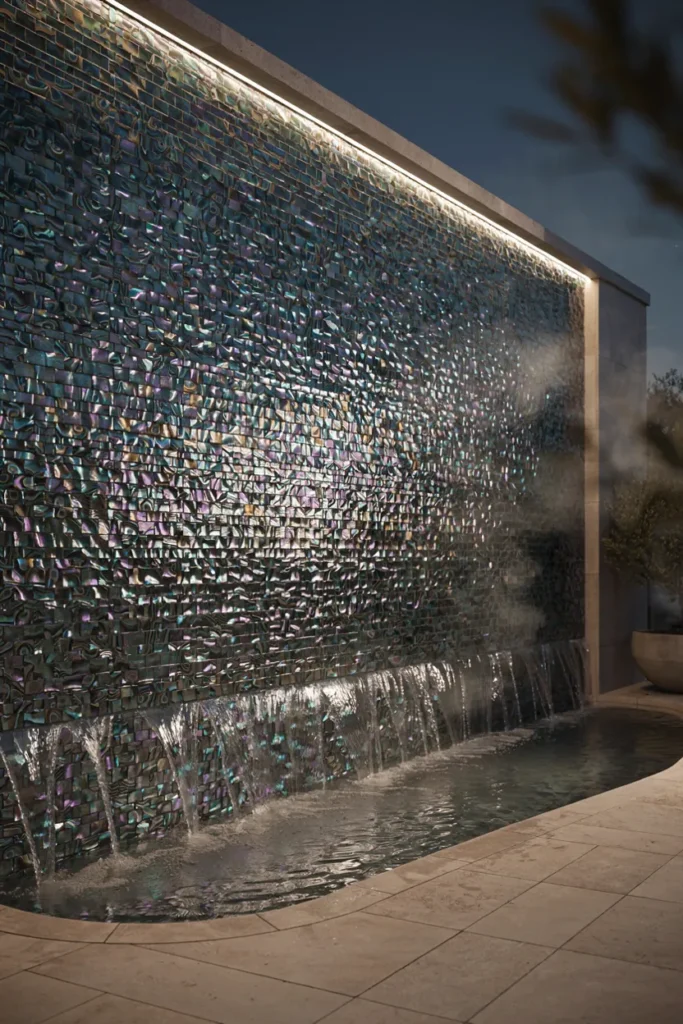
Where a spa spills into a pool, water falls in a thin sheet all day — and whatever tile lives behind that sheet gets the best light show on the property. Iridescent abalone glass turns the spillway wall into liquid pearl, shifting violet to aqua as sun and underwater LEDs move. It’s a small surface with cinema-level payoff, and the upgrade almost every remodeler wishes they’d known about.
Tile just the dam wall face and spillway lip — two to four square meters typically — so premium glass stays affordable. Iridescent finishes vary wildly between brands; view samples wet and moving, ideally under evening light. Position one warm LED in the pool aimed at the falling sheet. Squeegee-free maintenance: the constant flow keeps this wall the cleanest tile you own.
12. A Deck Pattern That Frames the Water
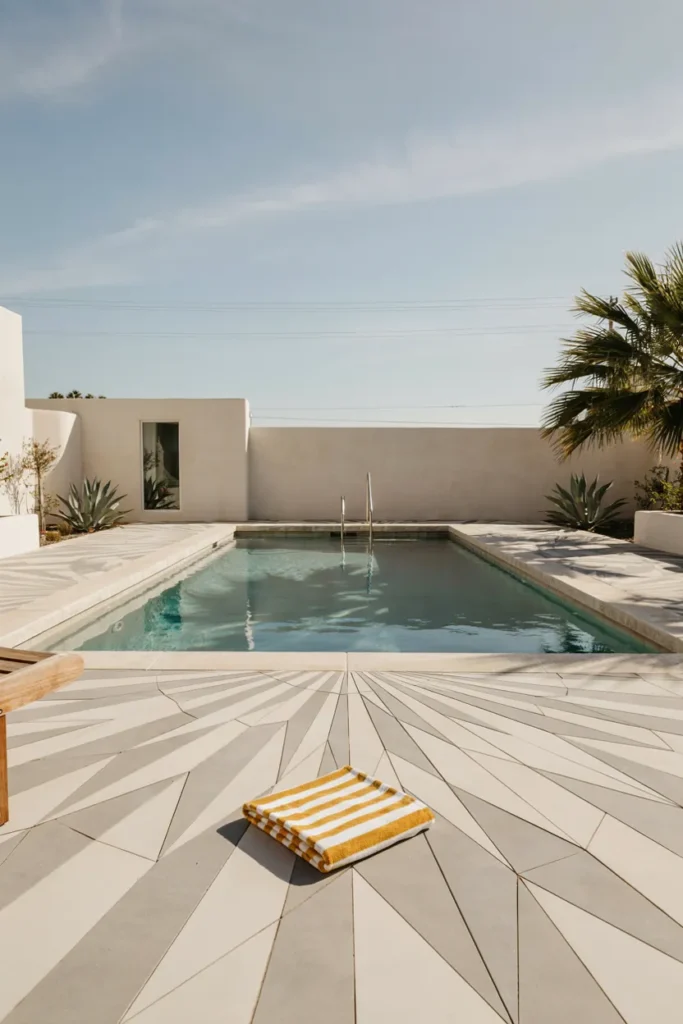
Sometimes the boldest move isn’t at the waterline at all — it’s underfoot. A patterned deck in two-tone porcelain, radiating triangles or oversized checkerboard, turns the entire pool surround into graphic design while the coping stays quiet and pale to keep the water’s frame calm. It’s the Palm Springs trick: let the floor carry the personality and the pool carry the peace.
Choose two tones from the same porcelain collection so slip rating and thickness match, and dry-lay the pattern before committing — scale errors only show at full size. Keep the coping course plain and continuous; pattern crashing into the water edge reads chaotic. Limit the palette to two colors plus water. One bright towel becomes all the extra color the composition wants.
13. A Stacked-Stone Raised Beam With Scupper Spouts
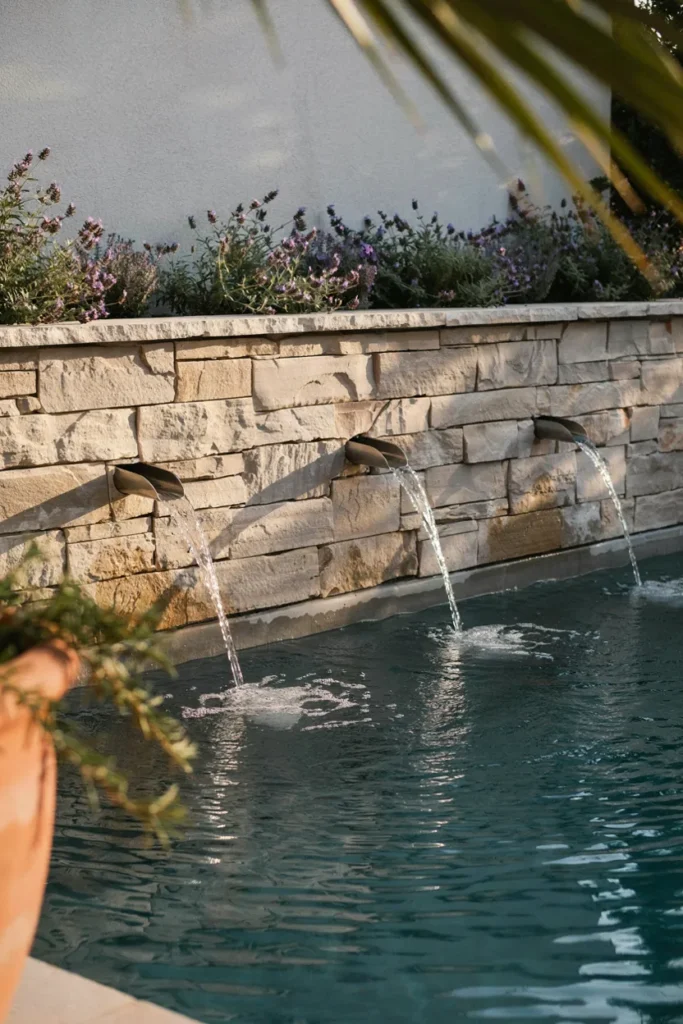
One raised wall changes a flat pool completely. Clad in stacked ledger stone with two or three scuppers arcing water into the pool, the bond beam adds vertical texture, a bench-height sitting cap, planting space above, and the sound every backyard oasis is missing. It’s the feature that makes guests say “resort” out loud — and mechanically, it’s just a wall with spouts on the existing pump.
Ledger panels install fast and hide sins; choose warm gray or sand blends that echo your coping. Cap at eighteen inches for legitimate seating, and space scuppers evenly — odd numbers look best. The spouts run off a valved line from the main pump, so the waterfall costs pennies. Plant lavender or trailing rosemary along the top and the wall earns its keep even switched off.
Conclusion
Water borrows all of its beauty from its frame. The same rectangle reads rustic in brick, glamorous in white marble, architectural in charcoal granite — proof that the oasis was never really about the swimming. That’s what makes coping and tile the smartest money in pool design: they’re the details you touch, see, and photograph every single day, and most can be upgraded without draining your budget or rebuilding a thing. Whichever of these pool coping and tile ideas fits your backyard’s character, follow the designer’s rule that runs through all thirteen — spend boldly on the small surfaces where light and water meet, and keep everything around them calm. Save your favorite combinations to your Pinterest boards before renovation season, when good tile sells out and patience gets expensive. Then go run your hand along your pool’s edge and ask if it feels like a resort yet. If not, now you know exactly where to start.