18 Minimalist Bedroom Ideas That Feel Calm, Clean and Full of Personality
A minimalist bedroom should feel like a deep exhale, calm, clear, and quietly personal. The best minimalist bedroom ideas are not about stripping everything away until a room feels empty. They are about keeping only what you love and letting it breathe. I still remember styling a client’s cluttered bedroom into a serene retreat by removing two-thirds of her decor and adding a single linen headboard and one beautiful plant. She told me she finally slept through the night. That is the power of a calm space. In this collection I am sharing eighteen ways to create a bedroom that feels clean and restful while still showing off your personality. From soft neutral palettes to warm textures, thoughtful lighting, and a few meaningful touches, these ideas prove that minimalism can be warm rather than stark. Let’s build a bedroom that soothes you the moment you walk in.
1. Start With a Soft Neutral Palette
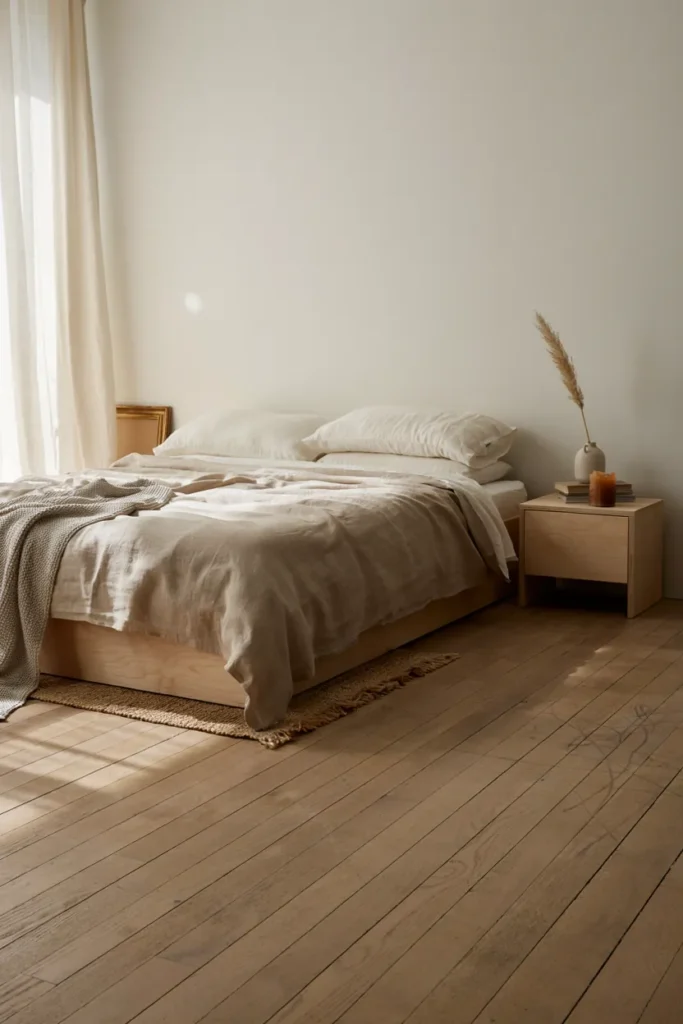
A soft neutral palette is the foundation of a calm minimalist bedroom. When walls, bedding, and furniture share gentle tones like warm white, greige, and oatmeal, the room feels cohesive and restful rather than busy. Neutrals recede quietly, letting your mind unwind and your eye relax. The mood becomes serene, airy, and grounding, exactly what a bedroom should offer. A well-chosen neutral base also makes the space feel timeless, giving you a soothing canvas that never goes out of style.
Recreate it by choosing two or three warm neutrals and repeating them across walls, bedding, and larger furniture. Avoid stark bright white on every surface, which can feel cold; opt for softer creams and putties instead. Add gentle tonal variation so the room has quiet depth. Budget tip: a fresh coat of warm neutral paint transforms a room affordably. Keep bold color to tiny, swappable accents so the calming base always stays front and center.
2. Choose a Low-Profile Platform Bed
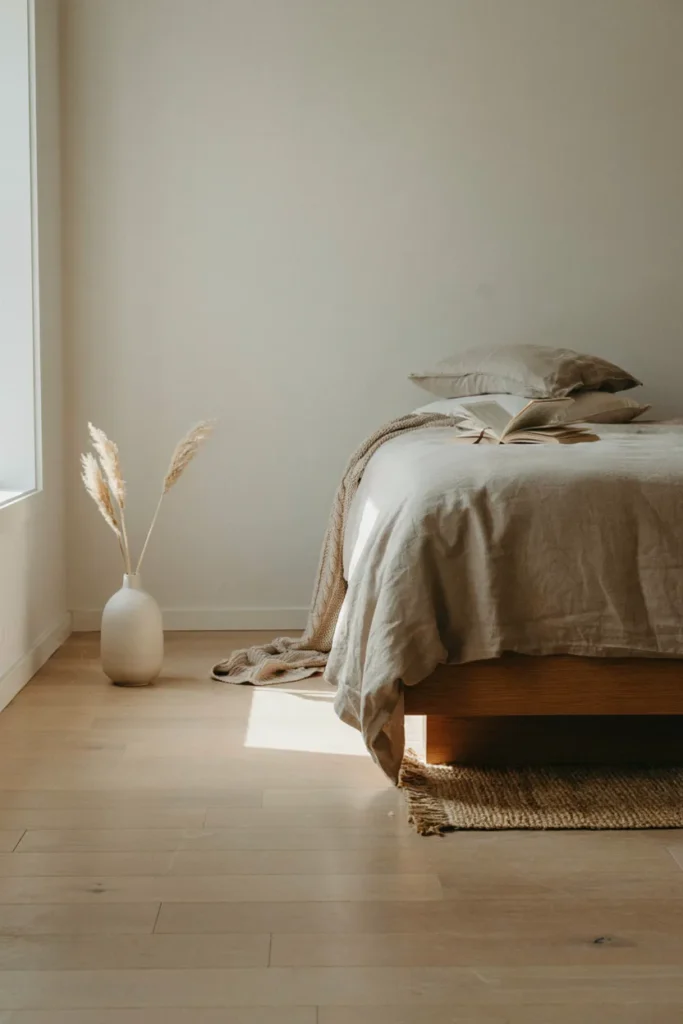
A low-profile platform bed instantly gives a bedroom that grounded, serene minimalist feel. Its clean lines and horizontal silhouette make the room feel calmer and more spacious, drawing the eye down and out. The simplicity of a platform bed lets your bedding and a few accents shine without visual clutter. The mood turns tranquil, modern, and uncluttered, evoking a peaceful retreat. A well-designed bed frame becomes quiet architecture, anchoring the room while keeping everything light and open.
Recreate it by choosing a low platform bed in warm wood or an upholstered neutral, with simple, unfussy lines. Keep the surrounding area clear so the bed’s clean silhouette reads fully. Dress it in tonal linen bedding for that effortless, lived-in look. Budget tip: a simple wood frame or even a well-styled low box spring on legs can achieve the look affordably. Skip tall, ornate headboards, which add visual weight and work against the calm minimalist feel.
3. Layer Warm, Tactile Textures
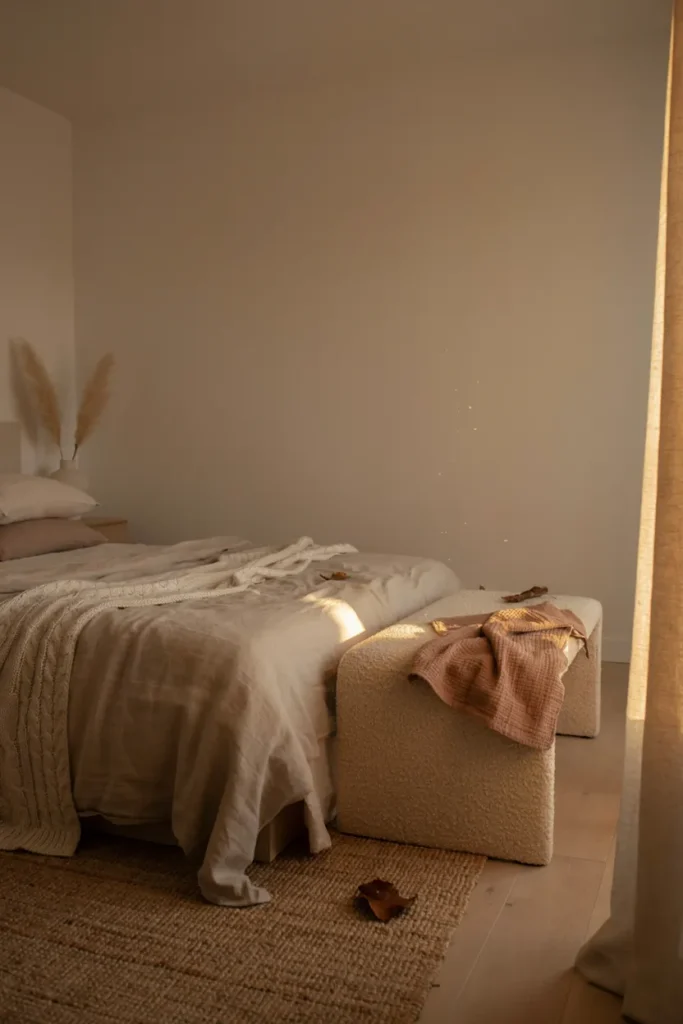
Texture is what keeps a minimalist bedroom from feeling cold or empty. Within a quiet neutral palette, layering knits, linen, boucle, and woven fibers adds warmth and depth that the eye reads as richness. Tactile materials invite touch and make the room feel cozy and inviting despite its simplicity. The mood becomes soft, plush, and comforting. Texture is the secret that lets minimalism feel warm and personal, proving a pared-back room can still wrap you in comfort at the end of the day.
Recreate it by mixing at least four textures across your bedding and furnishings, such as a cable-knit throw, a linen duvet, a boucle bench, and a jute rug. Keep everything tonal so the layering stays calm rather than busy. Add a faux sheepskin or woven basket for extra dimension. Budget tip: textured pillow covers and a chunky throw instantly enrich a plain bed. Favor natural fibers, which age beautifully and bring authentic, lasting warmth to the room.
4. Keep Surfaces Clear and Curated
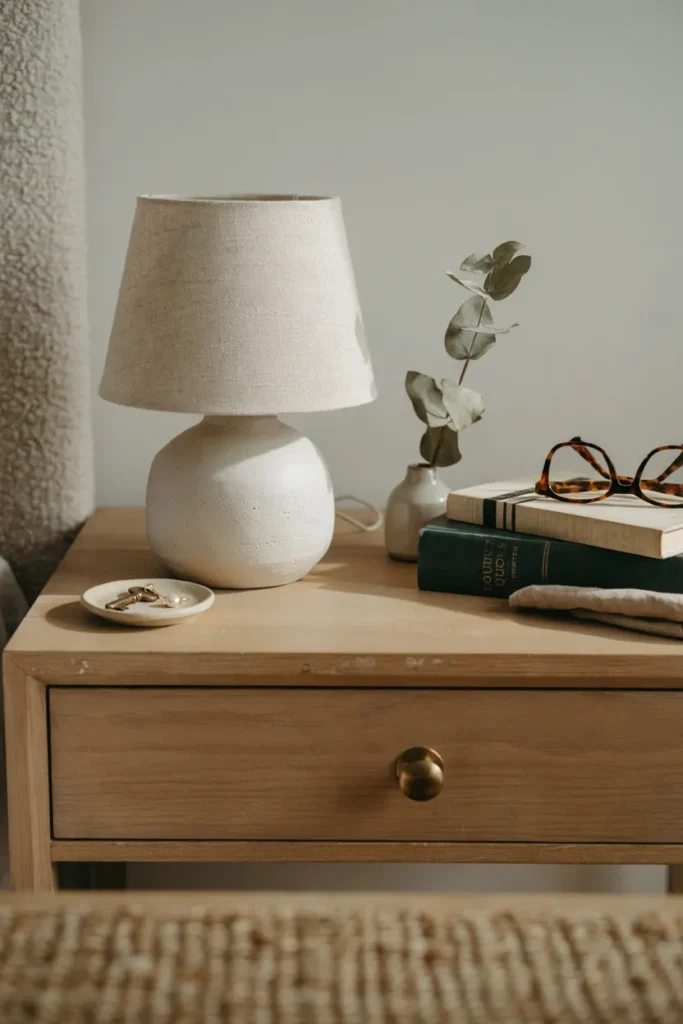
Clear, curated surfaces are at the very heart of minimalist calm. When nightstands and dressers hold only a few intentional items, the room feels serene, spacious, and easy to rest in. Empty space is not wasted; it gives the eye room to relax and makes the pieces you do display feel special. The mood turns peaceful and orderly, the visual quiet that helps you unwind. Editing your surfaces is the simplest, most transformative habit for a truly calming bedroom.
Recreate it by limiting each surface to two or three meaningful objects, such as a lamp, a small stack of books, and a single stem in a vase. Give everything breathing room and store the rest out of sight. Return items to their homes each night to maintain the calm. Budget tip: this idea costs nothing and often means simply removing things you already own. A small tray can corral essentials neatly while still keeping the surface feeling intentional.
5. Add Personality With a Single Statement Piece
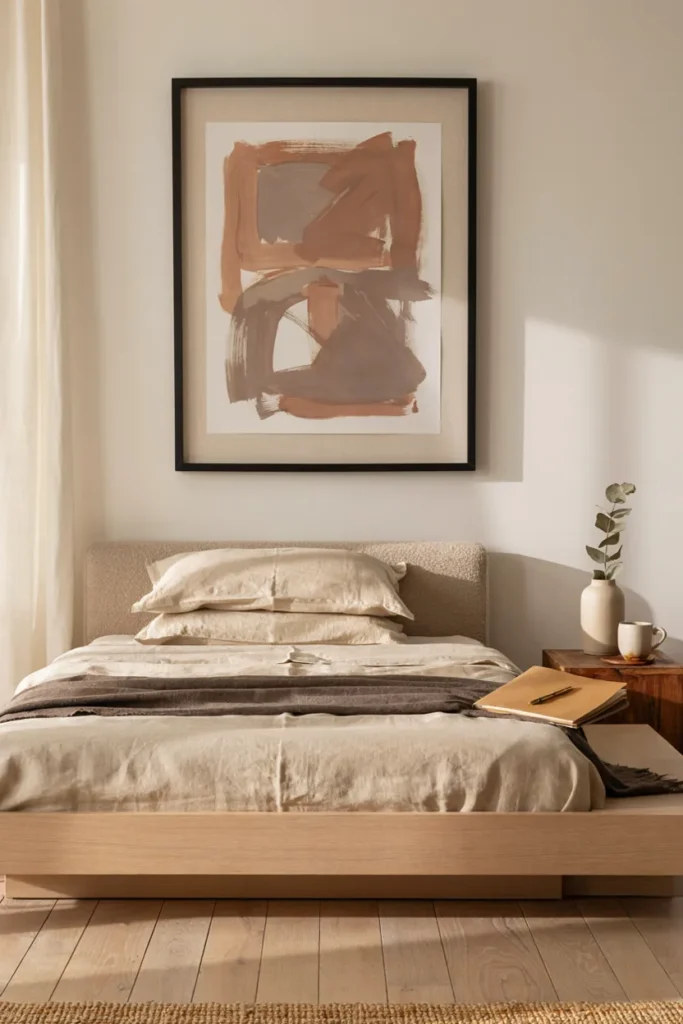
One well-chosen statement piece gives a minimalist bedroom personality without cluttering it. Because the room is pared back, a single striking element, a large artwork, a sculptural light, or a bold headboard, carries real impact and expresses your taste. It becomes a focal point that makes the space feel designed and personal. The mood turns artful and intentional. A thoughtful statement piece proves that minimalism and self-expression go hand in hand; you simply let one meaningful thing do the talking.
Recreate it by selecting one larger-scale element you genuinely love, such as an oversized art print, a woven wall hanging, or a sculptural pendant light. Give it plenty of surrounding space so it commands attention. Keep the rest of the room quiet so the piece truly stands out. Budget tip: a single large print or a DIY canvas offers big impact for little cost. Let this one object express your personality so the room feels like you, not a showroom.
6. Use Warm, Layered Lighting
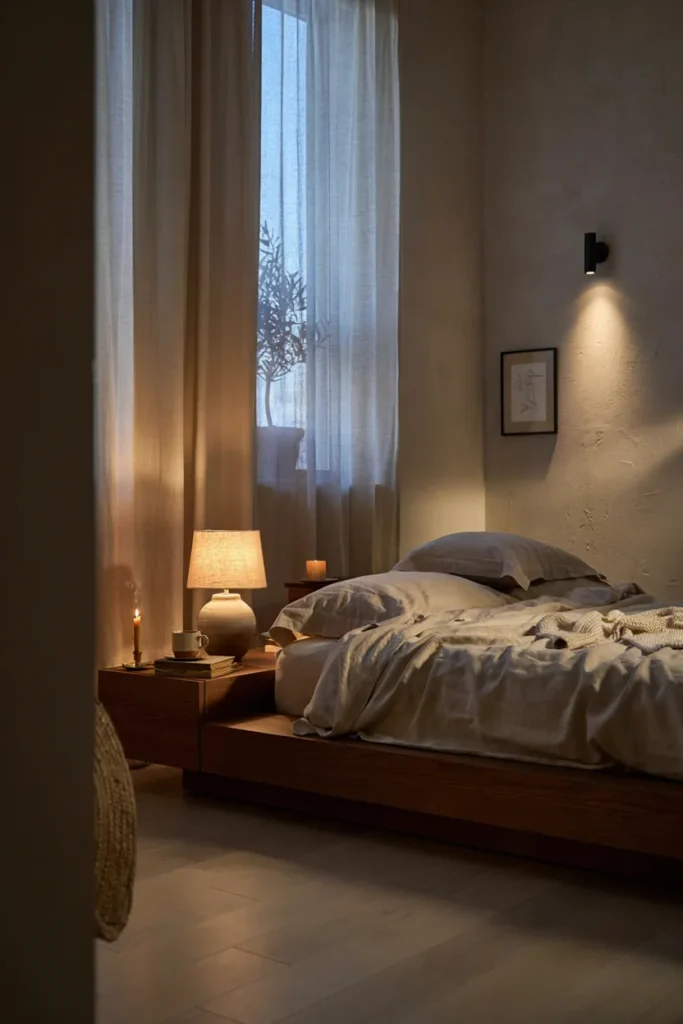
Warm, layered lighting turns a minimalist bedroom into a soothing retreat. Rather than a single overhead fixture, gentle light from lamps, sconces, and candles wraps the room in a soft amber glow that feels calm and intimate. Layered lighting adds warmth and dimension while keeping the aesthetic clean and uncluttered. The mood becomes restful and cocooning, ideal for winding down. Thoughtful lighting is one of the most powerful ways to make a pared-back bedroom feel cozy and deeply relaxing.
Recreate it by combining a bedside lamp, a wall sconce, and a small candle or dimmable floor lamp. Choose warm bulbs around 2700 kelvin and add a dimmer so you can soften the light at night. Keep fixtures simple and sculptural to fit the minimalist look. Budget tip: smart bulbs and plug-in sconces add layered light without rewiring. Avoid cool white bulbs, which flatten the room and undercut the calm, restful atmosphere you are building.
7. Bring In One or Two Live Plants
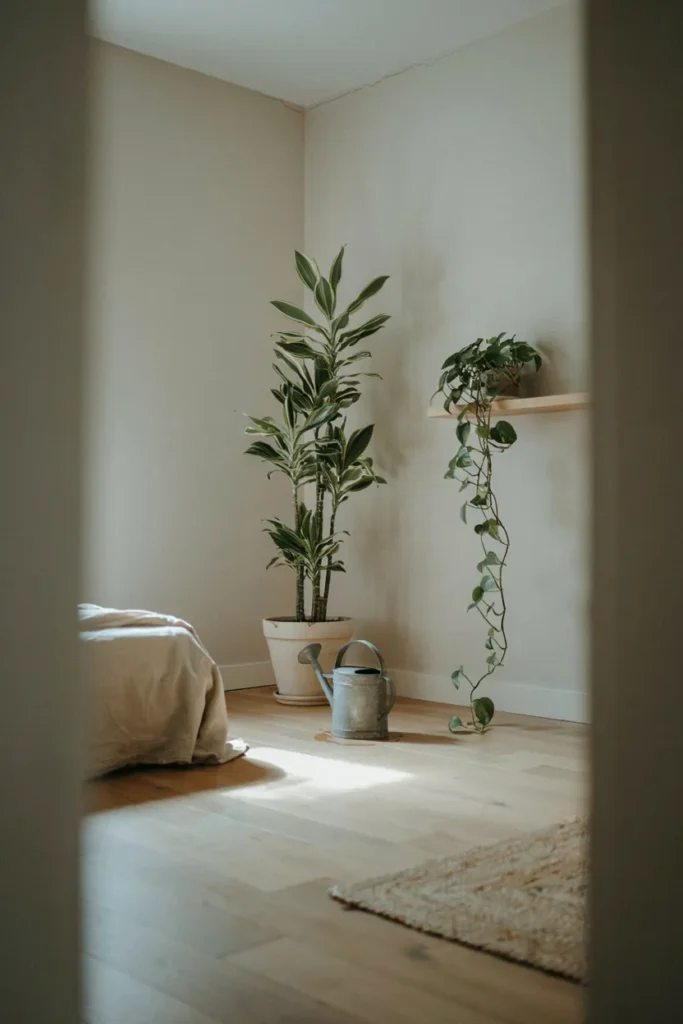
A plant or two brings life and gentle color to a minimalist bedroom without adding clutter. Greenery softens clean lines and connects the room to nature, making the calm space feel fresh and alive. Even a single sculptural plant adds a soothing organic presence. The mood turns serene, natural, and grounded. Plants are one of the easiest ways to warm up minimalism, offering just enough personality and vitality while keeping the room feeling airy, uncluttered, and peaceful.
Recreate it by choosing one statement plant, a snake plant, ZZ plant, or small olive tree, for a corner, plus perhaps one trailing plant on a shelf. Keep pots simple and tonal so the greenery stays the focus. Place plants where they get suitable light and are easy to care for. Budget tip: hardy, low-maintenance plants are inexpensive and forgiving for beginners. Resist overfilling the room; one or two healthy plants have far more impact than a crowded jungle.
8. Hide Clutter With Smart Storage
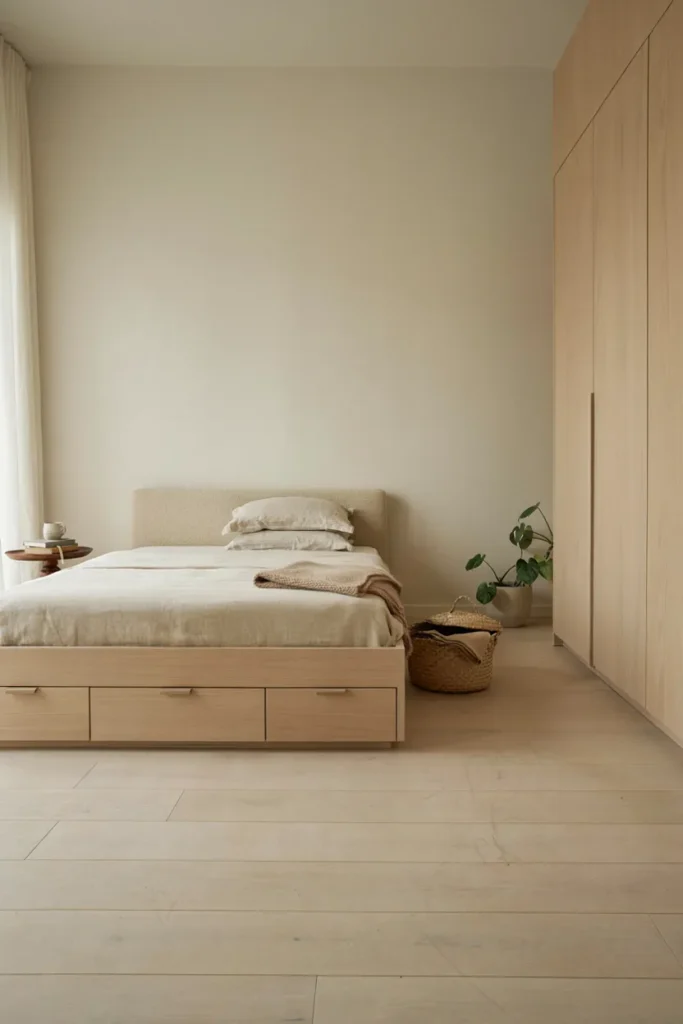
Smart storage is essential to keeping a minimalist bedroom calm and clutter-free. When belongings have a hidden home, surfaces and floors stay clear, letting the room’s clean lines breathe. Built-in drawers, closed wardrobes, and discreet baskets make it easy to maintain that serene, tidy look day to day. The mood becomes spacious, orderly, and restful. Good storage does the quiet work behind the scenes, allowing your real life to coexist with a peaceful, pared-back aesthetic.
Recreate it with a bed frame that includes drawers, a wardrobe with doors, and a few lidded baskets for odds and ends. Use under-bed bins hidden by a bed skirt in small rooms. Keep only daily essentials within reach and store the rest away. Budget tip: affordable baskets and under-bed containers dramatically cut visible clutter. Build a simple habit of putting things away each night so the room resets itself and always feels like a calm retreat.
9. Embrace Negative Space
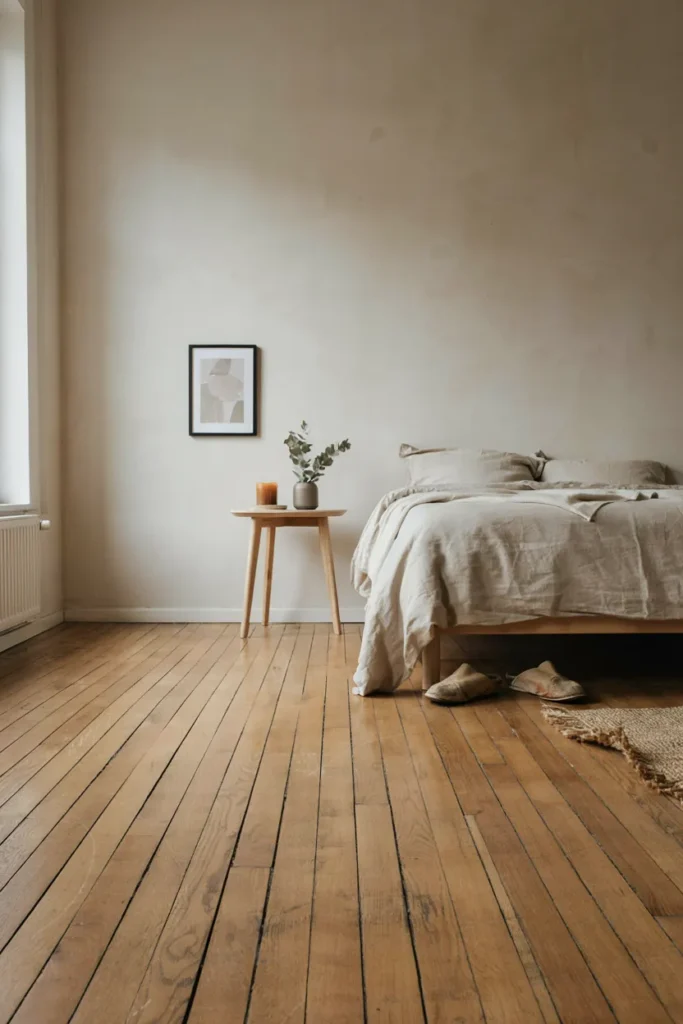
Negative space is a design element in its own right, and minimalist bedrooms use it beautifully. Leaving areas of wall and floor open gives the room a sense of calm, spaciousness, and quiet luxury. Empty space lets your carefully chosen pieces stand out and gives your mind room to rest. The mood becomes airy, serene, and uncluttered. Learning to value emptiness is what separates true minimalism from a room that simply lacks furniture; it is intentional, restful, and deeply calming.
Recreate it by resisting the urge to fill every wall and corner. Leave some walls bare, keep the floor largely open, and let a few key pieces anchor the room. Choose quality over quantity in every purchase. Budget tip: embracing negative space often means buying less, which saves money. Step back and edit regularly, removing anything that feels like filler, so the emptiness reads as calm and intentional rather than unfinished.
10. Pick Simple, Quality Bedding
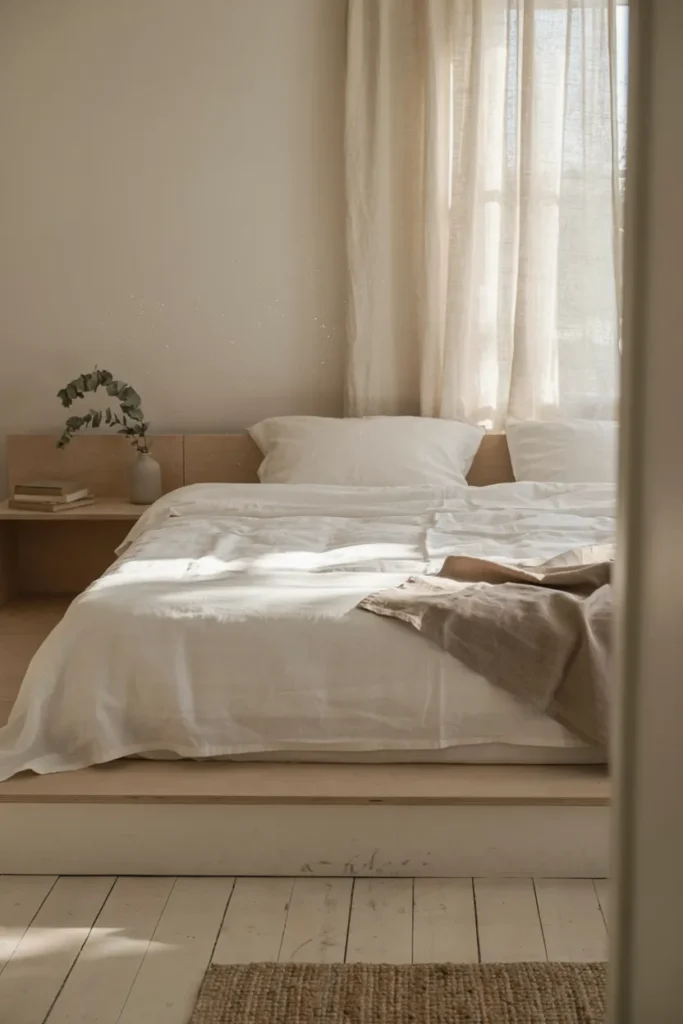
In a minimalist bedroom, the bedding does much of the styling work, so quality matters. Simple, well-made linens in soft neutrals create that serene, hotel-like calm and feel wonderful against the skin. Because there is little else competing for attention, beautiful bedding becomes a quiet luxury you notice every day. The mood turns restful, clean, and inviting. Investing in a few excellent pieces rather than many cheap ones is the essence of the minimalist approach and elevates the whole room.
Recreate it by choosing natural-fiber bedding, linen or cotton percale, in warm white, oatmeal, or soft gray. Layer a fitted sheet, duvet, and one folded throw for gentle dimension. Keep patterns minimal so the bed reads calm and cohesive. Budget tip: buy plain quality sheets and elevate them with one lovely throw or a few well-chosen shams. Wash and steam your bedding so it always looks fresh, smooth, and intentionally styled.
11. Add Warmth With Natural Wood
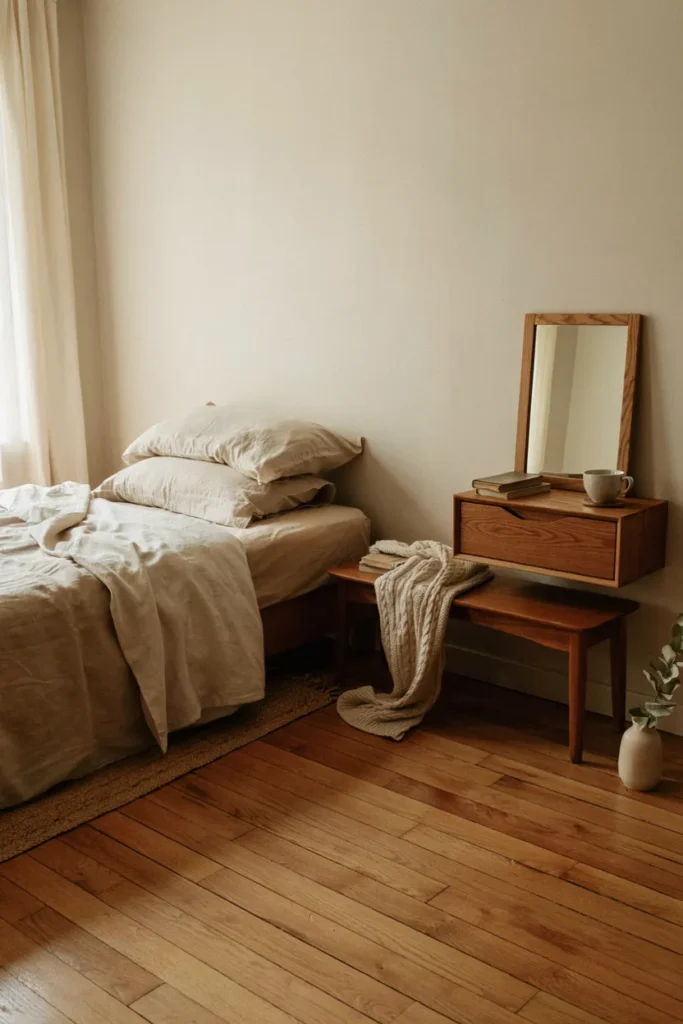
Natural wood keeps a minimalist bedroom from feeling stark by adding organic warmth and texture. The grain and honeyed tones of oak or walnut soften a neutral palette and introduce a grounding, nature-inspired quality. Wood brings craftsmanship and soul to clean, simple lines. The mood becomes earthy, calm, and welcoming. A few wood pieces strike the perfect balance between minimal and cozy, ensuring your pared-back bedroom feels warm and human rather than cold or clinical.
Recreate it by adding wood through a nightstand, bench, bed frame, or framed mirror in warm mid-tones. Mix a couple of wood finishes for a collected feel rather than a matched set. Keep the pieces simple in form to suit the minimalist look. Budget tip: solid wood secondhand furniture is affordable and full of character. Even a small wooden tray, stool, or frame threads that grounding warmth through the room without adding any visual clutter.
12. Install Soft, Simple Window Treatments
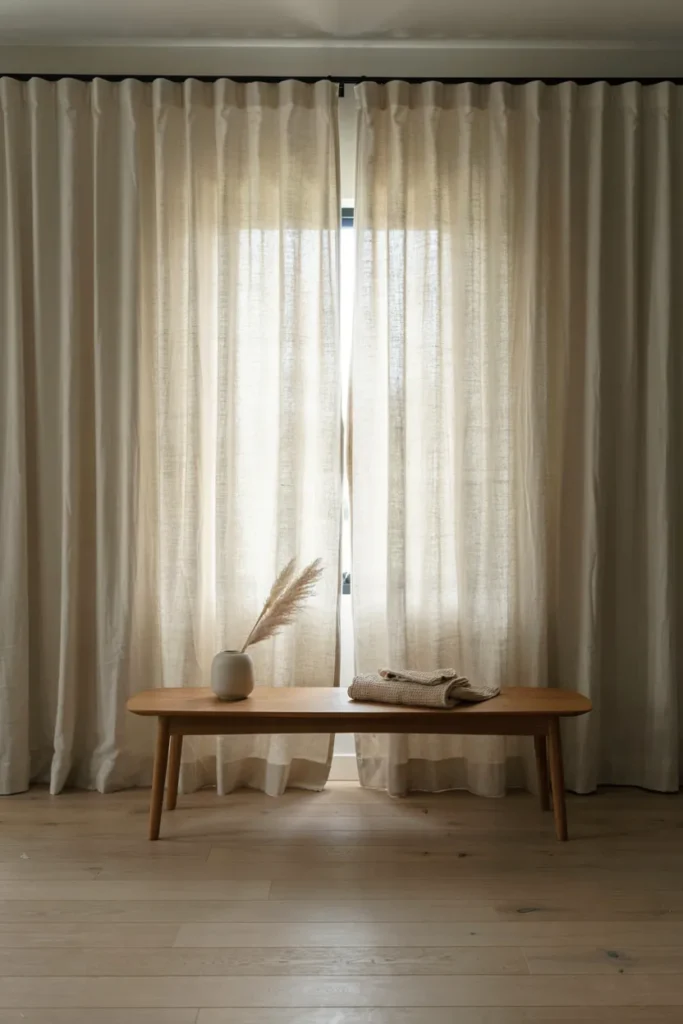
Simple window treatments complete the calm, cohesive look of a minimalist bedroom. Soft linen curtains diffuse light beautifully and add a gentle, airy softness without fuss or heavy pattern. Clean, floor-length panels make windows feel taller and the room more serene. The mood turns luminous, tranquil, and uncluttered. The right window treatment balances privacy and light while keeping the aesthetic pared back, framing your view and softening the room with quiet, understated elegance.
Recreate it by hanging simple linen or cotton curtains in a soft neutral, mounted high and wide to elongate the window. Choose floor-length panels that just kiss the floor for a tailored look. Add a blackout liner if you need darkness for sleep. Budget tip: affordable linen-look panels deliver the airy effect for less, and you can hem them yourself. Skip busy patterns and heavy valances, which add visual weight and disrupt the minimalist calm.
13. Display Meaningful Objects, Sparingly
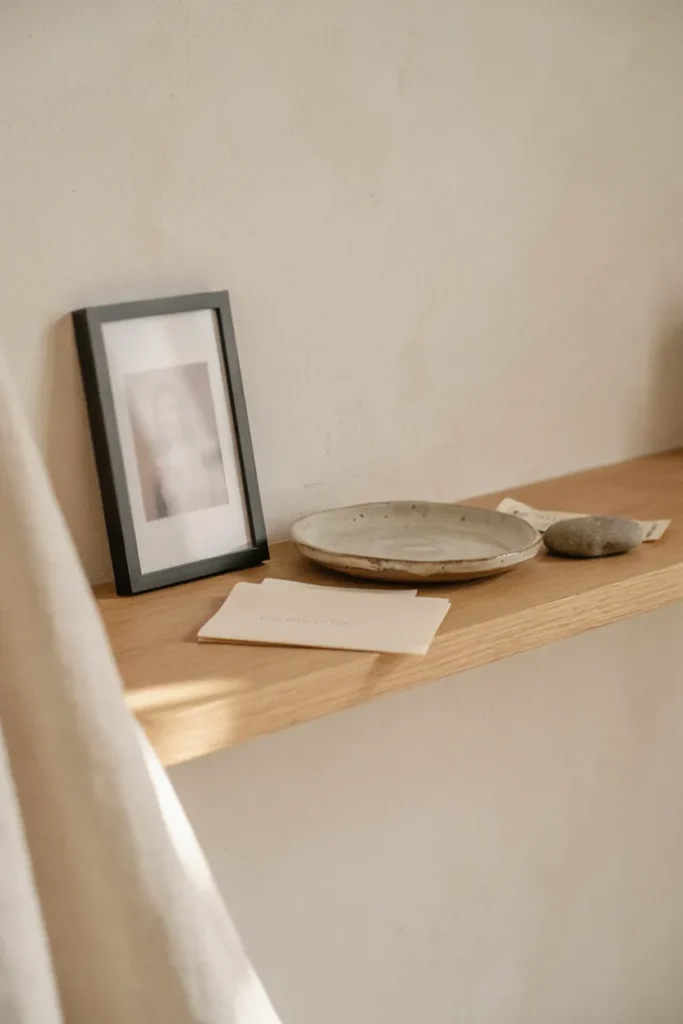
A few meaningful objects give a minimalist bedroom soul and keep it from feeling impersonal. Displayed sparingly, treasured items, a framed photo, a handmade dish, or a travel keepsake, tell your story and add warmth. With plenty of space around them, these pieces feel curated and special rather than cluttered. The mood turns personal, authentic, and heartfelt. Thoughtful editing lets your personality shine through without compromising the calm, proving minimalism has room for the things you truly love.
Recreate it by selecting just a handful of objects you cherish and giving each one breathing room on a shelf or dresser. Rotate them seasonally to keep the display fresh and meaningful. Choose pieces that share a soft, cohesive palette so they feel intentional together. Budget tip: the best personal touches are things you already own, so they cost nothing. Resist adding more than a few items; restraint is what makes each meaningful object feel like a quiet treasure.
14. Create a Calm Reading Corner
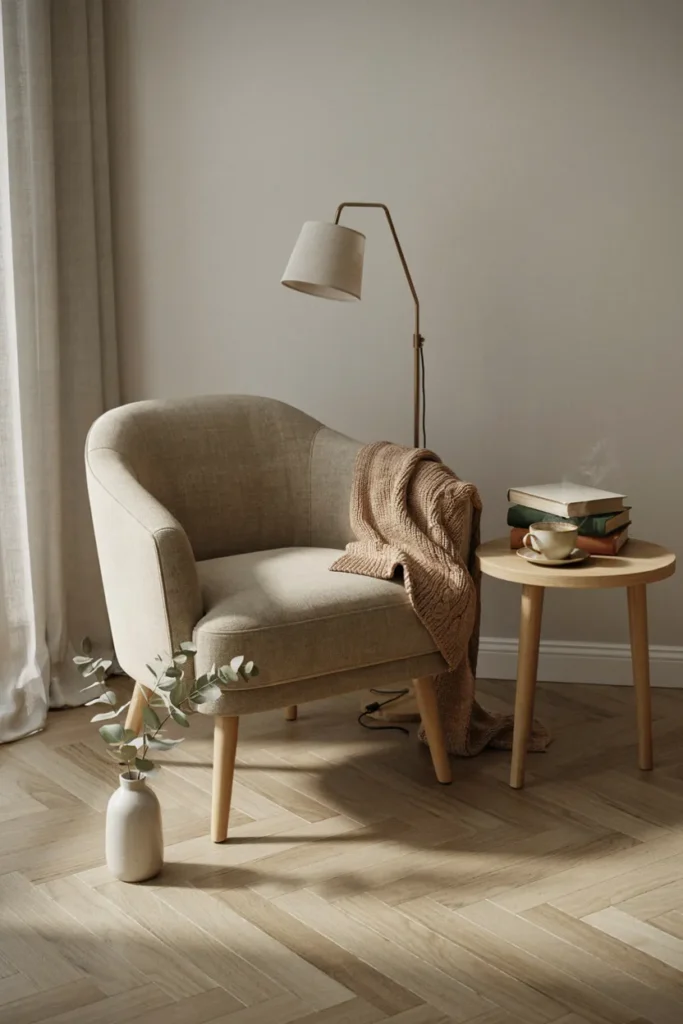
A small reading corner adds function and quiet personality to a minimalist bedroom. A single comfortable chair with soft light creates an inviting spot to unwind, read, or simply pause. It gives the room purpose beyond sleep while maintaining a clean, uncluttered feel. The mood turns peaceful, personal, and restful, a little retreat within your retreat. A well-styled nook shows that minimalism can be both serene and genuinely livable, offering comfort without overcrowding the space.
Recreate it by placing a simple armchair near a window or in a quiet corner, paired with a slim side table and a floor lamp. Add one throw and a stack of books to make it inviting without clutter. Keep the palette tonal so the nook blends seamlessly. Budget tip: repurpose a chair you already own and dress it with a neutral throw. Position it to catch natural light by day and warm lamplight by evening for year-round comfort.
15. Keep Decor Cohesive and Tonal
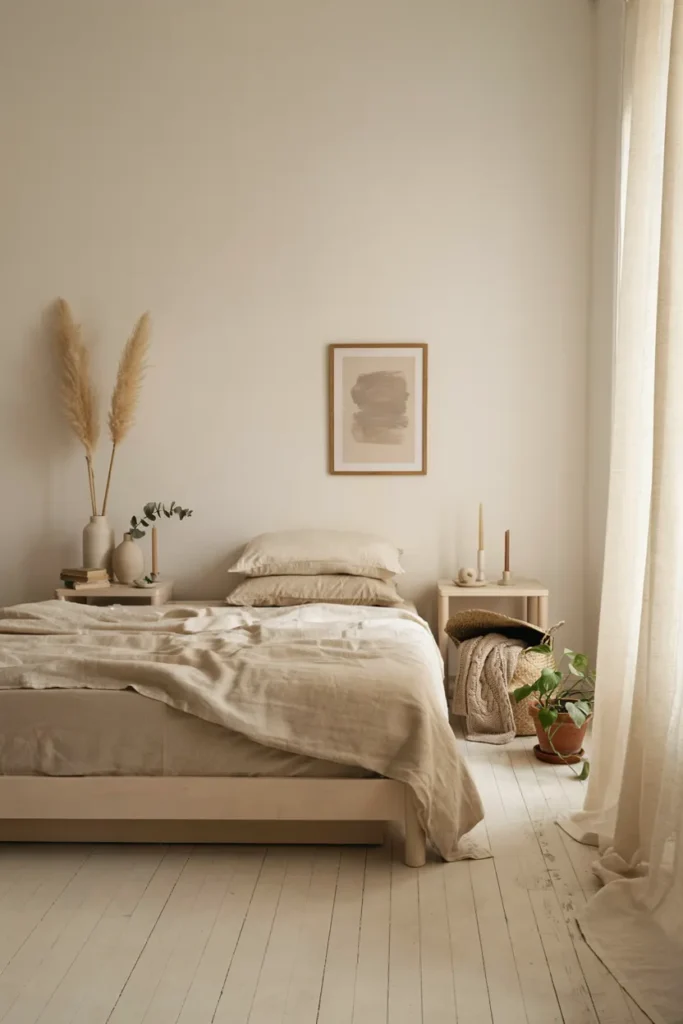
Cohesion is key to a calm minimalist bedroom, and a tonal approach ties everything together. When your décor shares a unified palette and gentle materials, the room feels intentional and soothing rather than piecemeal. Tonal styling lets texture and form take center stage, adding interest without visual noise. The mood becomes harmonious, serene, and polished. Keeping décor cohesive is a simple discipline that makes even a few pieces feel like a considered, designer-worthy collection.
Recreate it by choosing décor within a narrow color range, creams, taupes, and soft woods, so nothing clashes. Repeat materials and finishes throughout the room for a unified feel. Add interest through texture and shape rather than bold color. Budget tip: unify mismatched items with a coat of neutral paint or by grouping them thoughtfully. Before buying anything new, ask whether it fits your palette; this keeps the room cohesive and your spending intentional.
16. Choose Multifunctional Furniture
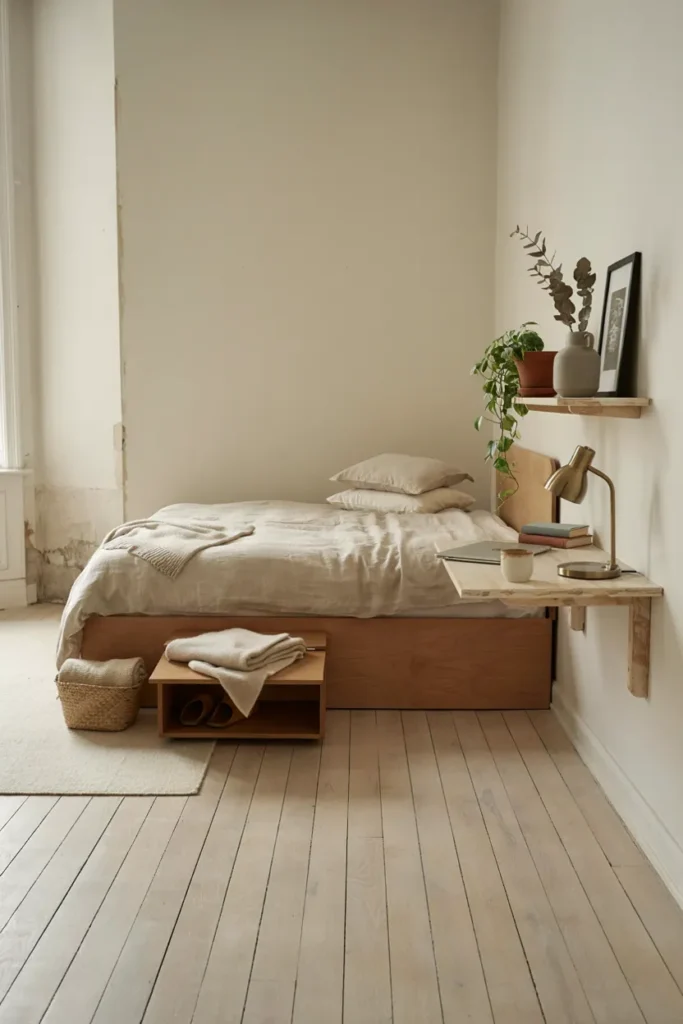
Multifunctional furniture helps a minimalist bedroom stay clean and efficient, especially in smaller spaces. Pieces that do double duty, a storage bench, a nightstand-desk, or a bed with drawers, reduce the need for extra items and keep clutter at bay. This thoughtful approach maximizes function without sacrificing the pared-back look. The mood stays calm, open, and uncluttered. Choosing versatile pieces is a smart, space-saving strategy that lets your bedroom work harder while still feeling serene and minimal.
Recreate it by selecting furniture that serves more than one purpose, like an ottoman with storage or a slim console that works as both nightstand and desk. Prioritize pieces with hidden compartments to keep essentials out of sight. Choose simple, tonal designs that fit the minimalist aesthetic. Budget tip: look for secondhand multifunctional pieces or repurpose what you own creatively. Fewer, smarter pieces mean less clutter, more space, and a calmer, more intentional room overall.
17. Soften the Floor With a Simple Rug
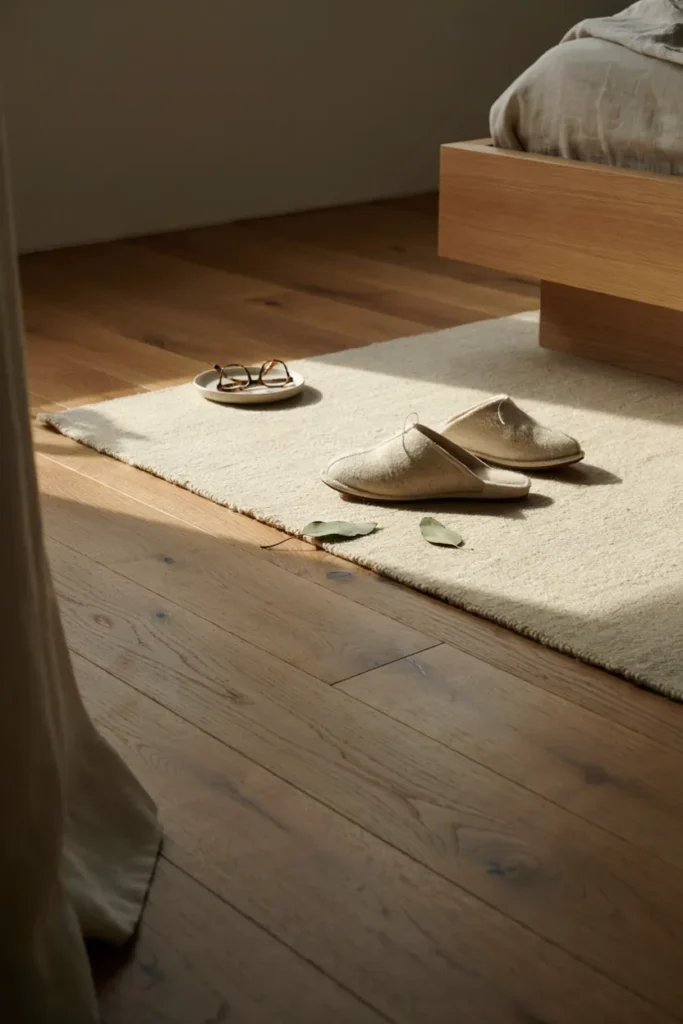
A simple rug adds warmth and comfort to a minimalist bedroom right where you step out of bed. Soft underfoot texture makes the room feel cozier and more inviting while defining the space around the bed. Even a plain, tonal rug introduces gentle depth without disturbing the calm. The mood becomes snug, grounded, and serene. A well-chosen rug is a small addition that greatly improves the everyday comfort of a pared-back bedroom, softening both sound and sensation.
Recreate it by choosing a soft wool or textured rug in a warm neutral, sized to extend beyond the sides of the bed. Keep the pattern minimal or tone-on-tone so it stays calm. Position it so your feet land on softness each morning. Budget tip: a plush washable rug or a layered sheepskin offers comfort affordably. Add a rug pad underneath for extra cushioning and to keep the rug securely and neatly in place.
18. Let in Fresh Air and Simplicity
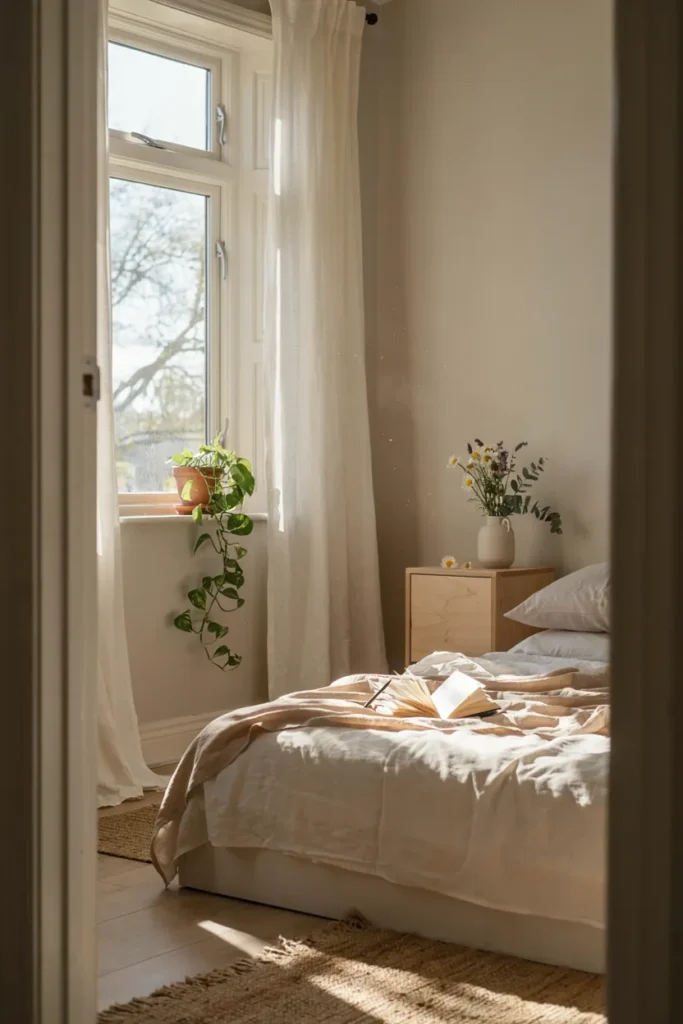
Sometimes the most powerful minimalist idea is simply letting the room breathe. Fresh air, open windows, and a sense of simplicity make a bedroom feel clean, healthy, and restorative. When you clear away excess and welcome light and airflow, the space naturally feels calmer and more alive. The mood turns fresh, peaceful, and rejuvenating. Embracing simplicity is really a mindset, a commitment to keeping only what serves you, and it is the true heart of every calming minimalist bedroom.
Recreate it by opening windows regularly, keeping the air fresh, and resisting the urge to accumulate. Add a small vase of fresh flowers or greenery for a living, seasonal touch. Regularly declutter and donate what you no longer need. Budget tip: fresh air and decluttering cost nothing yet transform how a room feels. Make simplicity a gentle ongoing practice rather than a one-time project, and your bedroom will stay a serene, restful retreat.
Creating Your Calm, Personal Retreat
Building a peaceful bedroom is less about following rules and more about making space for rest, and these minimalist bedroom ideas are simply tools to help you get there. When you start with a soft neutral palette, layer in warm textures, keep surfaces clear, and add a few meaningful touches, minimalism stops feeling cold and starts feeling like a warm embrace. Remember that a truly calming room does not mean an empty one; it means a room filled only with what you love and need. Begin with one or two changes, perhaps clearing your nightstand or adding a single plant, and notice how much lighter the space feels. From there, build slowly and intentionally, letting the room evolve to fit your life and personality. The most serene bedrooms come together over time, one thoughtful decision at a time. I hope these ideas inspire you to create a retreat that soothes you the moment you walk in. If any of them resonated, save your favorites to your Pinterest boards so they are ready when you are. Here is to calm nights and clean, personal spaces you truly love.