18 Deck Ideas That Feel Intentional, Inviting and Perfectly Put Together
The difference between a deck that gets used every evening and one that holds a grill and two forgotten chairs usually comes down to planning rather than budget. Good deck ideas start with how you want to move through the space and where you want to sit at six in the evening, not with which boards to buy. I learned this after building ours slightly too small, which is the most common mistake there is. Six people fit, but only if nobody moved, so we ate inside all summer. Adding four feet the following year cost less than the original build and changed everything. The eighteen ideas ahead cover zoning, railings, shade, lighting, planting, storage, and the details that make a deck feel like an outdoor room rather than a platform attached to a house.
1. Start With Zones Instead of Furniture
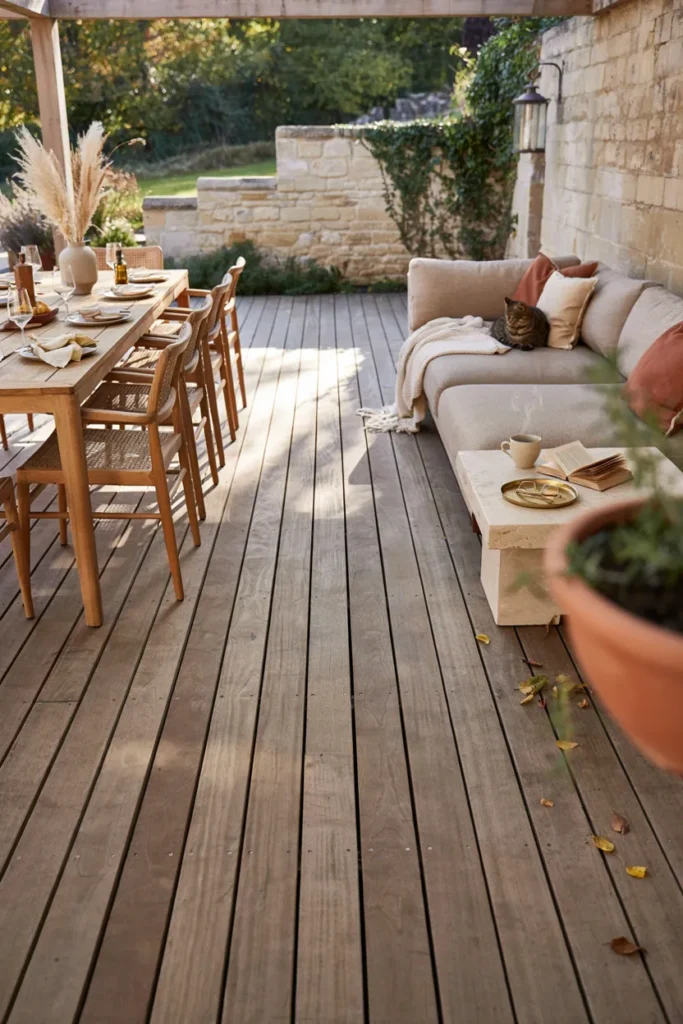
Decks that feel unplanned are usually ones where furniture arrived before the layout did. Deciding what each part of the deck is for, before you buy anything, changes the result completely. Two clearly defined areas feel far more generous than one large undifferentiated platform, because the eye reads separate rooms rather than one leftover space with objects scattered across it.
Sketch the deck to scale and block out zones for dining, lounging, and circulation before ordering a single board. Allow ten by ten feet for a dining set of six and roughly eight by eight for a lounge group. Keep a clear path of at least three feet between zones and to the door. Mark it out with chalk or rope on the ground first, which costs nothing and prevents expensive regret.
2. Give the Dining Area Something Overhead
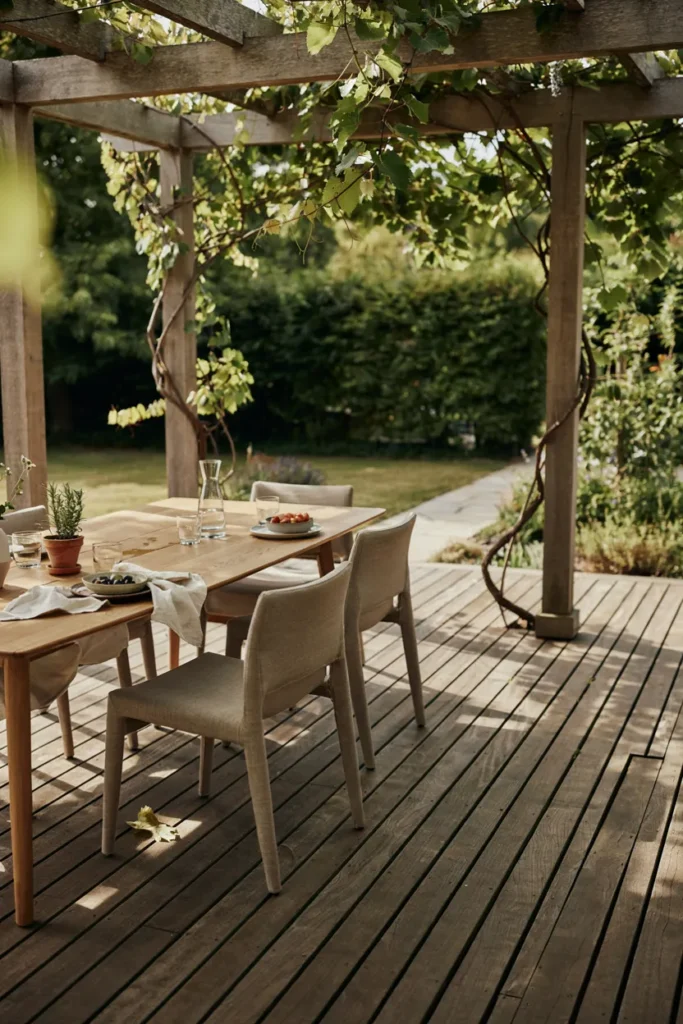
An outdoor space without a ceiling never quite feels like a room, which is why people gravitate to the covered corner of any patio. A pergola over the dining area gives that enclosure while keeping the sky visible. It also makes the deck usable in light rain and in harsh midday sun, which for most households doubles the number of evenings the table gets used.
Size the structure to the table with at least two feet of overhang on each side. Beams running east to west cast better shade during the hottest hours. Anchor posts properly to the deck frame rather than the surface boards. Climbing plants such as wisteria or grapevine soften the frame within a couple of seasons and cost far less than a solid roof.
3. Run the Boards to Make the Deck Look Longer
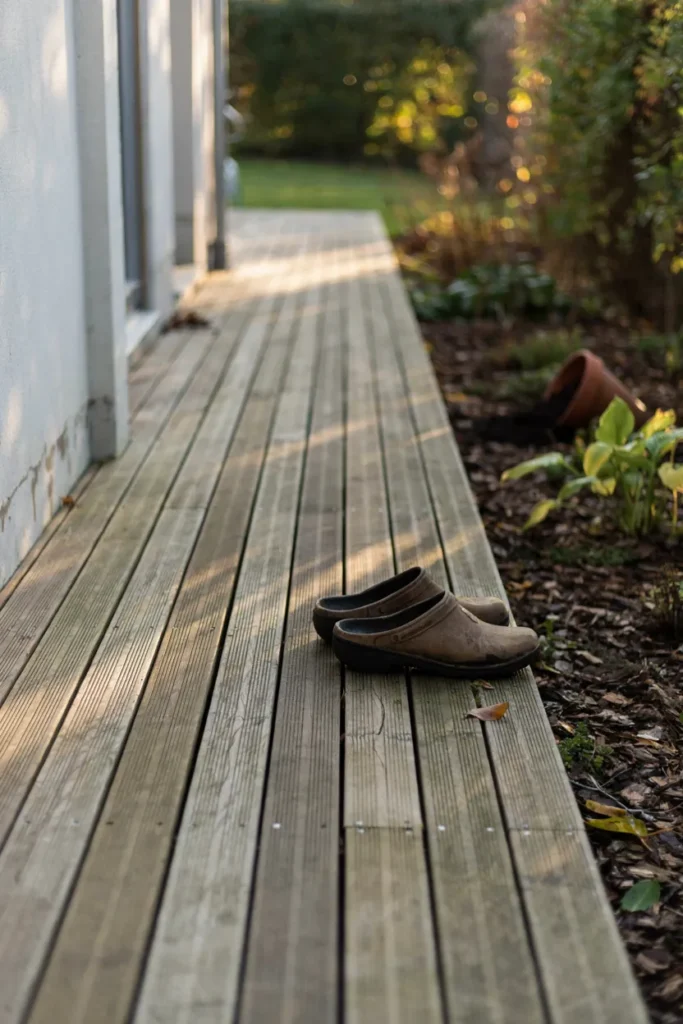
Board direction is decided early and almost never revisited, yet it changes how large the deck reads more than any decorating choice. Lines lead the eye, so boards running away from the house pull your gaze down the garden and make a modest deck feel like it extends further than it does. Running them across has the opposite effect and widens a narrow space.
Choose the direction that stretches the dimension you want to emphasize. Diagonal layouts add interest and use around fifteen percent more material, so budget accordingly. Consider a border board around the perimeter, which hides the cut ends and gives the whole deck a finished edge. Confirm the joist spacing suits your chosen direction before ordering, since diagonal runs need closer supports.
4. Build the Railing So It Almost Disappears
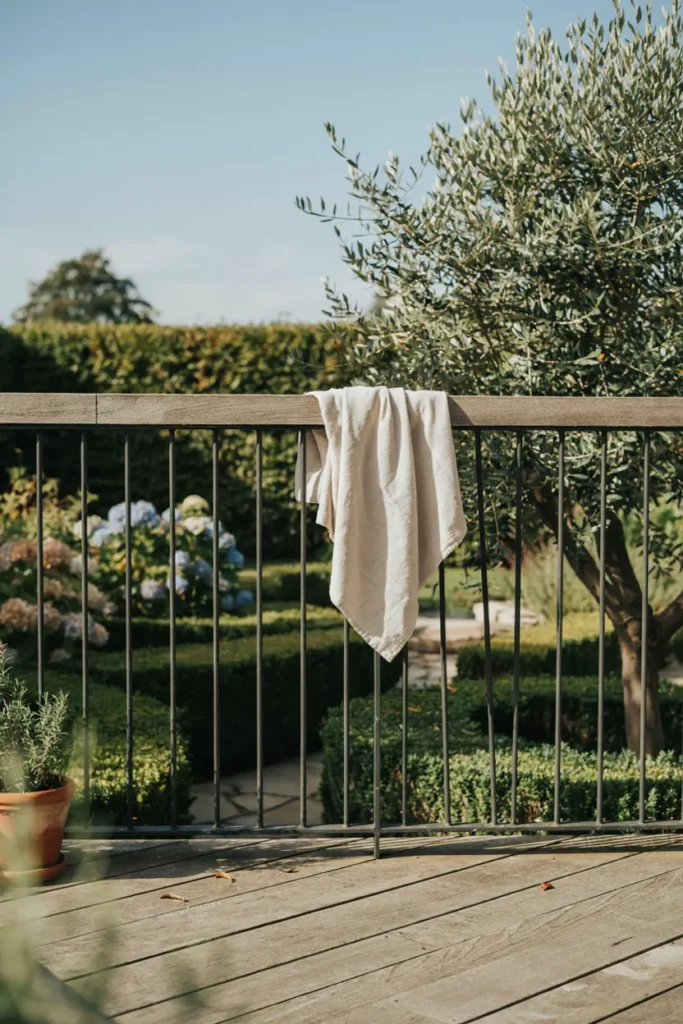
A heavy timber railing with closely spaced balusters cuts the view into slices and makes a deck feel like a pen. Since the railing sits exactly at eye level when you are seated, it has an outsized effect on how open the space feels. Choosing something visually light is the single change most people notice the moment they sit down.
Cable, thin metal balusters, and glass panels all preserve the view while meeting safety requirements. Check your local code for height and gap rules before choosing, since these vary and are strictly enforced. Powder coated aluminum systems cost far less than glass and look nearly as light. A timber top rail keeps the material warm to the touch and useful for setting drinks down.
5. Add Built-In Bench Seating Around the Edge
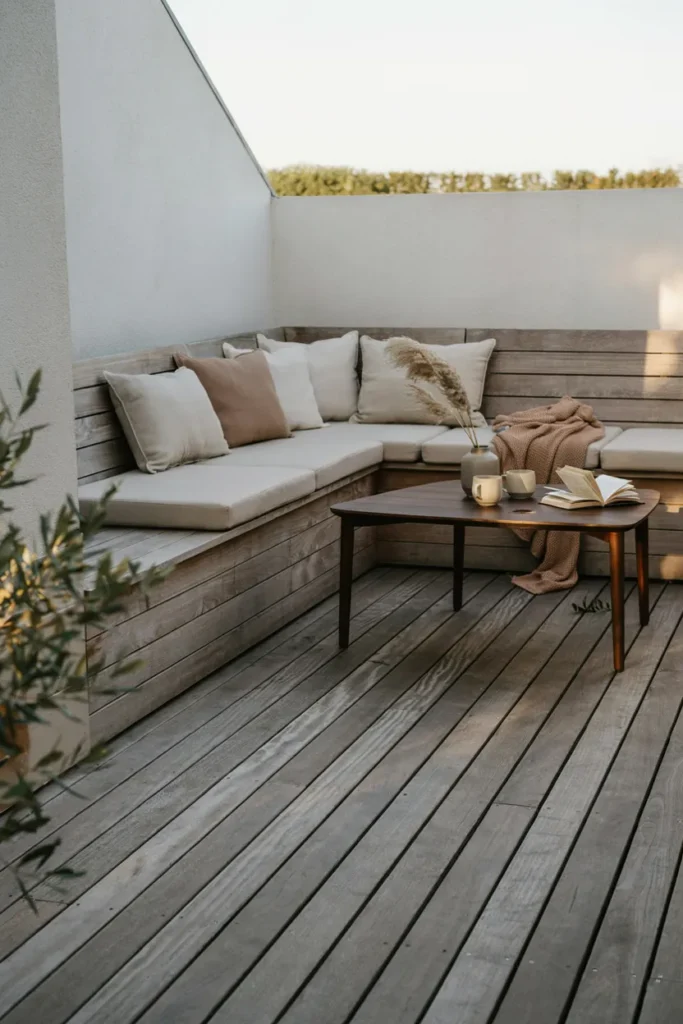
Built-in seating does three things at once. It seats more people than loose furniture in the same footprint, it never blows over or needs storing, and in many designs it can replace a railing entirely on low decks. It also makes a deck look designed rather than furnished, which is the quality most people are chasing without being able to name it.
Build seats seventeen to eighteen inches high and at least sixteen inches deep. A back is worth adding wherever people will linger, angled slightly for comfort. Use the space underneath for storage with hinged lids or slide-out bins. Order quick-dry foam cushions in solution-dyed fabric, and build a small cabinet nearby so they can go away when the weather turns.
6. Light the Steps Before You Light Anything Else
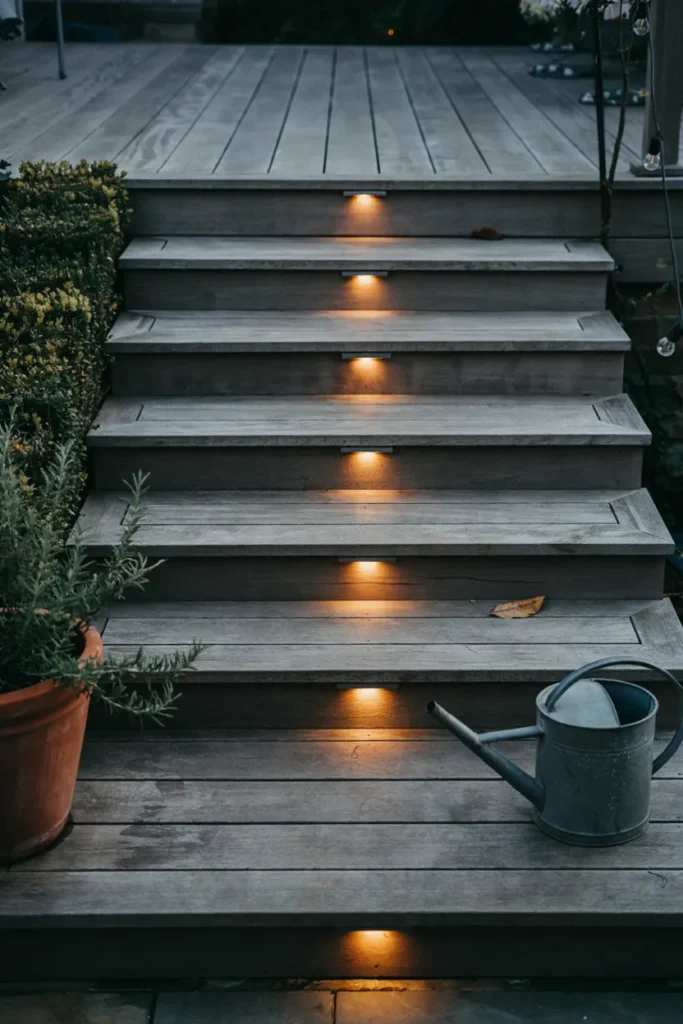
Deck lighting usually gets treated as decoration, but its first job is keeping people from falling down the steps in the dark. Once the level changes are lit, the rest of the lighting can be as low and atmospheric as you like. Doing it in that order means you never need a harsh floodlight, which is what ruins the mood of most outdoor spaces.
Recessed riser lights are the tidiest solution and are inexpensive in low voltage systems. Light every step, not just the top and bottom. Keep everything warm, around 2700K, and below knee height so nothing glares. Post cap lights and under-rail strips handle general ambience afterward. Put the decorative circuit on a separate switch so you can have safety light without the show.
7. Bring the Planting Up Onto the Deck
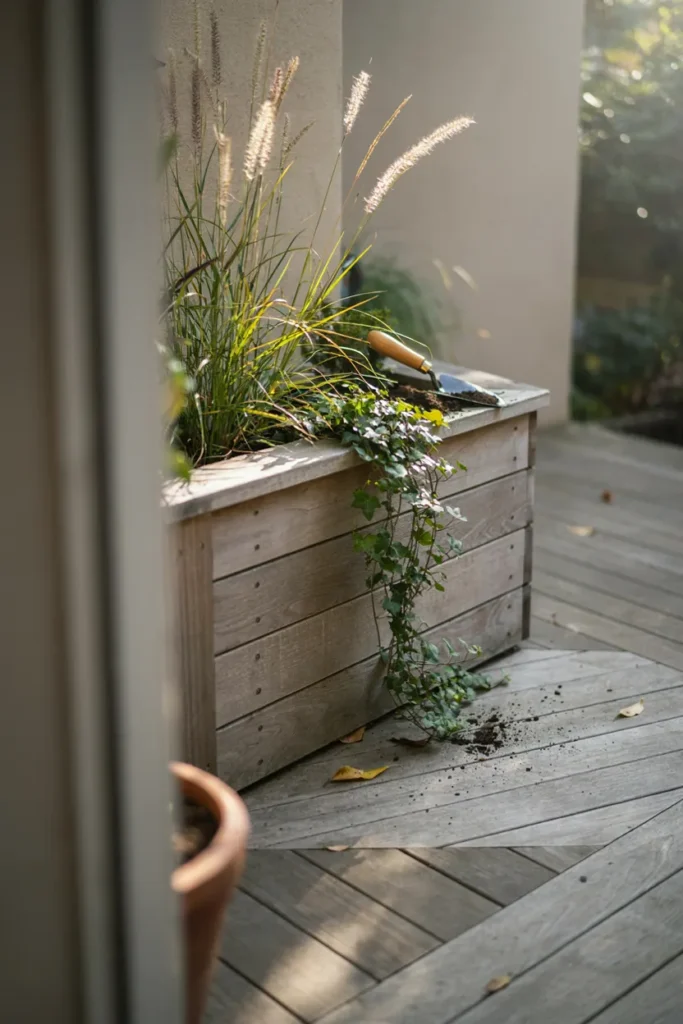
A bare timber platform surrounded by garden always looks like a stage rather than part of the landscape. Bringing plants up onto the surface stitches the two together. Greenery at deck level softens the hard edges, adds privacy where you are sitting rather than where you are standing, and gives the space seasonal change that timber alone cannot.
Built-in planters along the perimeter look most integrated and can double as a low railing on ground level decks. Line them properly and leave an air gap behind, since soil against timber rots it quickly. Large containers dry out far slower than small ones, so go bigger than feels necessary. Grasses, lavender, and evergreen shrubs all handle the exposure and wind that decks get.
8. Choose Furniture You Can Leave Outside
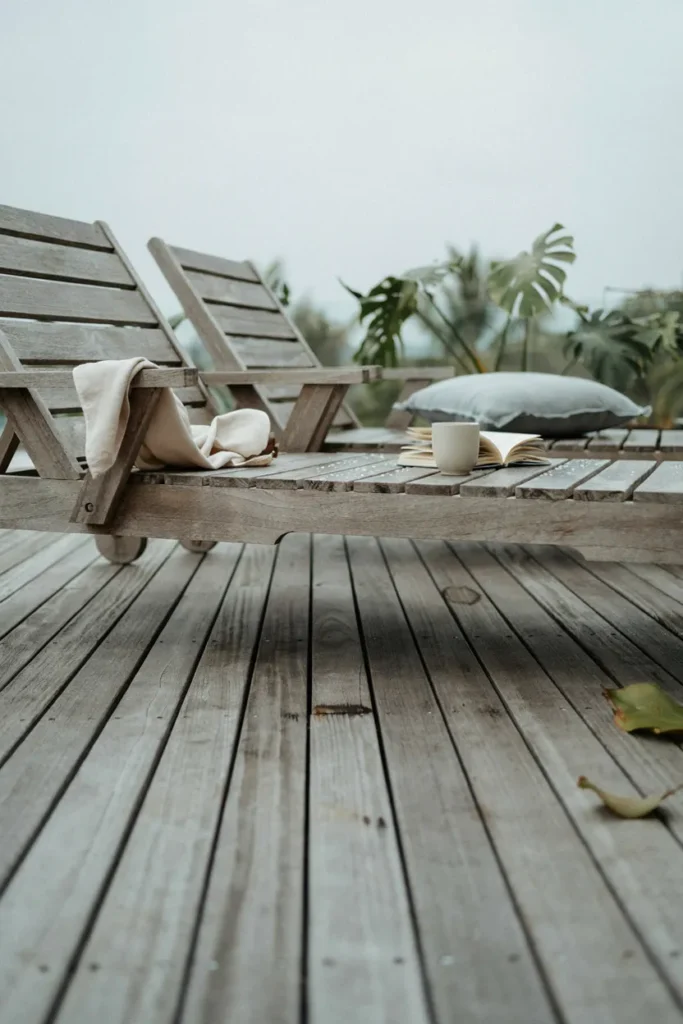
Furniture that has to be covered, carried in, or wiped down before every use quietly stops the deck from being used at all. The barrier is small but it is enough. Buying pieces that live outdoors permanently means stepping out with a cup of coffee takes no preparation, and that ease is what turns a deck into part of daily life.
Teak, powder coated aluminum, and quality all-weather wicker all stay out year round in most climates. Avoid untreated steel and cheap softwood, which deteriorate within two seasons. Solution-dyed acrylic cushions dry fast and resist fading. Buy a simple deck box for cushions rather than carrying them indoors, since the trip inside is the step people stop taking by August.
9. Anchor the Seating Group With an Outdoor Rug
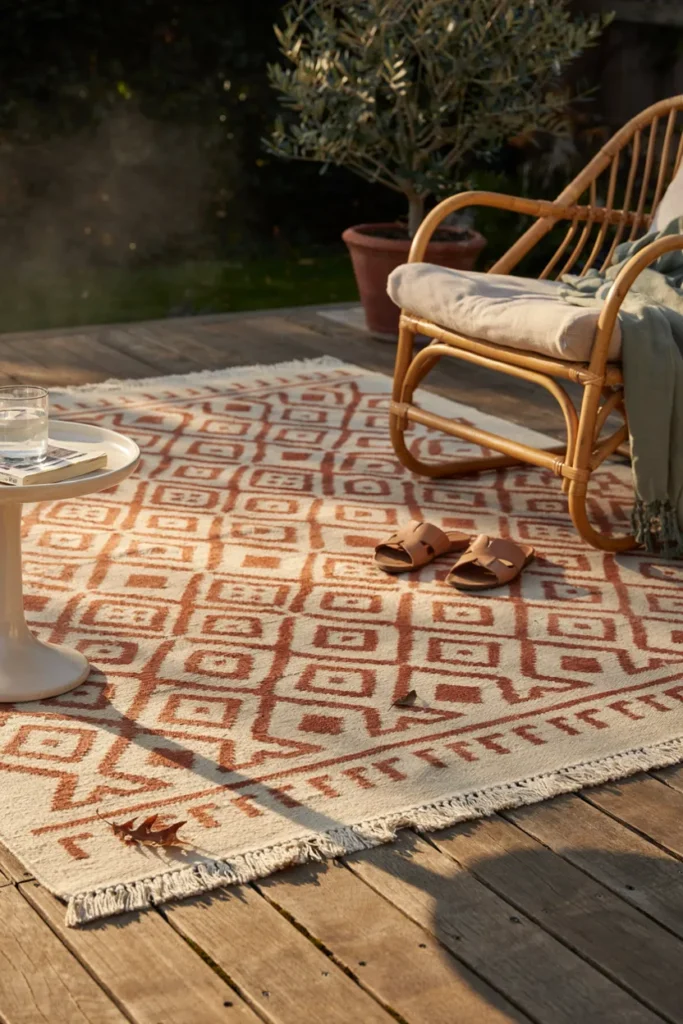
A rug outdoors does exactly what it does indoors. It gathers scattered furniture into a group and tells the eye that this part of the deck is a room. Without one, chairs on a large timber surface tend to look adrift no matter how carefully they are placed. It also makes bare feet on hot or splintery boards far more pleasant.
Choose polypropylene or recycled plastic weaves, which shed water and resist fading better than natural fibers outdoors. Size it so the front legs of all the seating sit on it. Lift it occasionally to let the boards dry, since a rug left flat all season traps moisture and marks the timber. Hose it down a few times a summer and let it dry fully before replacing.
10. Use a Level Change Instead of a Railing
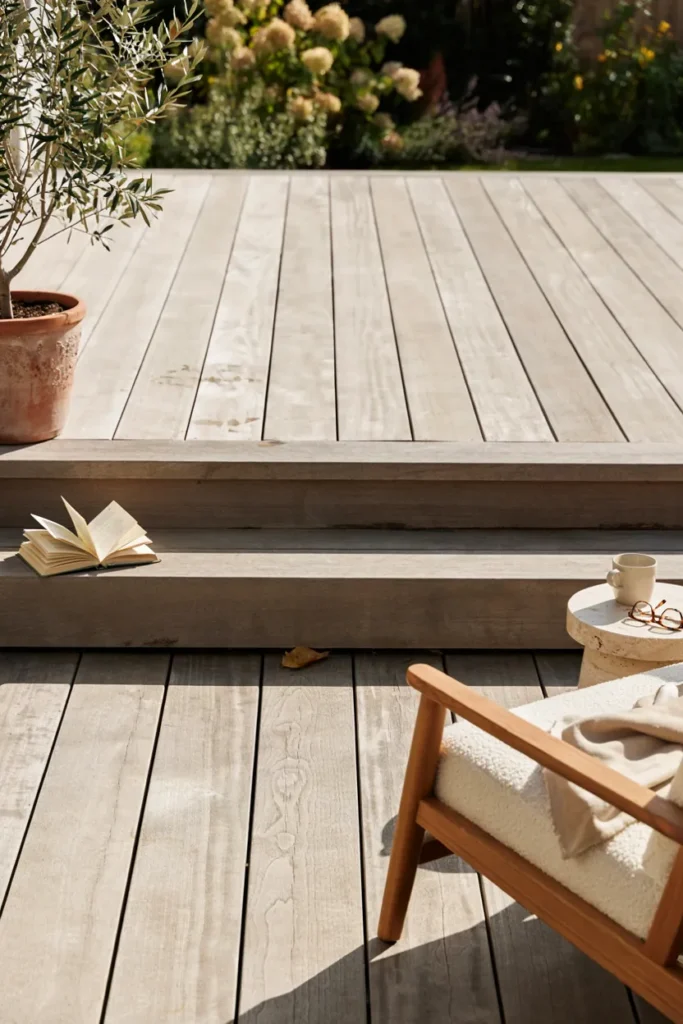
Where the ground allows it, dropping a section of deck by a single step divides the space without a single vertical element. The change underfoot does the work a railing or screen would do, so the view stays completely open. Multi-level decks feel considered and expensive, and on gently sloping sites they are often the most practical way to build anyway.
Keep the drop to a single comfortable step of around seven inches, since larger changes need railings in most codes. Make the step broad, at least eighteen inches deep, so it doubles as casual seating. Use a contrasting board direction or a border on each level to make the edge visible. Check local requirements, as railing thresholds vary by jurisdiction.
11. Build Storage Into the Deck Itself
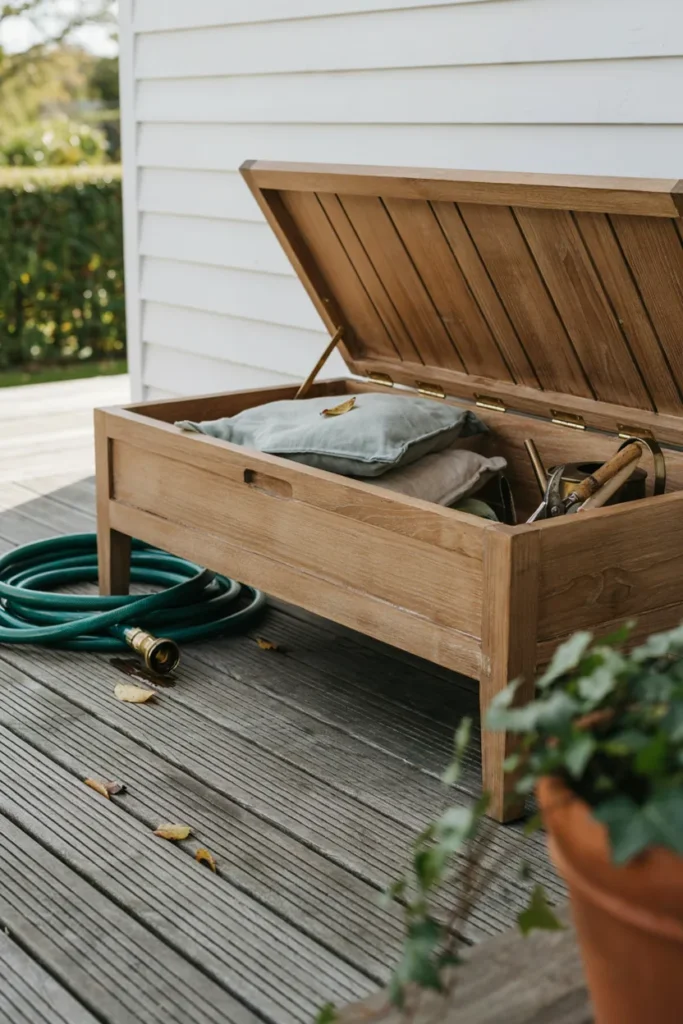
Cushions, toys, tools, and covers all have to go somewhere, and if that somewhere is the garage, the deck slowly becomes a staging area for things nobody has put away. Building storage into benches or under the deck surface keeps everything within a few steps of where it is used, which is the only way a tidy deck stays tidy.
Hinged bench lids are the simplest option and need a gas strut to be safe with children around. Under-deck hatches suit raised decks and hold longer items like furniture covers. Ventilate any enclosed space and raise contents off the base, since damp is inevitable. Keep bins on castors so they roll out fully rather than forcing you to reach into a dark cavity.
12. Add Shade You Can Move Through the Day
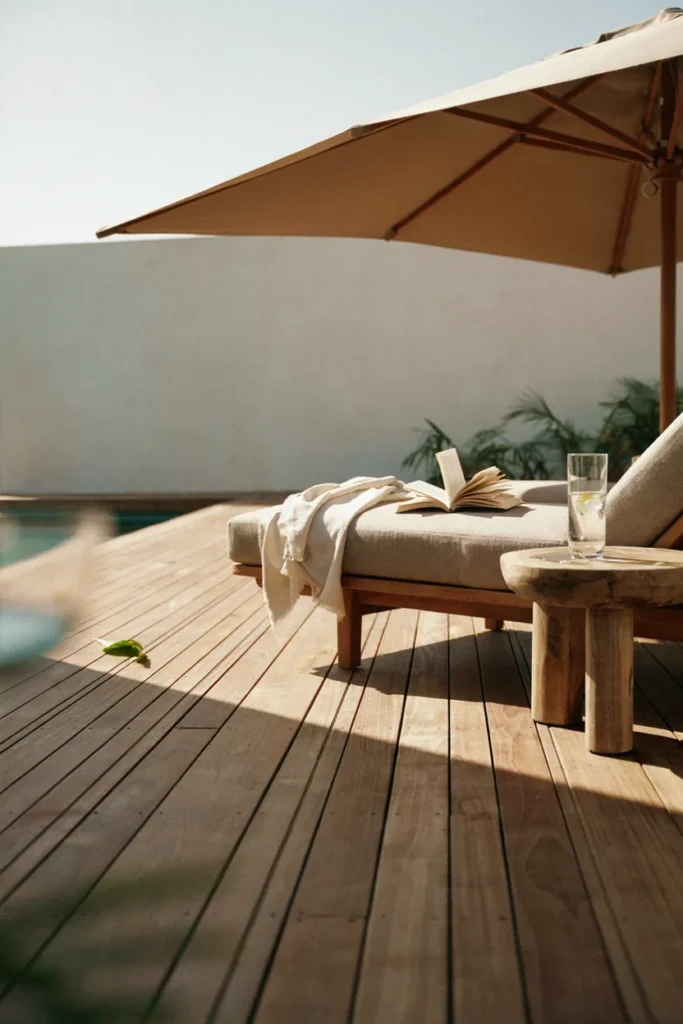
The sun moves, and a fixed structure that shades the table at one is useless at four. Adjustable shade keeps the deck comfortable across the whole afternoon rather than for one good hour. It is also the cheapest way to test where permanent shade should eventually go, since you will quickly learn which position you keep dragging it to.
Cantilevered parasols shade a seating group without a pole in the middle of the table, and a weighted base is essential rather than optional. Retractable awnings suit decks against the house and roll away in wind. Shade sails cost the least and need proper anchor points at different heights to shed rain. Always take fabric shade down before storms rather than after.
13. Put a Fire Element at the Far End
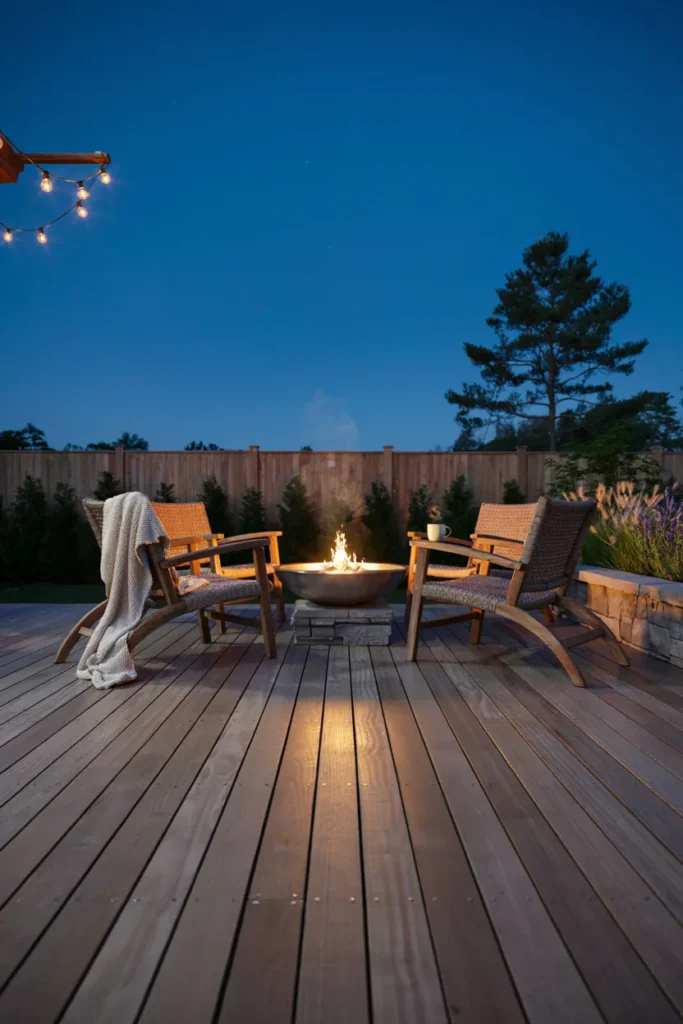
Fire draws people to the far end of a deck and keeps them there long after the food is finished. It also extends the season at both ends of the year, which is where most of the extra use comes from. Placing it away from the house pulls everyone out into the space rather than clustering by the back door.
Gas fire bowls and tables are far safer on timber than wood burning ones, which throw sparks. Set any fire element on a non-combustible base with clearance on all sides, and check your local rules, since some areas prohibit open flame on raised decks entirely. Keep it at least ten feet from the house and any fabric shade, and never leave it burning unattended.
14. Add a Serving Ledge Between Kitchen and Deck
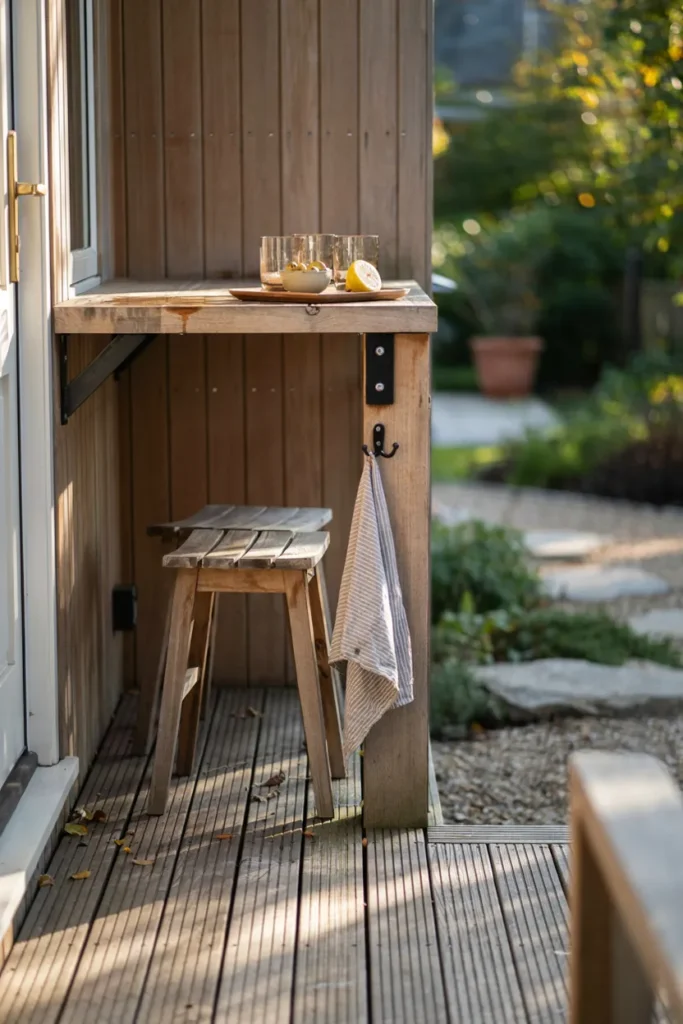
Every deck meal involves several trips through the door carrying things, and a surface right where you emerge saves most of them. A ledge is also somewhere to lean with a drink when the table is full, which is where people naturally gravitate anyway. It costs very little and changes the practical flow of every gathering you host.
Fix a ledge eight to twelve inches deep to the railing or a wall near the door, at counter height of around thirty six inches. Use the same timber as the deck for a built-in look. A pair of stools underneath adds casual seating without taking floor space. Seal it well, since this surface takes drinks, weather, and constant use all summer.
15. Screen the Neighbors Without Building a Fence
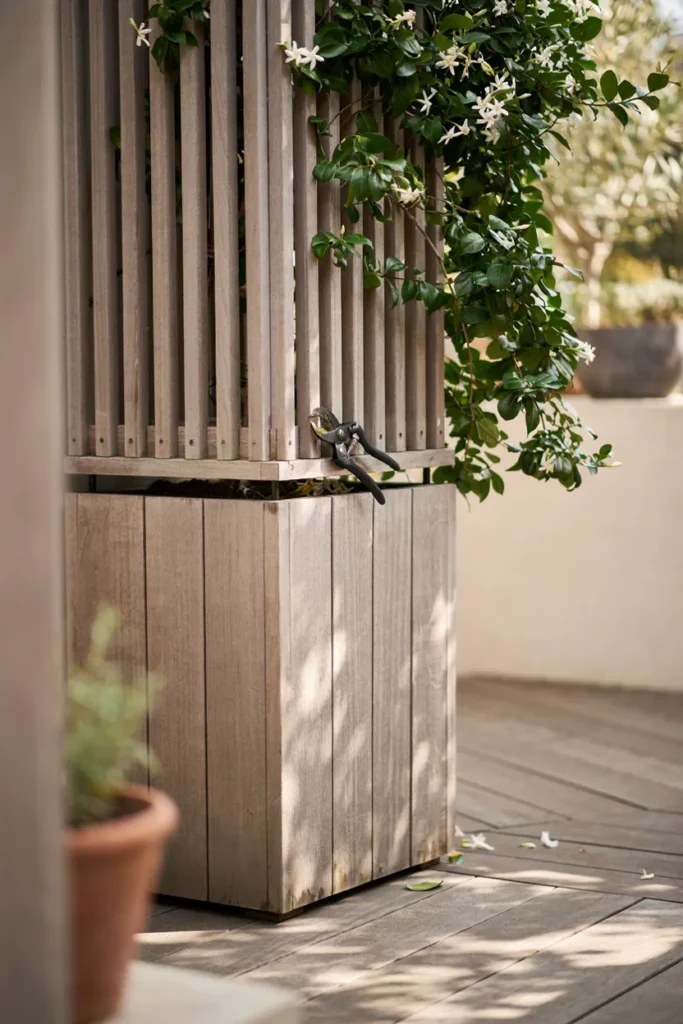
Raised decks put you at eye level with neighboring windows, which is the reason many beautiful decks sit empty. A full fence is often not permitted at that height and would darken the space anyway. A targeted screen at the one problematic angle solves the privacy issue while keeping the deck open and light on every other side.
Sit down in the actual seat before deciding what to block, since seated sightlines differ from standing ones considerably. A planter with a trellis panel above gives height without a fixed structure, and often falls outside planning restrictions. Climbers like jasmine and clematis fill in within two seasons. Keep the screen narrow and place it close to the seating for maximum effect.
16. Choose Boards You Will Not Resent in Year Five

The board choice determines how much of your summer you spend maintaining the deck rather than sitting on it. Every material is a trade between upfront cost, appearance, and the work it demands later. Being realistic about how much sanding and sealing you will genuinely do is worth more than any opinion about how a material looks when new.
Pressure treated pine costs least and needs sealing every year or two. Cedar looks better and weathers to silver if you let it. Composite costs two to three times more upfront and needs only washing, which suits people who would rather not maintain anything. Order a sample of anything you are considering and leave it outside for a month before committing.
17. Add Warm Layers So the Deck Works After Dark
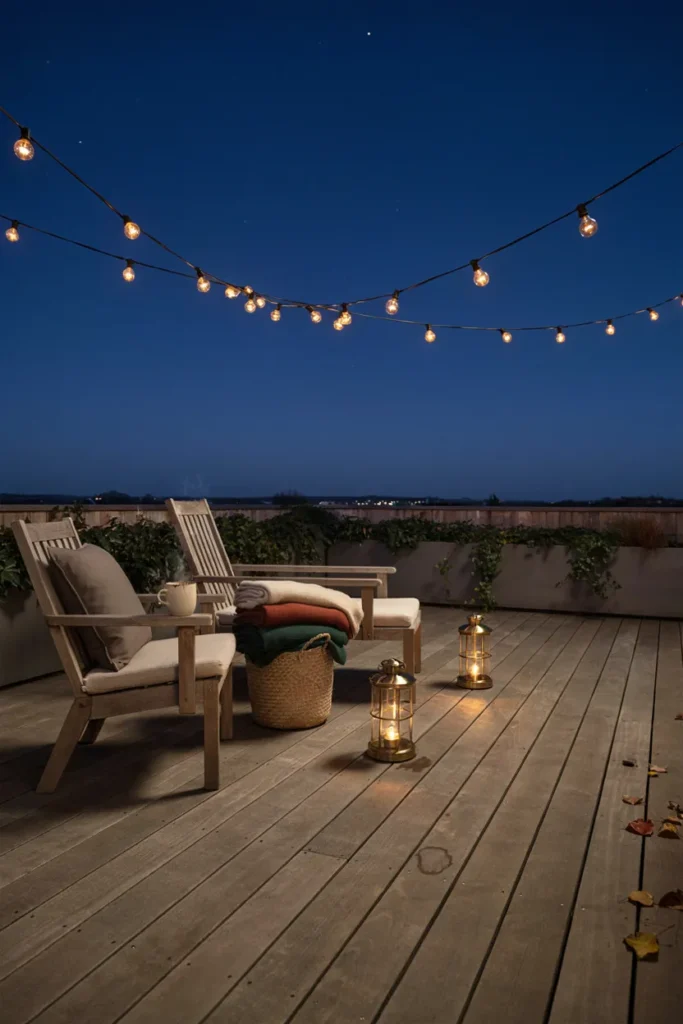
Evenings outdoors end when people get cold, not when the conversation runs out. A basket of blankets within arm’s reach adds an hour or two to every gathering and costs almost nothing. It is the least technical idea on this list and consistently the one guests comment on, because reaching for a blanket feels like being properly looked after.
Keep four or five heavier throws in a lidded weatherproof basket near the seating. Wool and thick cotton outperform thin decorative blankets by a wide margin. Store them somewhere genuinely dry, since damp blankets get used once and then avoided. Add an outdoor heater or a fire element if your evenings run cold, and the deck becomes usable most of the year.
18. Leave One Area Deliberately Empty
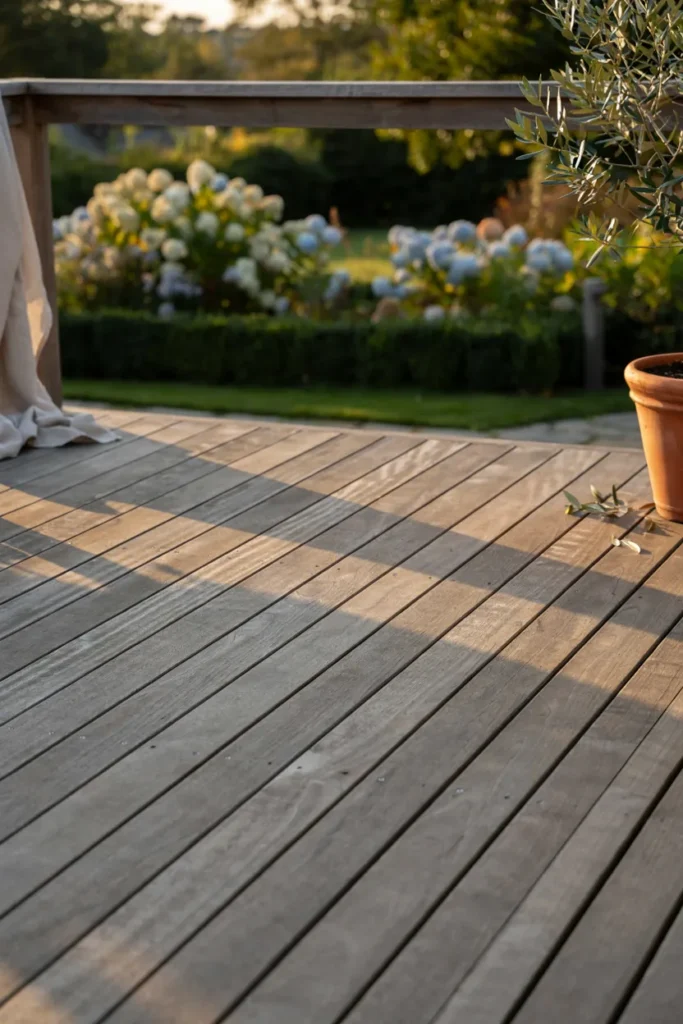
The instinct is to fill a new deck completely, and it is worth resisting. Empty space is what makes the furnished areas read as intentional, and it gives you somewhere to put extra chairs when eight people arrive instead of four. It is also where children play and where you stand with a drink, which are uses no furniture arrangement accommodates.
Aim to leave roughly a quarter of the deck clear, ideally in one continuous area rather than scattered gaps. Keep it near the railing with the best view or nearest the door. Resist filling it with planters, which multiply quickly. If you need reassurance it is not wasted, note how often that area gets used the first time you host a crowd.
Bringing It All Together
The deck ideas that make the biggest difference are decided before any boards go down: how big it needs to be, which way you will look, where people will sit, and how they will move between the door and the table. Get those right and even a simple deck with plain furniture feels calm and welcoming. Get them wrong and no amount of styling will rescue it. If you already have a deck you rarely use, work out which single thing is stopping you, whether that is the neighbor’s window, the dark steps, the furniture you have to wipe down first, or simply having nowhere comfortable to sit. Fix that one thing before spending on anything else, because it is usually the whole reason the space sits empty. Then build up slowly, adding shade, light, planting and storage as you learn how you really use it. If any of these gave you a plan worth starting, save them to your Pinterest boards for when the weather turns.