
16 White Living Room Ideas That Prove Minimalism Can Still Feel Inviting
White living rooms often get a reputation for feeling cold, but the right approach proves the opposite. Thoughtful white living room ideas can feel soft, layered, and genuinely welcoming, the kind of space you sink into with a cup of tea. The secret is warmth: mixing tones, textures, and natural materials so the room breathes. I once redesigned a client’s all-white living room that felt like a showroom, and simply adding a nubby oatmeal throw, a jute rug, and a few live plants turned it into somewhere her family loved to gather. In this collection I am sharing sixteen ways to make a white living room feel calm, airy, and inviting, from clever texture layering to warm lighting and organic accents. Whether you love clean minimalism or cozy simplicity, these ideas help you build a bright, restful space that still feels like home.
1. Layer Warm Whites Instead of One Stark Shade
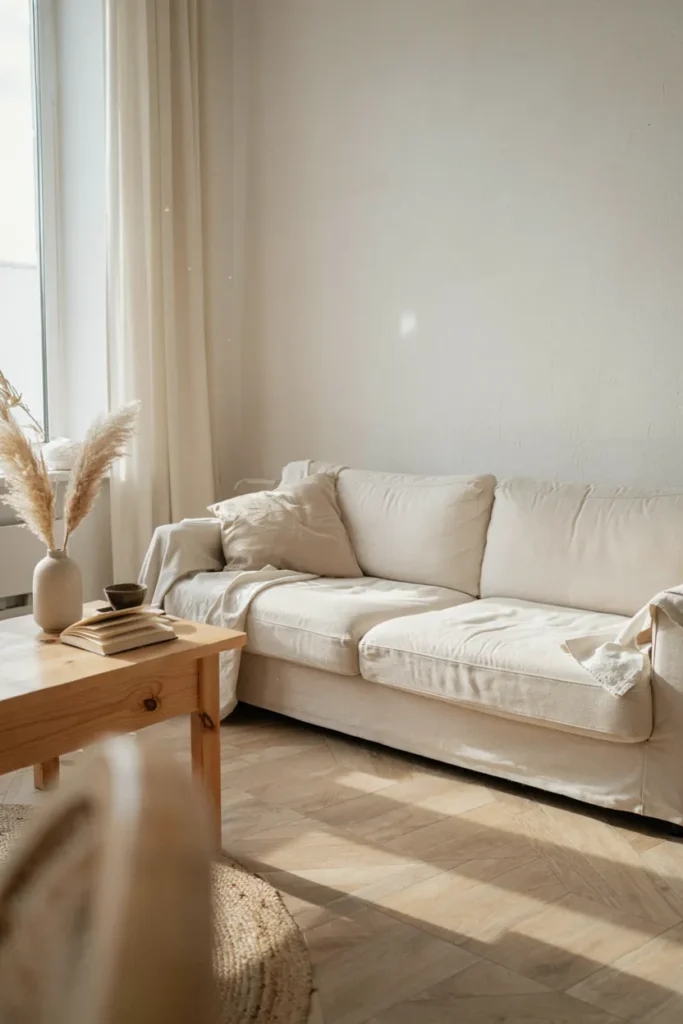
The fastest way to make a white living room feel inviting is to layer several warm whites rather than relying on one stark, clinical shade. When creamy, ivory, and soft greige tones sit together, the room gains subtle depth and a gentle glow instead of a flat, sterile feel. This tonal layering reads as calm and sophisticated rather than empty. The mood becomes soft and restful, like morning light through linen. It is a designer trick that keeps minimalism feeling warm, human, and thoroughly livable.
Recreate it by choosing whites with warm undertones, think soft cream, alabaster, or bone, and repeating them across walls, upholstery, and textiles. Avoid pure brilliant white on large surfaces, which can feel harsh. Vary the shades slightly so nothing matches too perfectly, adding natural dimension. Budget tip: test paint samples in your actual light before committing, since undertones shift dramatically through the day. A few warm-white throw pillows can soften an existing cool sofa without any major expense.
2. Add Depth With Natural Wood Tones
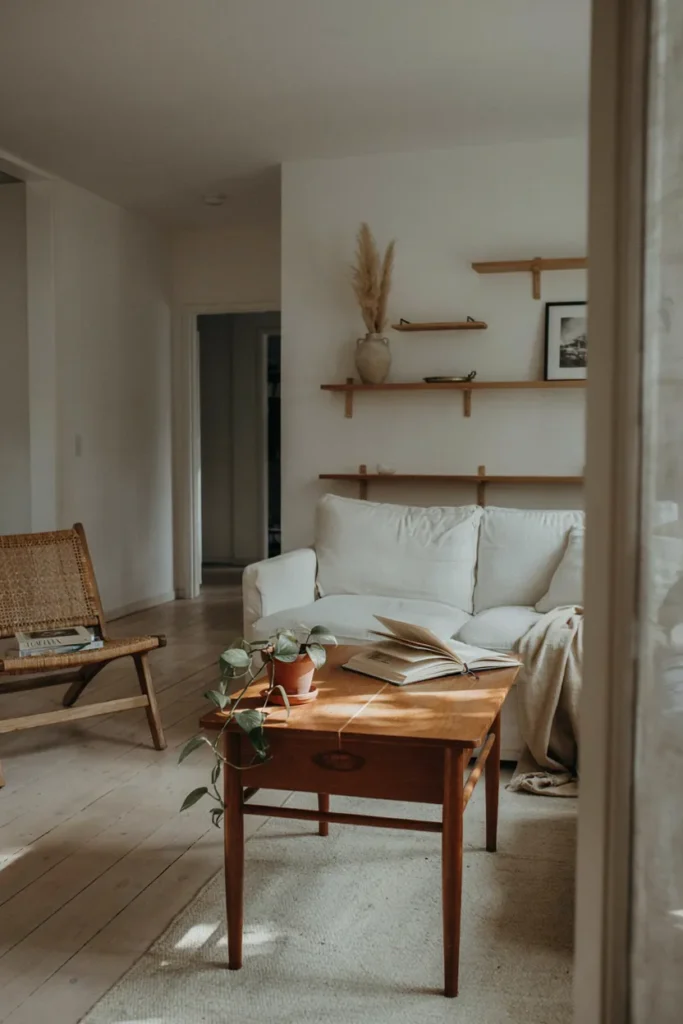
Natural wood is the perfect antidote to an overly white room, adding instant warmth and grounding. The organic grain and honeyed tones of oak, walnut, or cane break up the whiteness and keep the space from feeling cold or one-note. Wood introduces a sense of nature and craftsmanship that softens minimalism beautifully. The mood turns earthy, calm, and welcoming, striking that ideal balance between clean and cozy. It is one of the easiest ways to give a white living room soul and visual interest.
Recreate it by introducing wood through a coffee table, shelving, a bench, or accent chairs in warm mid-tones. Mix a couple of wood finishes for a collected, layered look rather than a matched set. Cane and rattan pieces add texture along with warmth. Budget tip: shop secondhand for solid wood furniture, which is affordable and full of character. Even a wooden bowl, tray, or picture frame helps thread that grounding warmth throughout your bright white space.
3. Mix Plenty of Cozy Textures
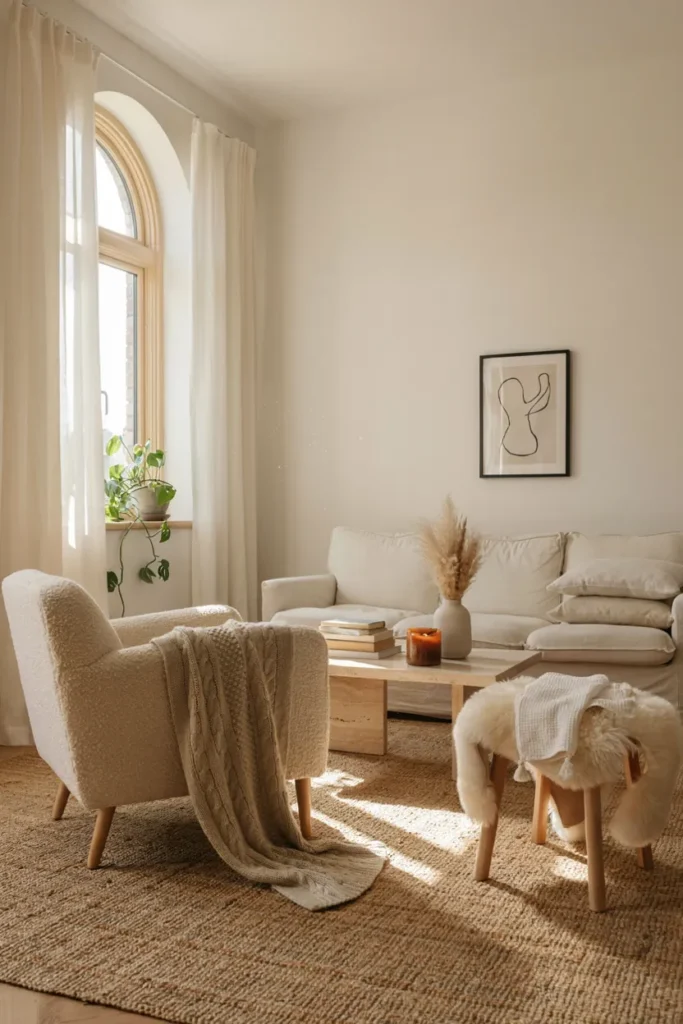
Texture is what makes an all-white room feel rich instead of blank. Because color is minimal, the eye reads depth through the interplay of boucle, knit, linen, and woven fibers. Layering many textures within a white palette creates warmth and tactile interest that invites touch. The mood becomes cozy, plush, and quietly luxurious, the sort of room you want to curl up in. Texture is the secret ingredient that lets minimalism feel soft and comforting rather than stark and untouchable.
Recreate it by combining at least four textures in your whites, such as a boucle chair, a cable-knit throw, a linen sofa, and a jute or wool rug. Add a faux sheepskin or a woven basket for extra dimension. Keep everything tonal so the layering reads calm, not busy. Budget tip: swap in textured pillow covers and a chunky throw to instantly enrich an existing white sofa. Look for natural fibers, which age gracefully and add authentic warmth over time.
4. Bring In Living Greenery
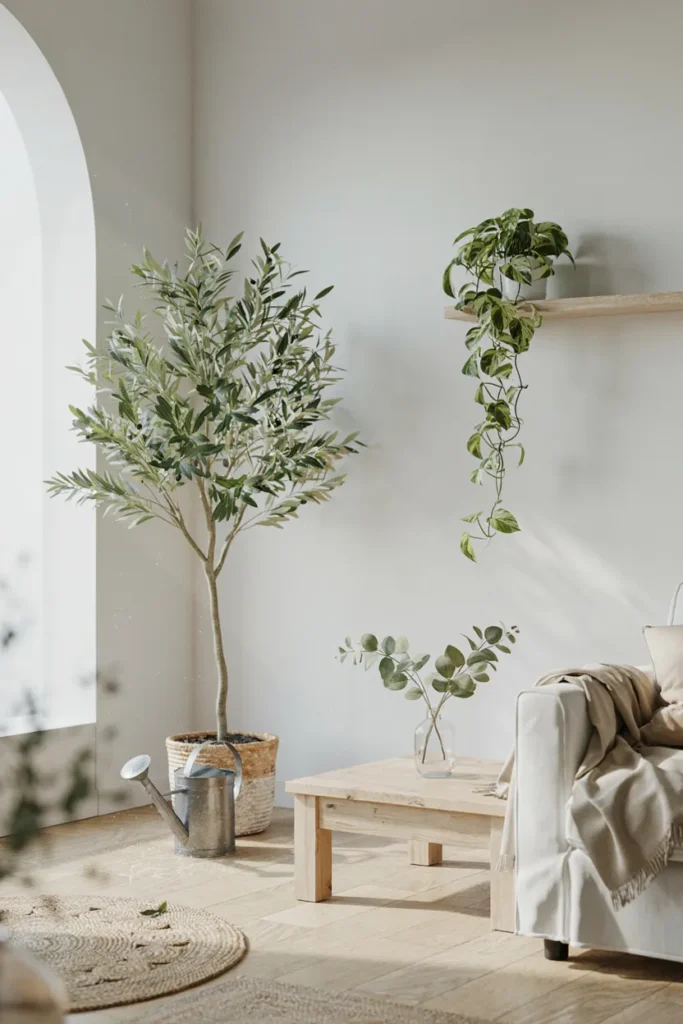
Greenery breathes life into a white living room, adding organic color and a fresh, natural energy. Against a clean backdrop, the vivid green of plants pops beautifully and softens all that crispness. Living plants also make a minimalist room feel cared for and alive rather than staged. The mood turns fresh, serene, and grounded, connecting the bright space to the outdoors. A few well-placed plants are one of the simplest, most affordable ways to warm up and enliven a white room.
Recreate it by adding one large statement plant, an olive tree, fiddle-leaf fig, or bird of paradise, in a warm woven basket, then layering smaller trailing plants on shelves. Add fresh cut stems in a simple vase for a rotating seasonal touch. Keep pots neutral so the greenery stays the star. Budget tip: hardy pothos, snake plants, and propagated cuttings are inexpensive and forgiving. Group plants in odd numbers and varied heights for a natural, effortless arrangement.
5. Choose a Statement Textured Rug
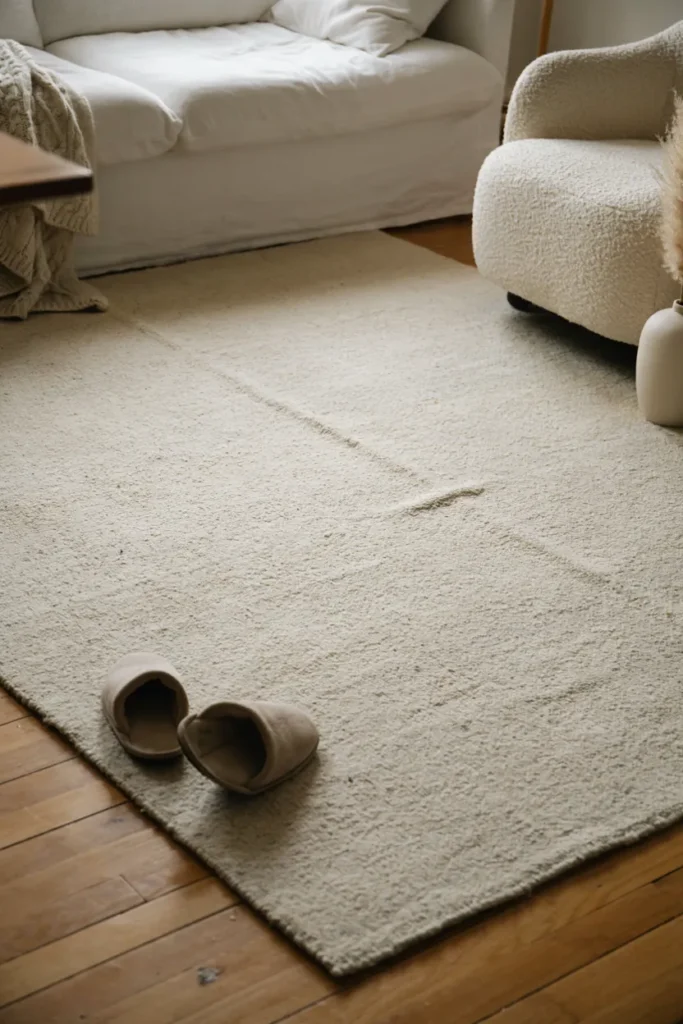
A textured rug grounds a white living room and adds warmth right where you need it most, underfoot. Even within a tonal palette, a rug with high-low pile, subtle pattern, or nubby weave introduces depth and coziness. It softens hard floors and defines the seating area, making the room feel finished and intentional. The mood becomes snug, layered, and inviting, encouraging everyone to kick off their shoes. A great rug proves that a white room can be both minimal and deeply comfortable.
Recreate it by choosing a rug in ivory, cream, or oatmeal with plenty of texture, such as wool, shag, or a chunky flatweave. Make it large enough for your main furniture to rest on for a cohesive look. Layer a smaller sheepskin on top for extra softness if you like. Budget tip: a textured jute or wool-blend rug offers a high-end feel at a friendly price. Add a rug pad underneath for cushioning and to keep everything from sliding.
6. Warm Up the Room With Soft Lighting
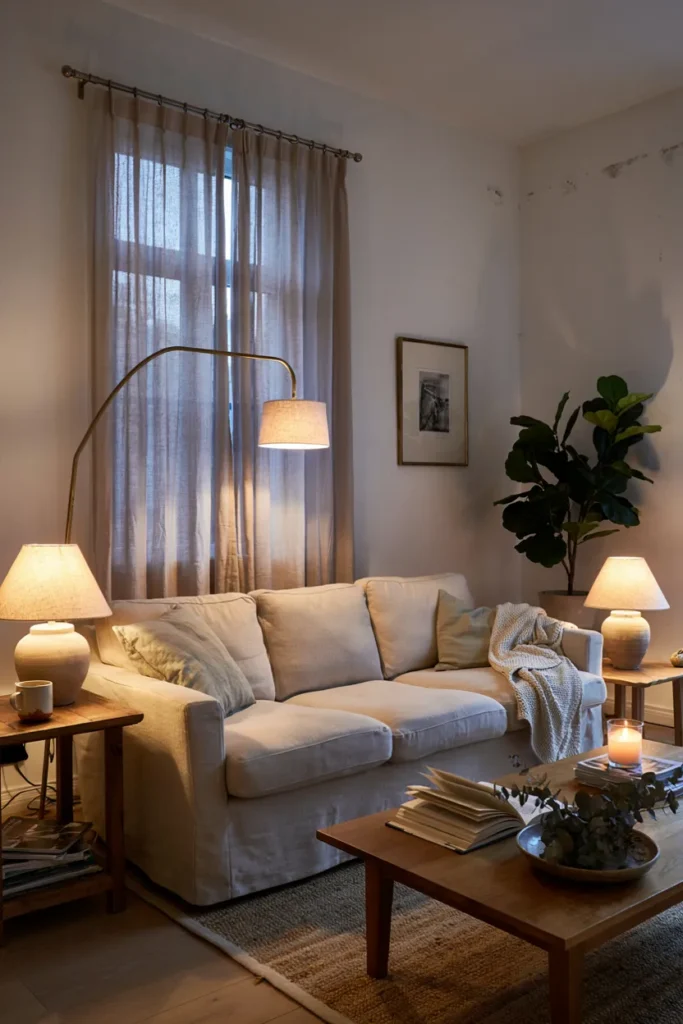
Lighting can make or break a white room, and warm light is essential to keep it from feeling cold. Soft, layered lamplight bathes white surfaces in a flattering amber glow that feels intimate and cozy. Multiple gentle light sources at different heights create atmosphere and banish the flat, harsh look that overhead lighting alone can bring. The mood turns warm, relaxed, and welcoming, especially in the evening. Thoughtful lighting is what makes a minimalist white space feel truly livable after dark.
Recreate it by layering table lamps, a floor lamp, and candles instead of relying on a single ceiling fixture. Choose warm bulbs around 2700 kelvin and add dimmers or smart plugs for control. Position lamps to bounce soft light off your white walls. Budget tip: thrift ceramic or wooden lamp bases and add fresh linen shades for a cohesive, cozy set. Skip cool-toned bulbs entirely, since they make white rooms feel clinical rather than serene.
7. Add Subtle Contrast With Black Accents
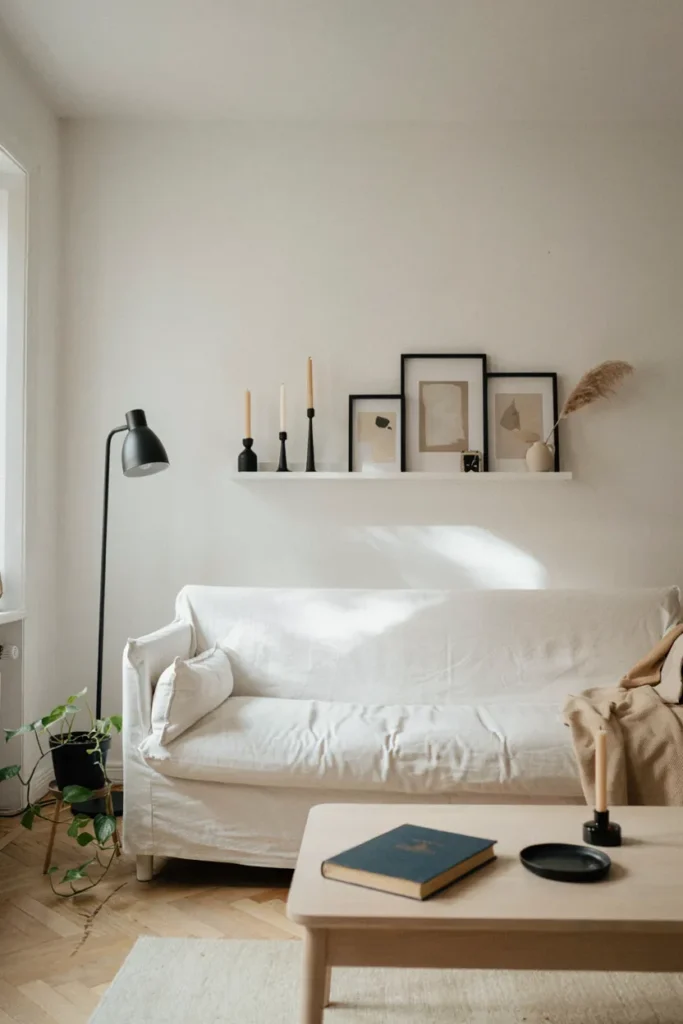
A few touches of black give a white living room definition and keep it from feeling washed out. Small doses of matte black, in frames, lighting, or hardware, add crispness and a modern, grounded edge. This gentle contrast draws the eye and makes the whites look intentional rather than accidental. The mood becomes refined, balanced, and quietly graphic. A little black is like eyeliner for a room; it sharpens everything and adds a touch of sophistication without overwhelming the airy, minimal feel.
Recreate it by adding black through thin picture frames, a slim floor lamp, candlesticks, or small decor objects. Keep the finish matte for a soft, contemporary look, and repeat it a few times so it feels deliberate. Use black sparingly, as an accent rather than a dominant color. Budget tip: spray-paint thrifted frames or accessories matte black for an inexpensive, cohesive set. A single black-and-white print or a dark-spined book stack can add just the right amount of contrast.
8. Keep Surfaces Clutter-Free With Smart Storage
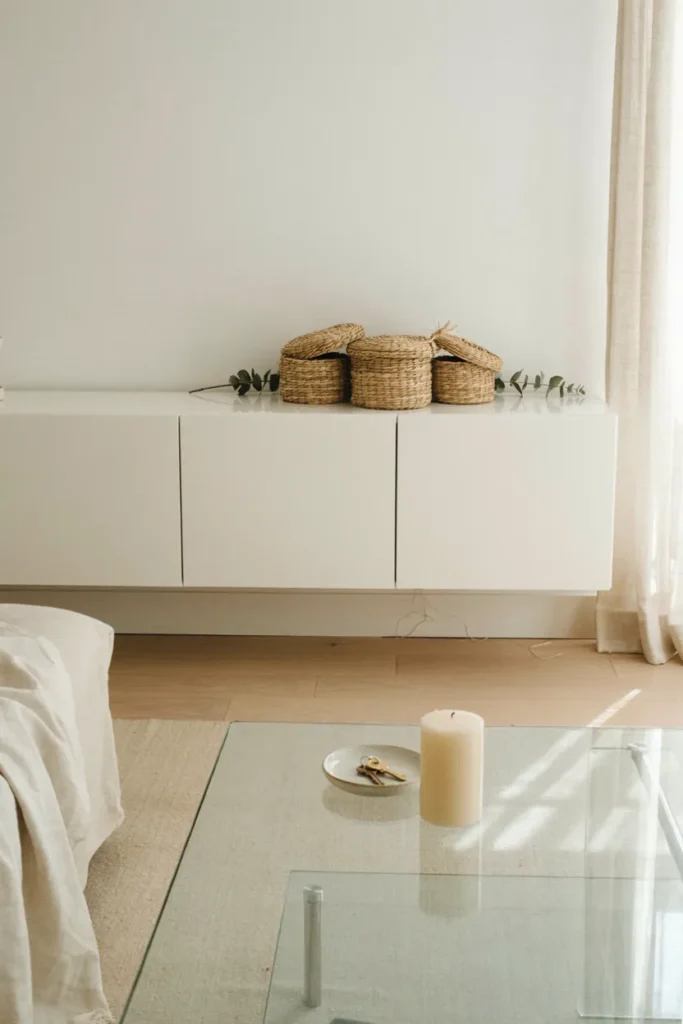
Minimalism depends on tidy, breathing surfaces, and a white room shows clutter more than most. Smart, hidden storage keeps everyday items out of sight so the clean lines can shine. When surfaces stay clear and curated, the whole room feels calm, spacious, and intentional. The mood turns serene and restful, the visual quiet that makes minimalism so appealing. Good storage is the unsung hero of a white living room, letting real life coexist with that crisp, airy aesthetic.
Recreate it with closed-door media consoles, lidded baskets, and multifunctional pieces like storage ottomans. Give every remote, charger, and blanket a designated home out of view. Limit open-shelf decor to a few curated objects with breathing room. Budget tip: woven baskets and fabric bins are affordable ways to corral clutter attractively. Edit surfaces regularly, keeping only what you love on display, so the room always feels intentional rather than crowded.
9. Introduce Gentle Pattern in Neutral Tones
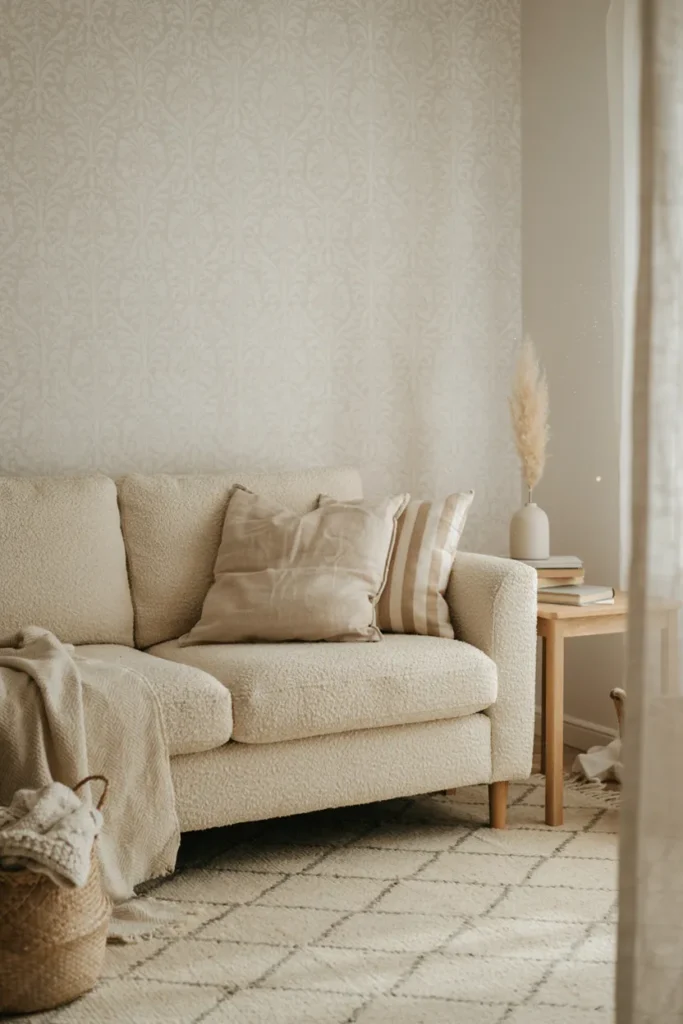
Gentle pattern adds personality to a white room without disturbing its calm. Tone-on-tone stripes, subtle checks, or soft geometrics in creamy neutrals bring movement and interest while keeping the palette serene. This quiet patterning prevents a minimalist space from feeling too plain or flat. The mood stays restful yet becomes more dynamic and layered. Pattern in neutral tones is a sophisticated way to add depth, proving that a white living room can be both minimal and full of understated character.
Recreate it by choosing textiles with soft, low-contrast patterns, such as a faintly striped pillow, a herringbone throw, or a tonal geometric rug. Keep the colors within your white and cream family so the patterns whisper rather than shout. Mix scales, a small check with a wider stripe, for a collected feel. Budget tip: patterned pillow covers are an inexpensive way to test this look. Let just a few patterned pieces do the work so the room stays clean and cohesive.
10. Style a Simple, Airy Gallery Wall
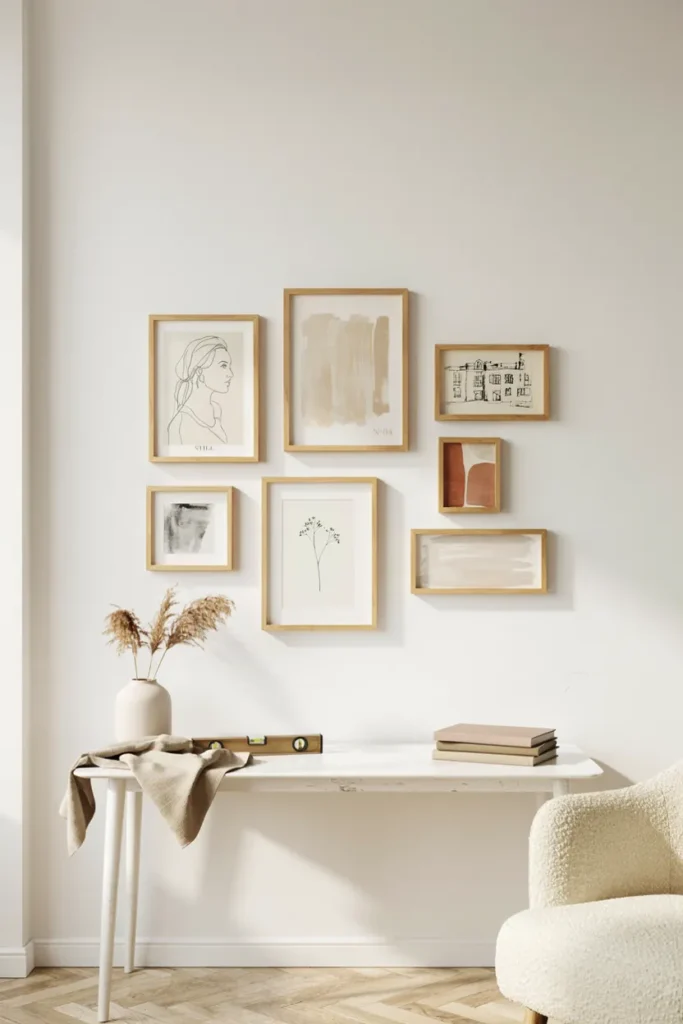
A pared-back gallery wall adds personality to a white living room while honoring its minimalist spirit. Framed art in neutral tones, with plenty of breathing room, brings visual interest without clutter. The generous white space around each piece keeps the display feeling calm and curated. The mood turns artful, serene, and personal, giving the room a designed, intentional quality. A simple gallery wall proves that minimalism and self-expression can happily coexist on the same clean, bright wall.
Recreate it by selecting a few prints in soft, cohesive tones, abstracts, line art, or black-and-white photography, and framing them in thin oak or black frames. Space them generously so the wall feels airy rather than packed. Align them along a clean grid or a relaxed row for order. Budget tip: free printable art plus affordable frames make this look very accessible. Use painter’s-tape templates on the wall before hanging to get the spacing just right.
11. Warm the Floor With Layered Neutrals
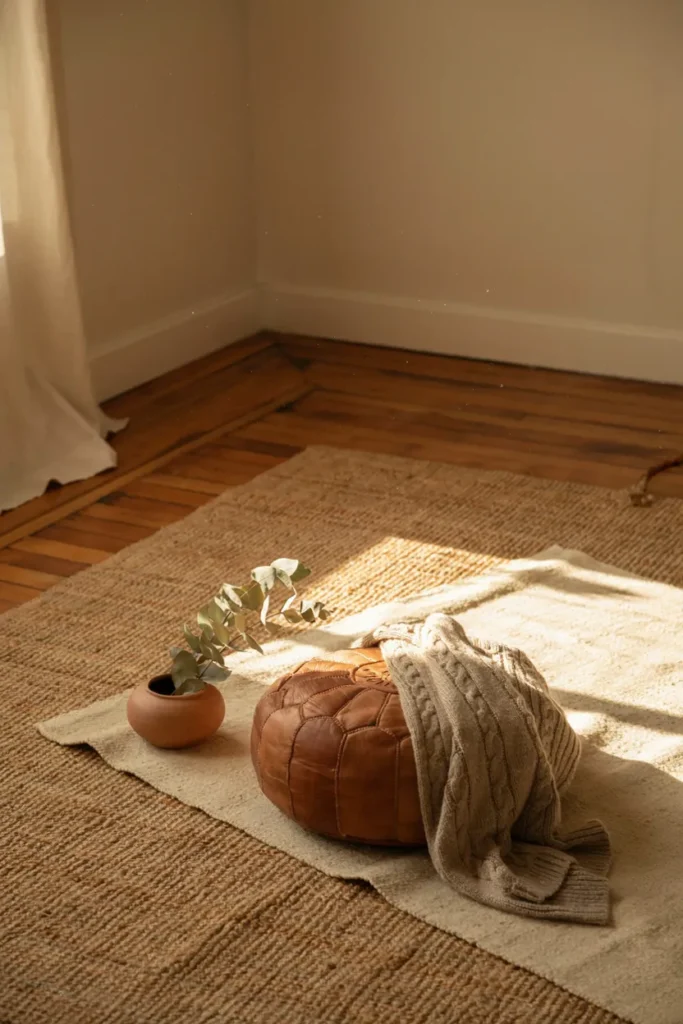
Layering rugs and warm neutral accents on the floor adds richness to a white living room from the ground up. Combining textures and gentle earth tones underfoot introduces coziness and dimension that keep the space from feeling sterile. A leather pouf or a caramel accent grounds the palette with warmth. The mood becomes snug, collected, and inviting, balancing crisp white above with softness below. Layering the floor is a subtle but powerful way to make minimalism feel truly comfortable.
Recreate it by layering a soft flatweave or wool rug over a larger jute base, then adding a warm-toned pouf, basket, or leather accent. Choose creams, oatmeals, and gentle caramels so the neutrals feel warm rather than flat. Keep the layering intentional, two rugs and one or two accents is plenty. Budget tip: a small leather or woven pouf doubles as seating and adds instant warmth. Anchor the arrangement so your main furniture sits partly on the top rug.
12. Add a Sculptural Statement Piece
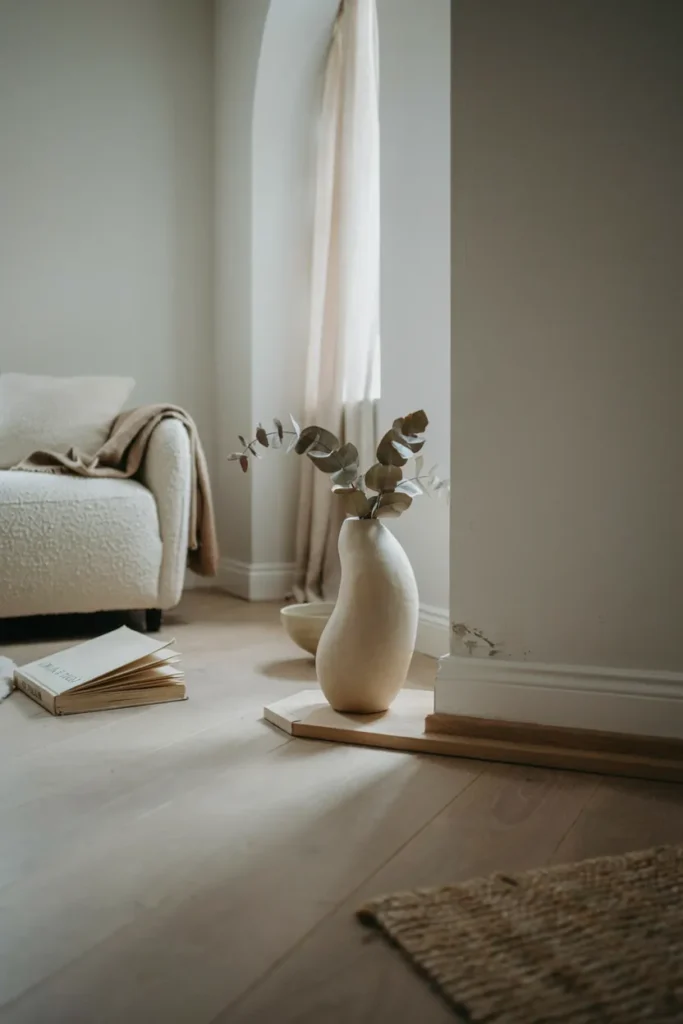
One sculptural statement piece gives a white living room a focal point and a dose of artful personality. Because the palette is so pared back, a single striking object, a curvy vase, an organic sculpture, or a bold light fixture, draws the eye and adds intrigue. It keeps minimalism from feeling boring and shows off your taste. The mood turns gallery-like and intentional, elevating the whole room. A well-chosen statement piece is proof that less really can be more when each item is meaningful.
Recreate it by choosing one larger-scale object with interesting form, such as a sculptural vase, a ceramic bust, or an oversized pendant light. Give it space to breathe so it truly stands out. Keep it tonal with your whites, or let it introduce one soft, organic shape. Budget tip: check thrift stores, estate sales, and secondhand marketplaces for unique sculptural finds. Rotate the piece seasonally if you like, letting one strong object carry the room’s character.
13. Embrace Natural Light and Sheer Curtains
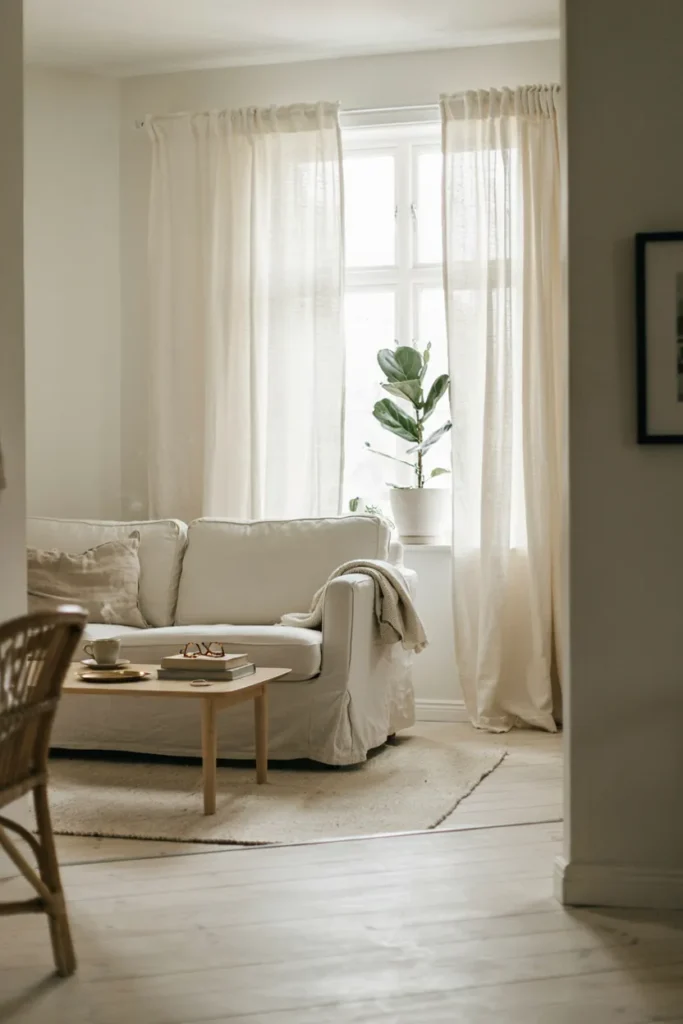
Natural light is a white room’s greatest asset, and maximizing it makes the space glow with warmth. Sheer curtains soften and diffuse sunlight into a gentle, flattering wash that feels airy and serene. Letting light move through the room keeps whites looking fresh and dimensional rather than flat. The mood turns luminous, calm, and uplifting, the very essence of inviting minimalism. Embracing daylight is a free, effortless way to make a white living room feel bright, open, and beautifully alive.
Recreate it by hanging sheer linen or cotton curtains that filter light while preserving privacy and softness. Mount rods high and wide to let in maximum sun and make windows feel larger. Keep window areas clear of bulky furniture so light flows freely. Budget tip: affordable sheer panels are widely available and instantly soften a room. Add a layered heavier drape for evenings if you need light control, and clean your windows so the daylight pours in unobstructed.
14. Ground the Space With a Cozy Sofa
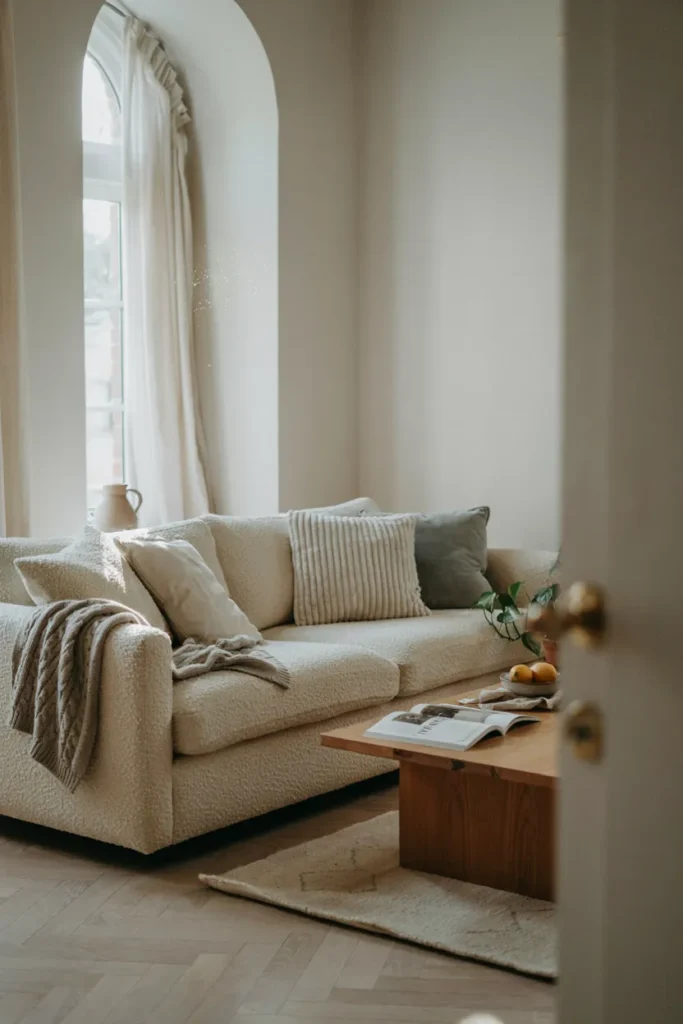
A deep, plush sofa is the heart of an inviting white living room. Comfort is what transforms a minimalist space from a showroom into a home, and a generous, soft sofa signals that this room is made for relaxing. Piled with cushions and a throw, it becomes the cozy anchor everyone gravitates toward. The mood turns warm, laid-back, and welcoming. A truly comfortable sofa proves that clean, white design can still wrap you in softness and invite hours of lounging.
Recreate it by choosing a sofa with deep seats and soft, forgiving cushions in a warm white or cream performance fabric. Layer it with linen, boucle, and knit pillows plus a cozy throw for texture. Pick a durable, washable cover if you have kids or pets, so white stays practical. Budget tip: a slipcovered sofa lets you refresh the look and clean it easily and affordably. Prioritize comfort over trend, since this is the piece you will use every single day.
15. Bring In Warm Metal Finishes
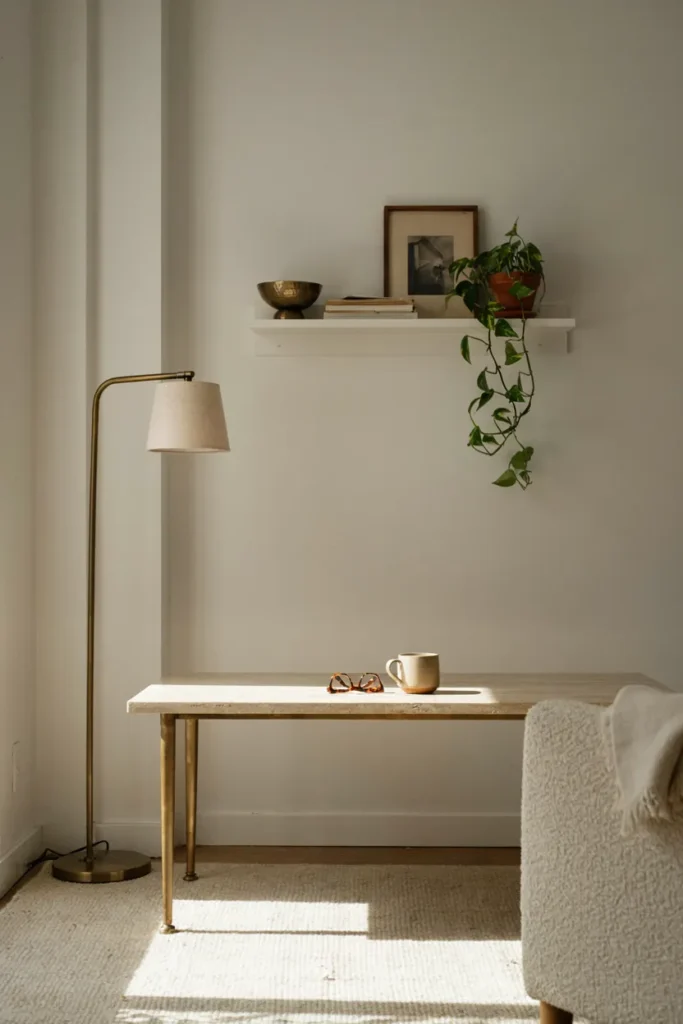
Warm metals add a subtle glow and a touch of quiet luxury to a white living room. Brass, gold, and aged bronze finishes catch the light and introduce warmth that cool whites can lack. Used in lamps, table legs, or small accents, they make the palette feel richer and more refined. The mood turns elegant, warm, and polished without straying from minimalism. A few warm metal touches are like fine jewelry for the room, elevating clean white design with understated shine.
Recreate it by adding brass or warm gold through a floor lamp, coffee table base, picture frames, or small decorative objects. Keep the metal finish consistent so the accents feel intentional and cohesive. Repeat it two or three times around the room for balance. Budget tip: brass thrift finds and inexpensive gold-toned accessories deliver the look affordably. Choose warm metals over chrome or nickel, which read cooler and can amplify a room’s crispness rather than soften it.
16. Personalize With Meaningful Objects
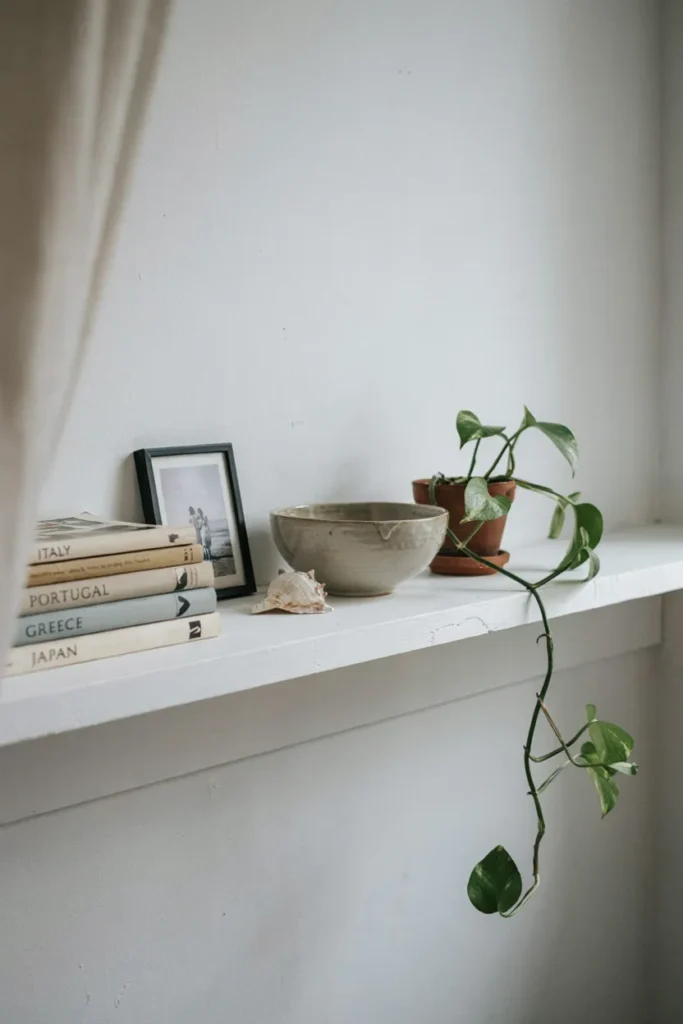
Personal, meaningful objects keep a white living room from feeling impersonal or catalog-like. A few treasured items, travel keepsakes, handmade ceramics, or a favorite photo, add soul and tell your story. Curated thoughtfully with breathing room, these pieces bring warmth and individuality to the minimal palette. The mood turns authentic, lived-in, and heartfelt. Personalizing your space is the final step that transforms a beautiful white room into a home that feels unmistakably and warmly yours, proving minimalism has plenty of room for personality.
Recreate it by choosing a handful of objects you genuinely love and displaying them with plenty of space around each one. Mix a book stack, a ceramic piece, a framed photo, and something natural like a shell or stone. Keep the palette soft so the collection feels cohesive. Budget tip: the best personal touches are things you already own and treasure, so they cost nothing. Edit and rotate them seasonally to keep the display feeling fresh and intentional.
Making White Feel Like Home
A white living room does not have to feel cold, sparse, or off-limits, and I hope these white living room ideas have shown you just how warm and welcoming minimalism can be. The real secret lies in layering, mixing warm whites, natural woods, cozy textures, living greenery, and soft lighting until the space feels calm rather than clinical. Add a few personal touches and meaningful objects, and suddenly that bright, airy room becomes a place your family actually wants to gather. Start with the ideas that speak to you, perhaps a textured rug, a plush sofa, or a handful of plants, and build slowly from there. The most inviting rooms come together over time, layer by thoughtful layer, so give yourself permission to experiment and enjoy the process. White is a beautiful, timeless canvas that only gets better with warmth and character. If any of these ideas inspired you, save your favorites to your Pinterest boards so they are ready when you begin. Here is to a bright, serene, and genuinely cozy white living room you will love coming home to.

